
 EN
EN
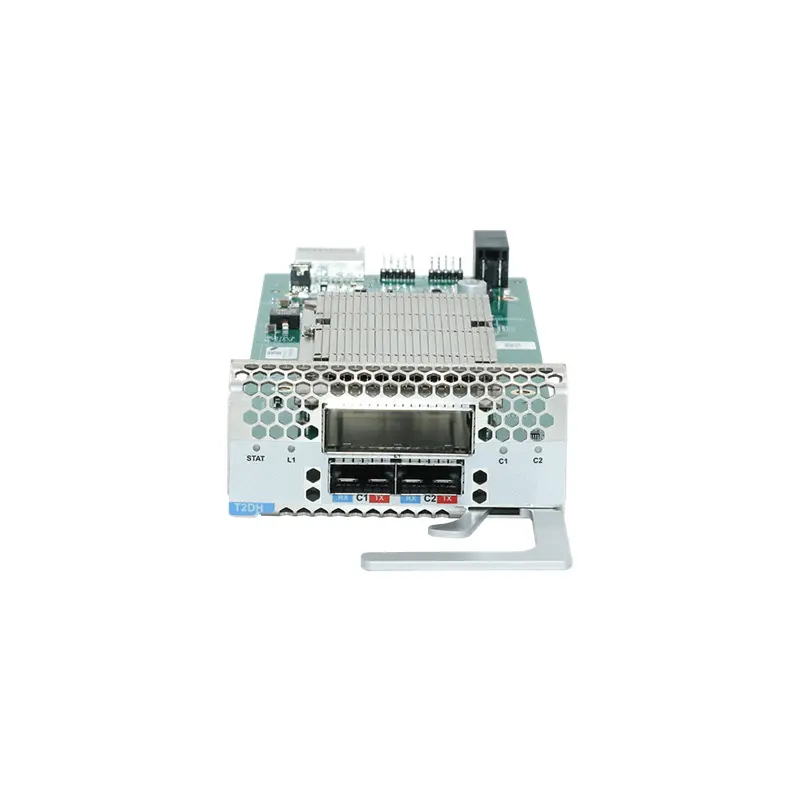
The commercial centers of the digital age are the metropolises. Whether for data centers, enterprise campuses, carrier hotels, or ISP POPs within a single city, the sheer volume of traffic dictates a need for fast, reliable, and affordable optical transport. Metro Data Center Interconnection (DCI) has emerged as the premier solution for ultra-efficient, ultra-low latency optical transmission with predictable costs within urban environments, replacing router based connectivity with specialized, high capacity optical transport systems.
What Is Metro DCI and Its Core Value
Metro DCI encompasses specialized optical transmission solutions tailored for metropolitan distances. Unlike long-haul optical solutions that focus on maximum reach, metro DCI is optimized for the capacity and miniaturization needed within a dense urban environment. Metro DCI has the core value proposition of enabling low-latency interconnections between data centers, turning them from isolated islands of connectivity into an integrated, low latency fabric. Metro DCI provides sub-millisecond latency between facilities for active-active data centers, supports real time data replication, offers granular bandwidth on-demand, and eliminates the need for major hardware upgrades when scaling capacity. This value translates into significant business advantages for an operator in urban markets with expensive real estate and limited fiber availability.
Challenges in Urban Optical Transmission
Challenges for optical transmission are much more complicated in the urban environment compare to suburban and rural sites. Most often, the fiber path has to travel through crowded, built-up areas with limited construction access. This dramatically increases fiber installation time and cost. High attenuation in established fiber can be attributed to frequent splits, bends and old splice and connector components. The existence of high power lines, electrical substations, subway lines and extensive wireless deployments creates very challenging EMI environments which can degrade signal quality. Varying outdoor temperature across a city – ranging from climate-controlled data centers to unventilated manholes – introduce additional variability into optical network design. The inability to establish intermediate amplification sites within the existing rights of way means that network operators must obtain maximum value from every existing fiber strand and the inherent capabilities of the equipment used. Metro DCI addresses many of these issues through the application of advanced coherent optics and adaptable modulation.
How Metro DCI Optimizes Network Efficiency
Metro DCI provides significant gains in network efficiency. By replacing the unnecessary router hops found in router-based DWDM solutions, metro DCI reduces latency and eliminates congestion points. The assignment of dedicated wavelength-level channels to applications and users ensures guaranteed performance of critical traffic flows. On-demand bandwidth provisioning allows network operators to instantly adjust the capacity required on a given Metro DCI link to meet demand – scaling capacity up or down without service interruption. Many outages can be avoided through the intelligent use of integrated OTDR and continuous monitoring of link performance, enabling preventive maintenance. Multiplexing numerous low speed customers and aggregate sites onto fewer, higher capacity wavelength channels vastly increases spectral efficiency and thereby maximizes fiber’s capacity.
Cost-Saving Benefits of Metro DCI
There are compelling financial advantages to adopting Metro DCI. Leases for fiber optic paths in urban markets are more expensive on a per-strand basis than they are in suburban areas. Since Metro DCI delivers 400 Gb/s or 800 Gb/s on a single wavelength, this reduces the number of individual fiber strands an operator is leasing. Operational costs for Metro DCI platforms are significantly lower due to dramatically reduced power consumption - the per-Gb/s consumption of many Metro DCI platforms is between 60% and 80% less than equivalent router-based systems. Cooling cost reduction is also a significant factor. Because the typical form factor for Metro DCI platforms is 1 RU or 2 RU, the utilization of valuable space within a data center colocation facility is minimized. Considering lower sparing levels due to standardized equipment and a simpler training requirement associated with common Metro DCI platforms, the total cost of ownership argument for Metro DCI is clear.
Flexible Deployment for Urban Scenarios
Urban deployment requires great flexibility and the Metro DCI platform delivers. Deployments can be accomplished using dark fiber, gray fiber, or wavelength services(directly on wavelengths). For central office applications where operating temperatures can be extremely broad and inconsistent, robust, temperature-hardened Metro DCI platforms are available. For data center and enterprise environments, front-to-back airflow and low acoustic noise are common. Metro DCI platforms are available in a variety of power inputs including standard AC and -48V DC thereby avoiding any need for AC to DC conversion. When capacity expansion is required, the modular Metro DCI platforms are designed to support adding line cards incrementally. Operators can start with as few as two wavelengths and scale to eight wavelengths (or more) on a single platform without a chassis replacement.
Metro DCI for Urban ISPs and Operators
The high subscriber expectation for ubiquitous, gigabit connectivity – essential for a competitive gaming or streaming experience – place a premium on the performance and reliability of ISP networks. Metro DCI enables interconnection of aggregation sites, local data centers and core POPs for the urban ISP. For a metropolitan network operator serving the aggregation needs of the 5G wireless backhaul network, Metro DCI is the ideal technology to meet both strict latency requirements and high bandwidth demands of cell tower sites. Urban utilities delivering smart city initiatives and services, such as public safety networks, benefit from the predictable latency and very high availability offered by these dedicated metro optical solutions. Across all use cases the one common requirement is unwavering reliability – a quality that urban operators simply cannot achieve with layered overlay architectures.
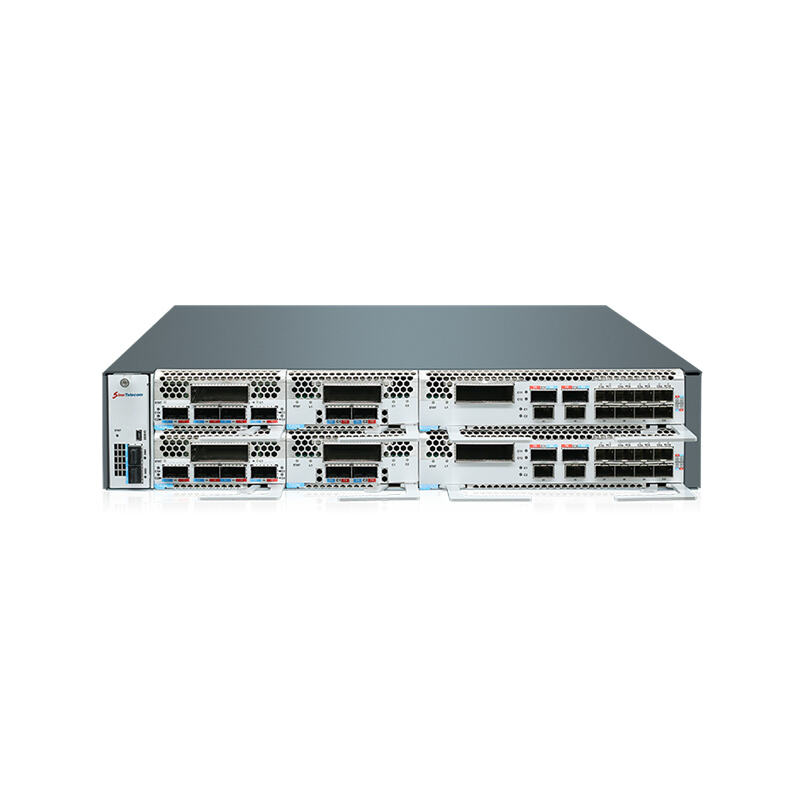
Reliable Metro DCI Solutions
Sino-Telecom offers a range of Metro DCI solutions engineered for metro optical transmission in urban markets. Our platforms offer 100G, 200G, 400G, and 800G coherent transport without regeneration. Our 1 RU and 2 RU platforms are designed for high density applications within enterprise and colocation data centers as well as dense central offices. Forward error correction and adaptive modulation have been incorporated to ensure error-free transmission across even the most challenging urban fiber plant. Sino-Telecom has successful deployments in metropolitan centers across more than 30 countries, including France, Indonesia, Brazil, and Australia. With over 240 patents and 150 software copyrights, we have a proven history of reliable solutions, demonstrating our commitment to optical innovation. In our complete portfolio we have optical transceiver modules from GE to 800G, and support fully end-to-end connection.
Conclusion
Metro DCI networks is a new way of designing and operating optical transmission. These high capacity, low latency, operationally simplified, and cost-effective solutions are enabling metropolitan ISPs, data center operators and utility networks to grow bandwidth capacity without major network overhauls.
Do you want to optimize your optical transmission network in urban areas? Get in touch with Sino-Telecom sales to request a tailored Metro DCI quotation and relevant datasheets, and browse the sample deployment cases with regard to your market.