
 EN
EN
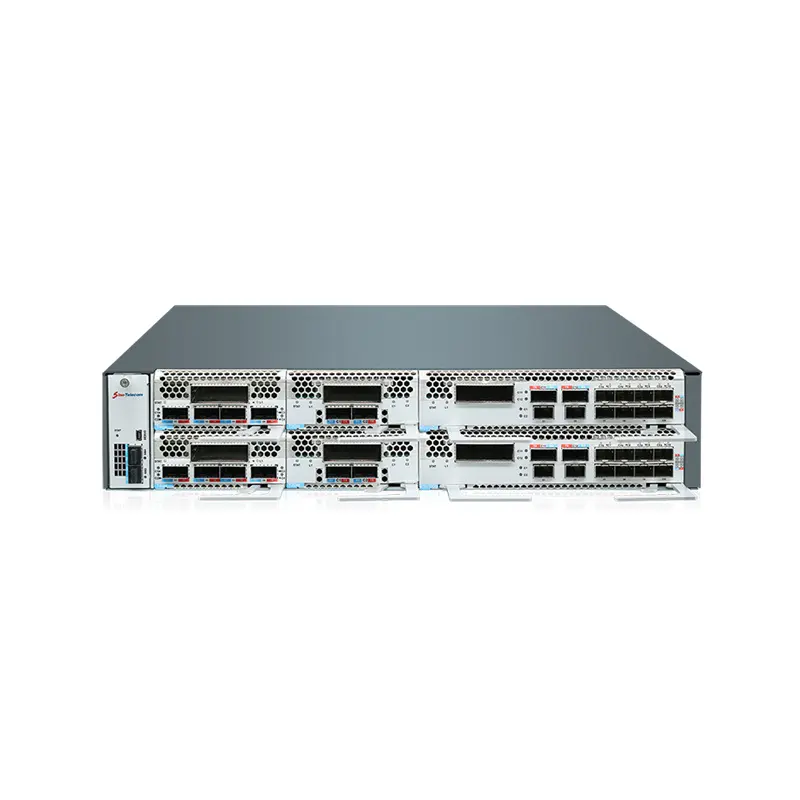
DCI-BOX vs. Traditional WDM/OTN: What's the Difference?
With increasing number of data centers and growing network traffic, operators face a critical choice: stick with the traditional WDM or OTN platforms, or adopt purpose-built DCI-BOX architecture? These solutions differ fundamentally in design philosophy, physical size, performance, operability economics, and can carry optical signals to long distances. An awareness of these differences enables network engineers and data center architects to make the right choices in a data center environment to meet the demands for scale, cost and deployment speed in today's world.
Scenario Adaptation: Designed for Different Environments
The traditional WDM and OTN systems were developed for the telecom central office and carrier grade applications. These platforms require managed temperatures, adequate physical space, multiple power supplies, and dedicated technical personnel for maintenance. They are good in service provider networks where protection switching, sub-wavelength grooming and legacy TDM service support are still a must.
On the other hand, a DCI-BOX is designed to cater to the needs of data centers. Data center halls have other constraints, rack space is limited, cooling is geared for hot-aisle and cold-aisle containment, deployments are measured in hours, not weeks. The compact design of the DCI-BOX, its front to back airflow compatibility and its ability to run over a broader temperature range are a response to these facts. In addition, because traditional telecom racks will not fit in some edge colocation facilities, meet-me rooms, even prefabricated modular data centers, DCI-BOX solutions are also at home in these settings.
Form Factor and Structural Design
The difference between traditional platforms and a DCI-BOX is immediately apparent. Legacy WDM and OTN systems typically occupy multiple chassis in a 19 inch or 23 inch rack, requiring several shelves for optical line amplification, multiplexing, administration channels and transponder cards. Cabling can become very dense and complicated, may require overhead or underfloor routing.
A single, low-profile enclosure is created for a DCI-BOX, which combines all the necessary functions, transponders, mux/demux, optical amplifiers and management. Most of the DCI-BOX units fit into 1 to 2 rack units, provide 1.6-6.4T per second of bi-directional capacity. Usually, the power supply adopts modular 1+1 protection, and redundant. This structural consolidation not only saves space, but also the number of patch cords, attenuators and ancillary components needed to create a functional link.
Capability and Performance Comparison
Traditional OTN platforms have typically provided a more complete sub-wavelength switching capability and cross-connect capabilities for raw transmission. For point-to-point data center interconnection, however, these have no added value and are only a complexity. The DCI-BOX removes functionality that isn't needed, optimizes link density and per-wavelength capacity.
Coherent transmission typically supports 100G, 400G, or even 800G per wavelength, with 16QAM modulation formats or QPSK modulation formats with forward error correction (FEC) adjustment. They offer industry leading spectral efficiency. Meanwhile, the total power consumption is significantly less than traditional options – typically, less than 20 watts per gigabit – as the DCI-BOX saves redundant cross-connect fabrics, idle backplane capacity, and legacy interface cards that are powered in older systems.
While traditional WDM platforms continue to be adept at multiplexing myriad low rate services (1G/10G) onto a single fiber, in today's world of distributed AI training and real-time data replication, fewer, higher speed flows are the better way to go. This has been the perfect match for the DCI-BOX.
Why DCI-BOX Matters for Modern Networks
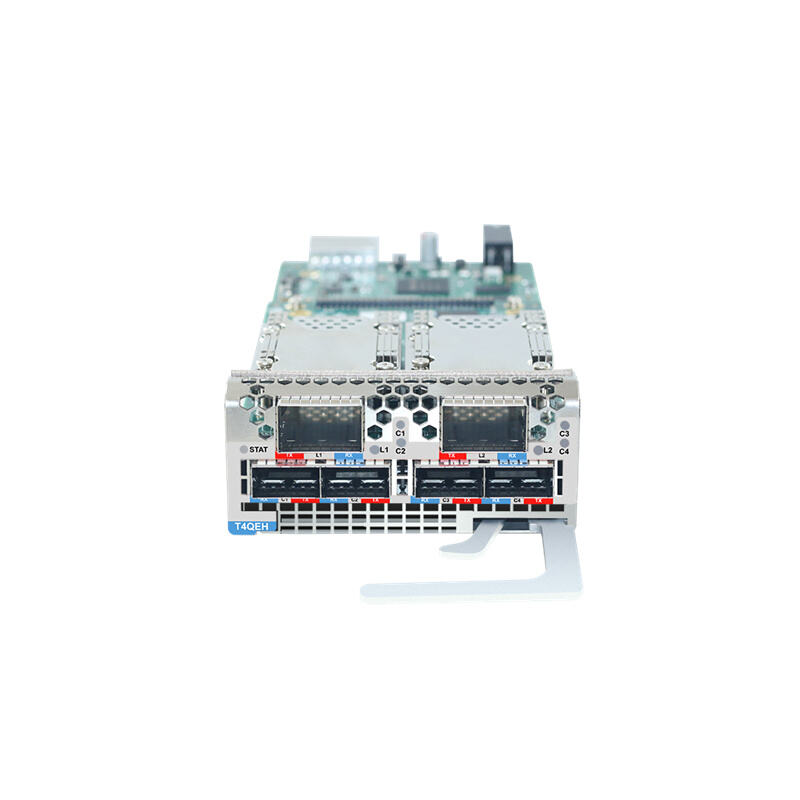
The development of DCI-Box solutions is not simply a technology fad, but is a change in the network architecture itself. First, deployment velocity is more important than ever. While traditional WDM deployment—including optical testing and configuration—can take days a DCI-BOX can be unpacked, mounted, cabled and provisioned in less than two hours. Second, operational simolicity eliminates the need for specialized optical engineering skills at each data center site. Integrated diagnostics, automated power control and remote provisioning enable general server and network teams to control interconnections. Third, with a pay-as-you-grow model, DCI-BOX becomes an investment rather than a fixed capacity commitment. Lastly, with organizations striving to reduce their carbon emissions, the reduced energy consumption of the DCI-BOX is aligned with their sustainability goals, without compromising throughput.
Sino-Telecom's DCI-BOX and Optical Transceiver Solutions
Sino-Telecom has built up a complete portfolio of DCI-BOX solutions for today's data center and cloud service providers. These solutions combine the best elements of high-density DWDM transmission, coherent optical technology and simplified management with a compact form factor. From 100G for regional interconnect to 400G and 800G for clusters of data centers powered by AI, Sino-Telecom's DCI-BOX platforms meet the need for reliable performance and low power consumption.
Sino-Telecom also provides various optical transceivers such as GE, 10G, 25G, 40G, 100G, 200G, 400G and 800G to complement these platforms. The transceivers are designed to be interoperable and thermally efficient, providing end-to-end optical signal integrity from the DCI-BOX to the switch port. With a lock-in-free design and a wide selection of matched optical modules, Sino-Telecom enables network operators to deliver scalable, cost-effective and future-proof DCI-BOX designs without being tied to any proprietary technologies.
Summary
Looking to “scale up” your interconnect? Get a detailed quotation from Sino-Telecom's sales force today, with detailed product data sheets and real-life deployment scenarios. Contact us today through our website or by email to talk through your project and see how Sino-Telecom's reliable and successful DCI solutions have enabled operators in over 30 countries to provide resiliency, high-capacity connectivity.