
 EN
EN
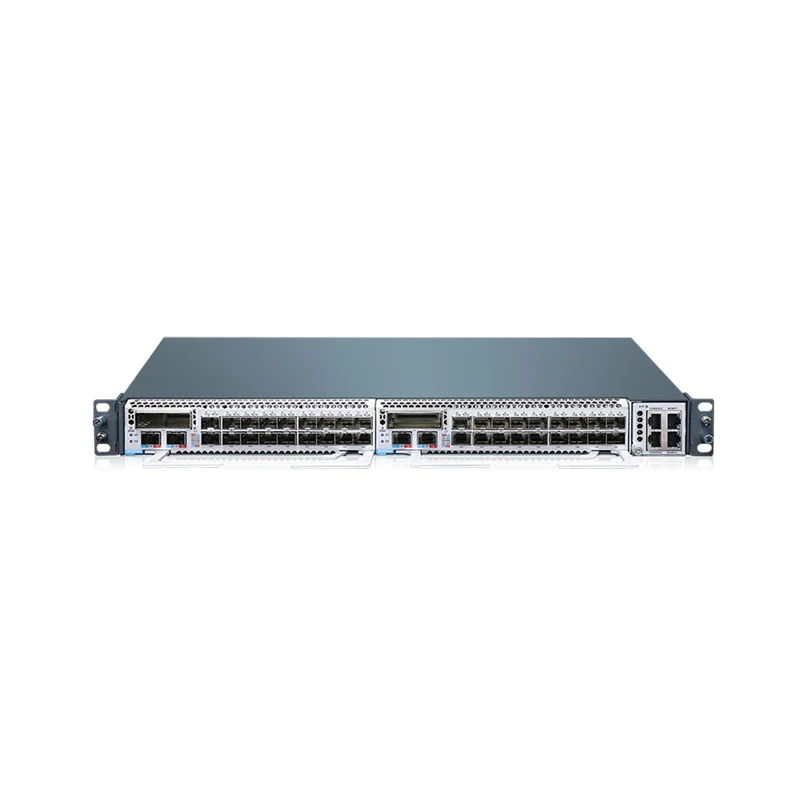
Data centers are booming due to high demand from AI, cloud computing, and global networking, which in turn makes ultra-high density transmission increasingly important. Data Center Interconnection (DCI) has emerged as the technology to allow multiple data centers to work as a single, high-performance fabric. Through the use of advanced optical networking, DCI maximizes data throughput while simultaneously minimizing space and complexity. The following sections examine the key factors of ultra-high density transmission, including scalability, deployment challenges, cost-effective data flow, and design considerations for DCI.
Benefits of Ultra-High Density Transmission in Data Centers
The concept of ultra-high density transmission will transform the way data centers address their bandwidth and infrastructure needs. By consolidating hundreds of gigabits, or even terabits, of traffic over a single pair of fiber optic cable, network engineers can significantly reduce fiber usage. This is particularly important for metro data centers in which fiber conduit is limited or prohibitively expensive to rent. In addition to saving space, this transmission method saves energy as modern optics can achieve greater bandwidth without a corresponding increase in energy consumption. Moreover, reduced cable management needs lessen the strain on cooling infrastructure, since fewer cables generate less heat. Data center operators will save money on operations by needing to purchase less equipment and foregoing additional construction for their capacity needs. High density also reduces network vulnerability by replacing dozens of single optical transmitters and receivers with just one or two modern, coherent optics featuring integrated fault detection and diagnostics.
How Data Center Interconnection Enhances Scalability for Growing Needs
Scalability is perhaps the most important consideration in any modern data center design. DCI addresses scalability on multiple fronts. Firstly, operators are able to provision new wavelengths or services without interrupting existing traffic, using the wavelength-based granularity to effectively segregate services and traffic. Secondly, pluggable, high-density optical modules have already been designed for future-proofing. Operators can start with 100G per channel today and then migrate to 200G, 400G, or 800G in the future without replacing the entire line card. Finally, these DCI modules are software-controlled, allowing administrators to dynamically adjust bandwidth and reassign wavelengths in response to changing network conditions, such as synchronization AI training data between distributed data centers. Modern open DCI solutions even allow for interoperability with a multitude of switch platforms and offer horizontal scalability of multiple generations of line cards.
How Data Center Interconnection Supports Cost-Effective Data Transmission
Ultimately,cost is a key driver for adopting DCI solutions. High-density optical transmission and efficient DCI architecture dramatically reduce the per-fiber, per-bit cost of the metropolitan area link between two data centers. Capital expenses decrease because higher port density requires less equipment to populate racks and consumes less power. This reduces overall operational expenses associated with energy consumption and cooling. A long operational lifespan for optical transmission equipment helps amortize the capital cost over a long period. In some cases, modulation format can be tuned from one generation of optic module to another, delaying significant hardware upgrades while still getting more bits per second out of the same infrastructure.
Considerations for High-Density DCI Deployment
When designing a high-density DCI system, several factors need to be evaluated. First, a thorough assessment of the fiber optic infrastructure is essential. A physical survey to identify available fiber, combined with attenuation testing, polarization mode dispersion measurements,and connector evaluation-enables realistic reach calculation for any optical module, especially for higher symbol rates. Next, it is essential to define the required forward error correction level and appropriate modulation scheme(s) such as QPSK, 8QAM, 16QAM based on required bit rate and achievable reach. Power planning and cooling are also key. Advanced optics may require direct liquid cooling or forced air cooling at the line card level in order to maintain stable operation. Spare parts and redundancy strategies also need to be rethought. Since a failure has a greater impact on fewer optics with higher data capacity, additional diversity in terms of diverse fiber paths or redundant architectures with protection switching may be needed. Finally, the choice of network operating system or controllers for the DCI transmission must integrate seamlessly with the overall data center orchestration platform to allow for end-to-end visibility and control.
Conclusion
Overall, DCI enables ultra-high density transmission with cost, scale and ease of use advantages. Deployment needs to address fiber resources, cooling, redundancy and smooth orchestration layer integration.
To learn how DCI can change your data center, call our sales for compelling pricing, detailed product features and proof cases. Sales will advise on customized solutions with documentable deployment stories and let you achieve ultra-high density transmission with confidence.