
 EN
EN
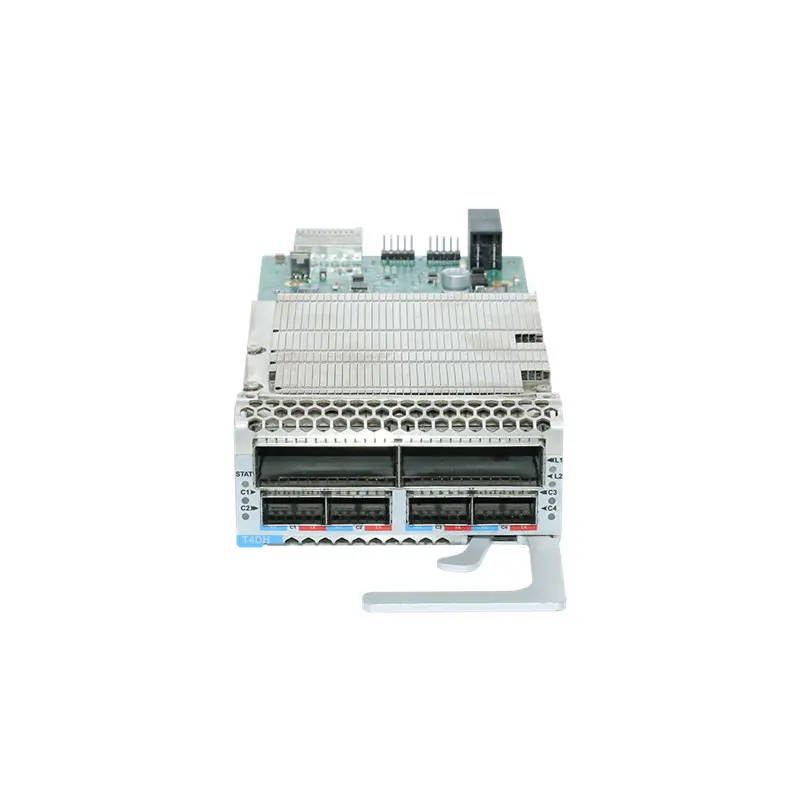
The telecom industry is changing dramatically. The Internet of Things (IoT) is becoming more of a reality as 5G networks develop and cloud services proliferate, and the infrastructure that enables these connections is more important than ever. Data Center Interconnection (DCI) is the technology at the core of this ecosystem, which allows data centers, cloud platforms and network edges to seamlessly connect.
What 5G Core and Edge Actually Require From Transport
The shift to 5G Standalone (SA) architecture is accompanied by a cloud-native core that is radically altering the mode in which the transport networks need to operate. The 5G core is located on the cloud computing platforms and the network functions are deployed in the country and region data centers. This distributed architecture puts strict requirements on transport infrastructure.
Edge computing adds further complexity. For real-time applications, Multi-Access Edge Computing (MEC) platforms need ultra-reliable, low-latency connectivity. The transport network needs to deliver deterministic latency, high availability and scalable bandwidth between edge nodes and central data centers.
To effectively support deployments of 5G core and edge, a DCI solution must provide:
Very low latency when handling real-time processes
A large bandwidth capacity ensuring that huge amounts of data can flow through it
High carrier grade reliability with redundancy mechanisms
The ability to scale up and down as traffic fluctuates.
Connecting Public, Private, and Hybrid Clouds
Today's businesses use a variety of cloud platforms, such as a public cloud for scale and a private cloud for security, or both, in what's known as a hybrid cloud. The DCI network is the glue that holds this multi-cloud approach together.
Cloud providers and enterprises need high bandwidth, robust connections between their distributed data centers. A Data Center Interconnect (DCI) solution should be flexible and integrate with multiple cloud architectures seamlessly, allowing workloads to easily move between different environments without impacting performance and security.
Sino-Telecom's modular DCI OTN platforms, including STN6800-D16 series, are specially designed for the multi-cloud era. These platforms offer the necessary density and flexibility for today's cloud interconnections with 1U delivering 6.4T of capacity and 2U scaling up to 12.8T.
Running 5G, Enterprise, and Residential Traffic on One Network
A major challenge for network operators is the ability to support a variety of traffic types over a single infrastructure. The DCI network should support:
Mobile backhaul traffic for 5G with strict latency requirements
Data from the enterprise that has different QoS requirements
A broadband service for homes that consumes huge amounts of bandwidth.
This requires a transport platform that can accommodate multiple types of services. Multi-service mapping optical transport solutions allow operators to transport Ethernet, SDH, SONET, OTN and SAN services through a single infrastructure.
For compatibility with most traffic types, the STN6800-D16 series supports FE, GE, 10GE, 40GE, 100GE Ethernet services, as well as STM-1/4/16/64, OTU2/OTU2e/OTU4 and 100G FlexE services.
Network Slicing and Meeting Different SLAs
Network slicing is a radical change in the way networks will provide differentiated services. Operators can configure each slice to meet customer needs by creating multiple virtual networks on shared physical resources. This is especially useful in 5G applications, which have a wide range of use cases with varying performance requirements.
To meet the requirements of strict Service Level Agreements (SLAs) in several slices, it is required to:
End-to-end visibility across multi-domain, multi-layer slice performance
Tailored QoS guarantees for latency, throughput and reliability
Intelligent resource allocation over slices
Automated assurance on Slice specific SLAs.
These slicing features need to be supported by a robust DCI platform, which must be based on open software architectures and have a complete network management system. Sino-Telecom’s platforms offer open interfaces such as SNMP, NETCONF, and other interfaces to facilitate seamless integration of network slicing management frameworks.
Scaling DCI as 5G Traffic Grows
According to industry observers, AI-driven traffic growth will significant impact DWDM bandwidth requirements. Even the 2% of data traffic that “overflows” from cloud data centers could cause a dramatic DWDM bandwidth increase, LightCounting reports.
Therefore, the network design of the DC network needs to be scalable right from the start. Service providers cannot afford infrastructure that requires forklift upgrades every few years. Rather, the network should enable “pay-as-you-grow” architectures in which capacity can be incrementally added to the network on demand.
That is why DCI networks must be scalable from scratch. For service providers, infrastructure requiring frequent upgrades is cost prohibitive. Rather, the network should be designed for on-demand expansion, adding capacity as needed.
The modular DCI platforms and solutions of Sino-Telecom are a reflection of this design philosophy. Scaling up from 1U 6.4T to 2U 12.8T architectures with backward compatibility helps safeguard network investments as traffic increases.
Conclusion
With the introduction of 5G networks and the rise of cloud-based services, the need for Data Center Interconnection as the engine powering the next generation of services is only growing. DCI technology is the backbone that powers modern digital services, from bridging 5G core functions to supporting multi-cloud strategies, from network slicing to scaling for AI-driven traffic growth, and more.
Sino-Telecom Technology Co., Inc. is at the vanguard of this change. As a leading international DCI provider with over 100,000 units shipped worldwide, we bring deep expertise in optical networking and data communication to every deployment. With 241 patents and 156 software copyrights, we are focused on technological leadership – the foundation of our ongoing innovation in DCI solutions.
Available in both 1U 6.4T and 2U 12.8T platforms, our STN6800-D16 series modular DCI OTN solutions provide the capacity, flexibility and reliability needed for today's high-demand network environment. Whatever you're trying to do – from connecting public and private clouds, converging 5G and enterprise traffic, to preparing for the surge of traffic with AI – Sino-Telecom has got the DCI foundation you need. Give us a call now to get a quote custom solution for your DCI needs.