
 EN
EN
The DCI industry has evolved significantly over the last decade. A decade ago, it was primarily long-haul tech for the telephone networks. Today, DCI is the foundation for our cloud-centric and AI-driven economy. Coherent optical technology lies at core of this evolution, powering capacity increases our digital economy needs. If you are a network operator thinking about the future, it is critical to have a strong grasp on the history to help inform your next-generation DCI strategy.
Why Coherent Optics Became Essential for DCI
The original form of optical communications used direct detection in which only light’s amplitude was modulated. As speeds increased, there was a point at which this fundamental technique hit a wall. But with coherent optics, information is conveyed through variations in amplitude and phase, and can even be sent over both polarizations concurrently. This means that the number of bits of data you can put on a single light signal increases drastically.
The technological innovation relies on a technology called digital signal processing (DSP). At the receiver side, algorithms based on DSP compensate for optical impairments such as chromatic and polarization mode dispersion that otherwise corrupt the signal as it travels through the network. The result is a tremendous gain in spectral efficiency and the ability to achieve high-speed, long-haul, high-capacity transport that direct detection technology cannot match. Indeed, coherent transmission is the de facto standard today at speeds of 100 Gbps and above, at distances of 40 km and further.
The Evolution From 100G to 800G Coherent Technology
Moving from 100G to 800G has been the result of continued innovation in both DSPs and semiconductor fabrication. Initial coherent optics were simply bulky, high power consuming transponders. 100G coherent optics were the first major shift as this approach enabled long-haul links without intermediate signal regenerators.
What became a pivotal shift in this move to 400G was the availability of pluggable coherent modules. Products like QSFP-DD combine a highly efficient coherent DSP with optics and modern modulation into a form factor that can be directly plugged into router ports. This has created the convergence of IP and optics with simpler architectures and lower operational costs. Advances in CMOS processes have also led to faster and more energy-efficient DSPs that are enabling the current generation of 800G pluggables.
How Coherent Enables Higher Capacity and Longer Reach
Coherent systems provide their advantages through several key technologies. Firstly, there are intelligent modulation schemes in place. For instance, using DP-16QAM (Dual-Polarization 16-Quadrature Amplitude Modulation), multiple bits are packed within each symbol, increasing the spectral efficiency and hence data rate per wavelength significantly. Secondly, using polarization multiplexing, two signals can be propagated independently on the same wavelength, thereby doubling its capacity.
Third, the built-in DSP engine can compensate for the impairments of optical fibers in real time to make reliable transmission possible beyond the reach of direct-detection systems. By combining all of these elements-high baud rate, elaborate modulation and powerful DSP-coherent systems can now overcome limitations that restrict direct-detection to less than 100km for speeds greater than 400G on a single wavelength.
DCO, ZR, and ZR+: Choosing the Right Optical Technology
This means network operators are left with a variety of flavors of coherent pluggable optics to choose from. Knowing how they differ is important in order to make the appropriate choice.
Digital Coherent Optics (DCO): This is the general term for coherent transceivers which package the DSP engine within the module. External processing is eliminated.
OIF 400ZR: This is the baseline requirement for 400G coherent pluggables. Intended for point-to-point single-span metro DCI up to approximately 120km, it guaranteed multi-vendor interoperability but uses a fixed rate and modulation format.
ZR+ (Extended Reach): Generally, it implies modules that exceed the 400ZR baseline by providing increased transmit power, superior forward error correction (FEC) and ability to support various modulation schemes for longer distance (600km and beyond) or for ROADM compatibility. As this "ZR+" term can be vendor-specific proprietary extension it can vary among vendors.
OpenZR+: Often described as "the best of both worlds," this is a multi-vendor interoperable technology that offers software-selectable modulation rates from 100G to 400G, and provides reach comparable to dedicated transponder solutions. It is the go-to choice for SMB ISPs and enterprises that value flexibility without vendor lock-in.
Reducing Cost per Bit Through Higher-Speed Optics
The economic rationale for adoption of higher speed coherent optics is clear. As data rates along a single path are increased the cost per transmitted bit drops dramatically. Moving from 100G to 400G or 800G will enable service providers to carry 4x to 8x the data across existing fiber infrastructure while at the same time not increasing the amount of hardware, space, and power consumed by the same order of magnitude.
Furthermore, pluggable coherent modules eliminate the need for separate transponder shelves, reducing the number of devices in the network and simplifying management. The latest generation of modules leverages advanced DSP silicon to achieve up to 30% lower power consumption per bit compared to previous generations. For energy-conscious SMB ISPs, this actually translates directly to lower operational expenditures and a smaller carbon footprint.
The Future Path Toward 1.6T Coherent Transmission
The industry is already charting the course for next leap: 1.6T. The OIF is actively working on 1600ZR and 1600ZR+ implementation agreements. These will leverage further advancements in CMOS technology to increase baud rates and implement more advanced modulation formats, including interoperable probabilistic constellation shaping (PCS).
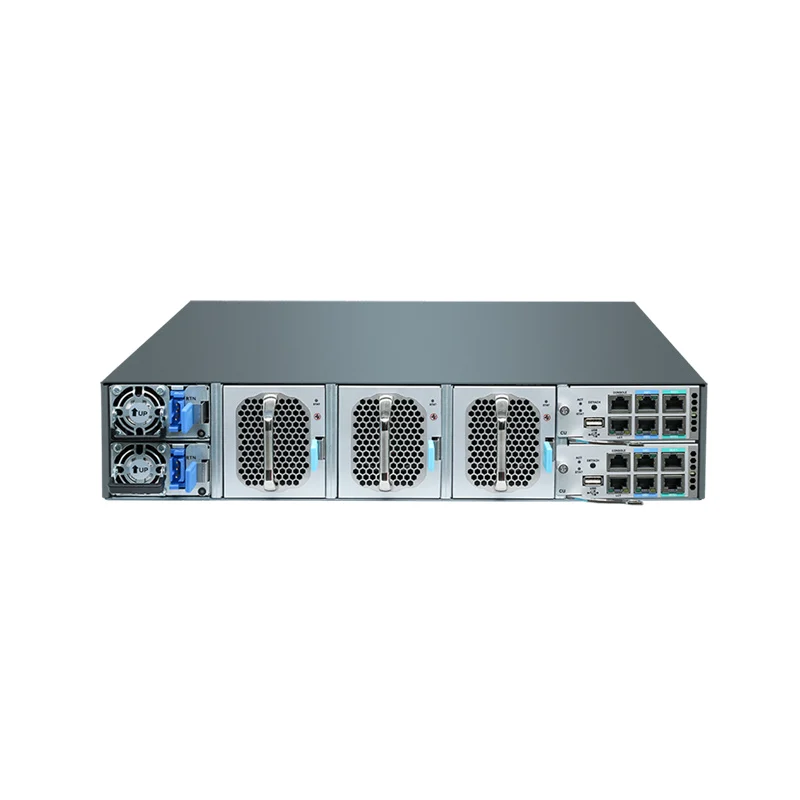
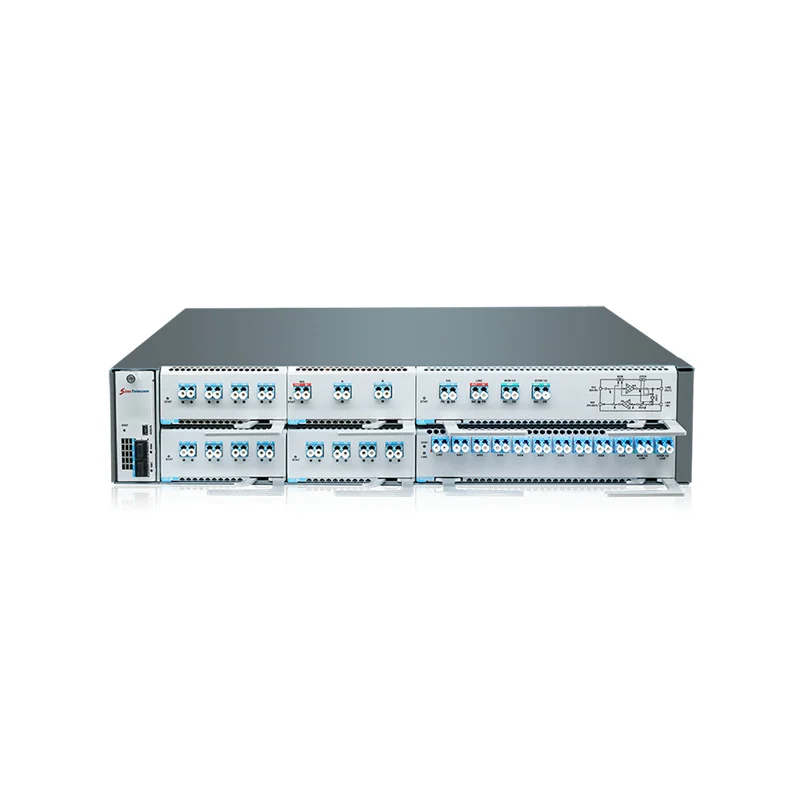
Sino-Telecom is already preparing for this future. Our STN6800-D16-1U DCI platform supports up to 6.4T capacity per site today, with line-side rates up to 400G. The STN6800-D16 platform is designed for smooth evolution to 800G, and our large-capacity coherent ring DCI solution provides a clear upgrade path to 48 × 800G wavelengths. This ensures your investment remains future-proof, capable of scaling with your business as bandwidth demands continue to surge. Operating at forefront of optical innovation, we design our systems to integrate latest coherent technologies, from 400G to 800G and beyond, ensuring your network keeps pace with the AI-driven era.
Conclusion
Since those clunky 100G transponder era, today’s pluggable 400ZR/800ZR and 1.6T evolution, coherent optical technology have changed the game of Data Center Interconnect (DCI). Compared with previous OTN or transponder modules, coherence optics achieve best in-class spectral efficiency. Together with DSP/modulation improvements, it enables extended reach, a massive reduction in cost-per-bit and makes high speed transport available for metro, regional and long haul DCI applications. Today, from STN6800 D16 modular OTN platform (1U 6.4T / 2U 12.8T), full coherent range pluggables (400ZR, OpenZR+, 800ZR/800LR), future oriented C band/L band line systems, and open NMS with SNMP/NETCONF features, Sino Telecom makes sure that operators/telcos could select the most suitable coherent – either fixed rate for simple point to point span, ZR+ for longer reach and ROADM friendly, or Open ZR+ for multi-vendor openness, or Open ZR for maximum open choices. Also, we ensure there is seamless upgradeability to 1.6T without forklift. As one of the world’s major DCI supplier with already 100,000+ units shipped to over 30 countries worldwide and equipped with solid field proven reliability, supply chain and the team of deep technical expertise, Sino Telecom's offering provides the broadest choices to satisfy the various requirements of DCI deployments from SMB ISP providers to tier-1 cloud operators. Feel free to reach out for Sino Telecom’s sales experts team for a quote. We can provide datasheets, case studies, and deployment best practices tailored for your next generation DCI network solution utilizing decade-long coherent innovation.
Table of Contents
- Why Coherent Optics Became Essential for DCI
- The Evolution From 100G to 800G Coherent Technology
- How Coherent Enables Higher Capacity and Longer Reach
- DCO, ZR, and ZR+: Choosing the Right Optical Technology
- Reducing Cost per Bit Through Higher-Speed Optics
- The Future Path Toward 1.6T Coherent Transmission
- Conclusion