
 EN
EN
Today, the landscape for Global Service Providers (GSPs) is shifting under wave of consumer-driven demands, cloud migration by organizations, and increased consumption of AI services, all of which are challenging legacy network designs. Service providers focused in past on ‘last mile' recognize network must become an all-encompassing fabric to link together cloud, edge and core IT infrastructure. This vision can only be achieved with robust, scalable DCI strategy at heart of their growth agenda.
The Traffic Surge That's Breaking Traditional ISP Models
This challenge is off charts. From AI workloads to edge computing and industrial automation and analytics, new categories of highly data intensive applications are impacting existing interconnect networks serving hyperscale and other large data centers at rates unseen in past. For example, capacity within hyperscale data centers has doubled in four years’ time, with one report forecasting deployment of between 120 and 130 Hyperscale Data Centers year over next five years. So, ISPs face both an opportunity and threat from Hyperscalers. The opportunity lies in offering high volume transport between sites, threat is that traditional core networks, optimized primarily for consumer broadband aggregation, cannot scale to meet demand.
By numbers, story is clear, fiber capacity is reaching logical and physical limit of what has been deployed. We are seeing doubling in number of fibers in DCI cable over past four years, with increased demand for denser solutions to fit into ducts that already contain existing infrastructure. Failing to cope may mean ISPs are pushed out by cloud and hyperscalers developing their own dedicated interconnect.
Why Edge Data Centers Need Better Interconnect
One of most influential changes to modern day networking world is fragmentation of data center. Factors like power issues, legal compliance, and low latency requirements now compel service providers to deploy distributed set of data centers.
Here is another challenge, even as they are deploying these geographically distributed centers, it’s still critical for data center providers to be able to connect those regional sites with same, high speed, high capacity, and fault tolerant connections. Edge data centers are geared for instantaneous processing, but data often needs to take route into more centrally located area for compute intensive work, and insufficient bandwidth or inefficient interconnection can create congestion, increase latency, and degrade application performance. It’s no longer about whether DCI offers those low latency and high capacity links, it has become prerequisite to serve those geographically dispersed data centers. The ISPs that can supply this will take share of enterprise and cloud interconnect market.
DCI vs Traditional Core Network Expansion Strategies
So where has innovation actually occurred in ISP networks? In past ISPs have grown their core networks with traditional packet technologies, for instance IP and MPLS networking. IP and MPLS are well understood, but they aren’t always cost effective or simple to provision, particularly for DCI use-cases. Studies have demonstrated similar level of performance as with IP/MPLS at “a severe cost reduction”, when using DCI systems like our purpose built coherent optics transponder and muxponder appliances.
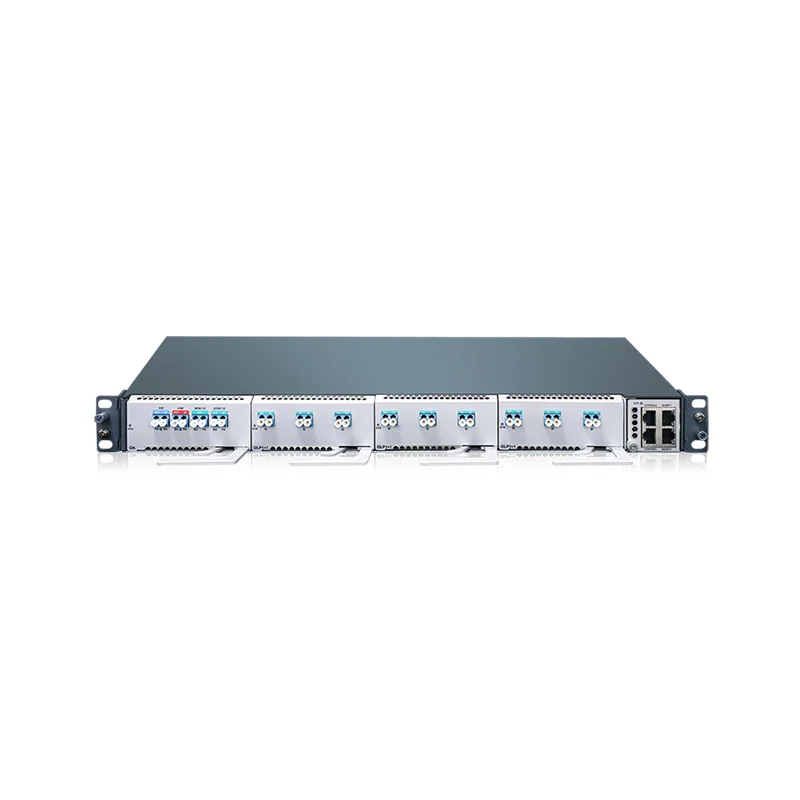
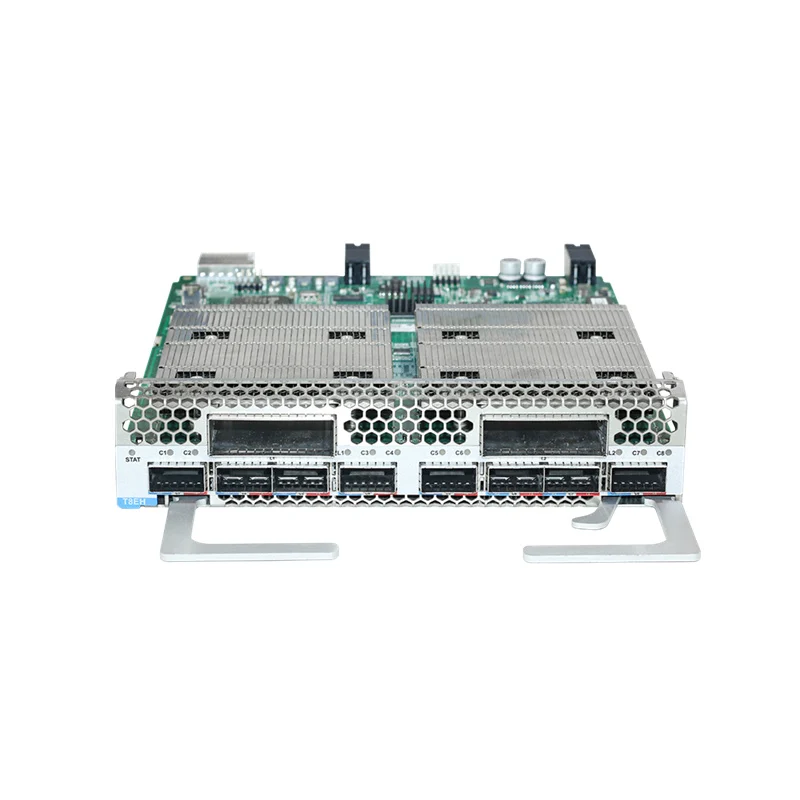
Economic benefits It’s just as compellingly cost effective. The network does not need to add an “alphabet soup of protocols” to provide converged layer between them to accommodate pure DCI approach. A dedicated optical transport solution that interconnects 100G, 200G, 400G, and 800G links on per wavelength basis offers much lower per bit cost, power consumption, and complexity for ISPs moving data between their data centers. Specifically, solutions such as the STN6800-D16 have been developed precisely for DCI applications. The platform is available in two compact form factors: a 1U chassis with 4 slots, supporting up to 4 pluggable STN6800-D16 series cards and delivering a maximum transmission capacity of 6.4T, with native support for 100GE and 400GE services. For higher-density requirements, the 2U chassis offers 8 slots, accommodating up to 8 pluggable cards and scaling to 12.8T total capacity, while explicitly supporting 200G, 400G, and 800G interfaces. This flexible architecture optimizes power usage and rack density, enabling efficient scaling for modern DCI networks.
Real ISP Deployments: From Regional to National Scale
DCI is not just an academic concept, ISPs worldwide are already realizing its value. Deployments now span from regional data center sites to national footprints and even across continental interconnects, providing concrete proof of DCI's power:
Regional Scale: For municipal education and regional carriers, DCI platforms that deliver backbones are used to connect campuses and datacenters within each district and serve as hard pipe isolation for vital services and delivering of low, sub-millisecond latency real time applications. 16-wavelength core ring can support metropolitan area’s backbone and district aggregation connecting with each of them through 8-wavelength links.
National Scale: Today's national ISPs deploy DCI to handle increases in enterprise cloud traffic and HD video. Deployments with modern DCI platform's pay-as-you-grow approach can start with 200G per wavelength and evolve to 800G per wavelength, without complete forklift upgrade.
These types of deployments rely on software based, open design that defines today's DCI solutions. Open software interfaces such as SNMP and NETCONF facilitate integration with third-party network management systems and can help reduce operational dependence on a single management platform, and enables providers to respond rapidly to changing traffic patterns.
What This Means for Your ISP Network Roadmap
It means big potential news for ISPs thinking about evolving their networks in future, “pay-as-you-grow” nature of those purpose-built DCI devices means they scale in line with your revenue not up front spending with opportunity to run with 100G or 200G today and seamlessly moving into 400G or 800G on same hardware.
Power efficiency is another critical factor. With data center power budgets becoming major operational concern, ability to deliver high capacity at low power consumption per chip makes compelling business case. Modern DCI products deliver 12.8T in 2U form factor, optimized for data center power constraints.
Lastly, intelligent operations and maintenance (O&M) functions, such as OSNR monitoring, automated fault diagnosis and predictive maintenance, and more, offload burden on operational teams and enhance network reliability. These are critical capabilities in management of complex, distributed nature of today’s ISP infrastructure.
Conclusion
Sino Telecom is uniquely engineered for the modern ISP looking for scalable, future- proof Data Center Interconnection (DCI) solutions. Our cost-efficient STN6800 series modular platforms offer compact 1U (6.4T) and 2U (12.8T) modular chassis designed for100G/400G/800G coherent transmission, featuring a true "pay as you grow" architecture with plug-and-play deployment. Regardless of the demands of your network, from ultra-low latency 400ZR connectivity for metro data centers, OpenZR+ with Multi-Vendor Flexibility for the broadest network compatibility, or high-performance800ZR/800LR for AI clusters in distributed campus environments, we provide the breadth of our complete coherent supplier portfolio plus comprehensive NMS supporting SNMP/NETCONF to give you ultimate speed, reach, and cost flexibility. As a globally leading DCI supplier with over 100,000 units already shipped to carriers across 30+ countries, we offer robust field reliability, dependable supply chain security, and the deepest expertise for any-size operator, from niche ISPs expanding remote residential broadband to top-tier telecom providers powering multi-terabit distributed interconnect. Submit your inquiry today for your tailored quotation, our comprehensive suite of product specifications, and case studies from service provider leaders who’ve escaped legacy limitations to expand their interconnect capacity with certainty. Book your consultation now to have one of our experts explain how Sino Telecom can build your future ready DCI network, one byte at a time.