
 EN
EN
The role of optical network is crucial in realizing the large-scale AI network As AI workloads extend beyond the bounds of a data center, 400G Ethernet optical solutions for DCI have evolved into an indispensable core technology for modern AI data center networks. In today’s complex AI data center architecture, AI workloads are not just limited to single data centers, and to meet the challenges of AI at scale, high speed connections such as 800G DCI are becoming an important way to build out next-generation AI infrastructure.
How AI Workloads Are Changing Data Center Traffic Patterns
AI infrastructure is evolving from scaling up” within a single building to “scaling across” a cluster of facilities, often miles apart. Running out of power, space and the ability to cool a facility simply makes it no longer feasible to “scale up” the AI workload at one facility. This means IT operations need to “scale out” by spreading the workload across multiple data centers. The shift from scale-up to scale-out redefines traffic patterns in the data center. AI workloads demand moving enormous amounts of data in a tightly synchronized fashion between cluster nodes. The resulting large east-west data flows completely dwarf traditional data center interconnect traffic patterns. There is a future of unpredictable high-speed, high-capacity, metropolitan and campus-wide data traffic that data center networks can no longer handle efficiently.
Why 800G Has Become Critical for AI Data Center Interconnect
AI training clusters work using distributed parallel processing, which needs enormous amounts of bandwidth across many data centers to interconnect GPU nodes. 400G is not adequate for this amount of data that large-scale training produces, at this scale, in the data centers. With 800G DCI you have doubled capacity per wavelength and allow operators to interconnect AI clusters using a single wavelength link rather than multiple parallel links. The footprint and operational costs are significantly lower. For the operator in campus or metro type networks, in order to allow training distribution, they need the high capacity density that 800G DCI gives them and this maintains efficient fiber use.
The Optical Technology Behind 800G DCI: Coherent, DCO, and Fiber Requirements
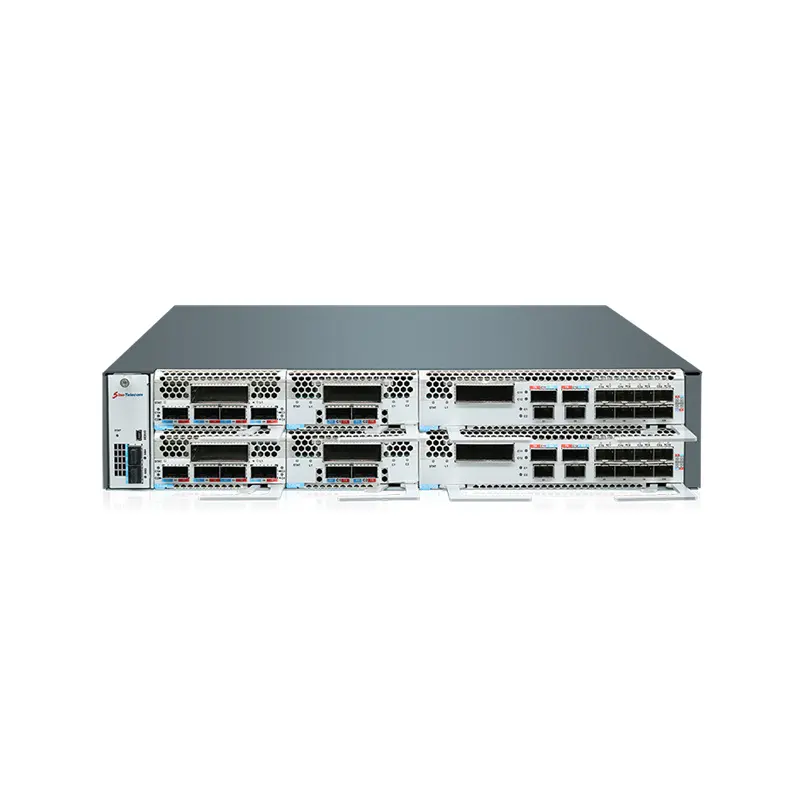
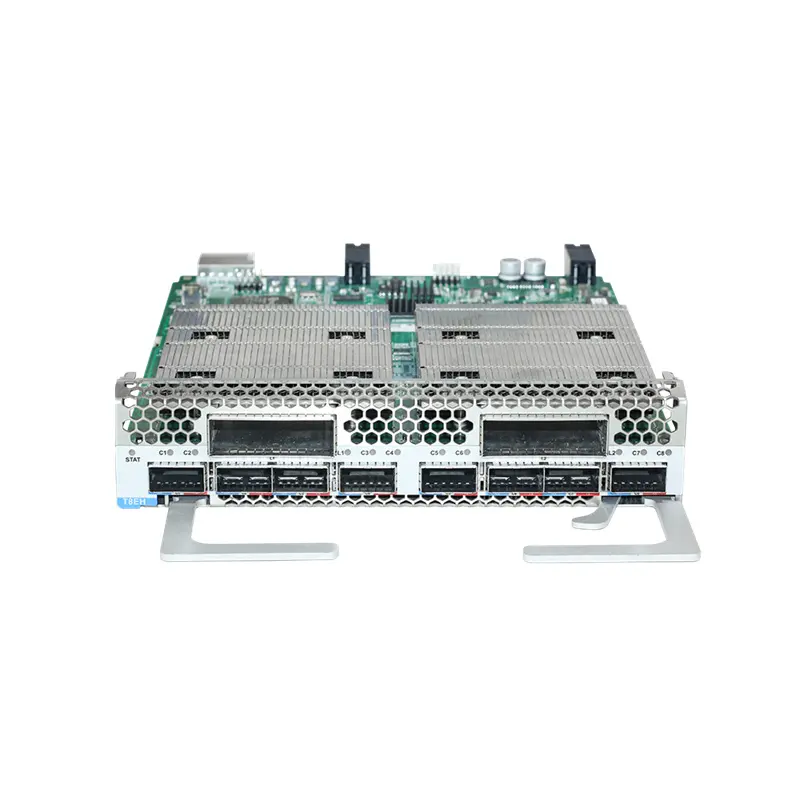
The technology that is behind 800G DCI is coherent optics because it allows utilizing the light amplitude and dual polarization for transmission purposes. Coherent transmission allows a more information-dense transmission over a single wavelength than the traditional direct-detection optics approach. Based on the foundation of coherent technology, Sino-Telecom offers DCI boards with support for up to 800G per board – and each board supports the optical module interfaces via the optical module interface on the board. This support delivers flexible deployment capability.
The design of the DCI board should be modular as well, making it possible to upgrade its capacity whenever needed through "hot swapping" of the board. Having the interface support for multiple types of optical modules and transmission distances on the board optimizes deployment options and gives us the ability to scale up the capacity (from 400G to 800G) seamlessly without the need to do a forklift upgrade.
Latency Challenges in AI Cluster Interconnection
AI training workloads are very sensitive to latency. Every microsecond difference when different GPUs in distributed training need to aggregate their gradients can be very costly. This is why our 800G coherent solutions will provide high capacity at very low latency.
The 800LR implementation, intended for unamplified distances up to approximately 10 km, delivers end-to-end latency under 250 nanoseconds. Compare that to 800ZR framing with end-to-end latencies exceeding 2 microsecond. This should allow for shorter latency with these all-optical solutions for campus sized AI clusters at nearer locations. However at greater distance, high architecture solutions such as all-optical mesh networks with 1ms edge to core latency circles are currently being put into place for AI training over larger areas. Overall, the latency for 800G coherent optics will still be acceptable in most cases for AI training if the distance is suitable.
Real-World 800G Deployment Considerations
Implementing 800G DCI in AI infrastructure entails planning around multiple areas, power and thermals, 800G ZR modules will run in the 24–25W range so, power will need to be a concern, make sure you know your platforms have the right cooling for this in terms of how many ports they can pack. Check what your switches/routers support from a thermal perspective when packed with 800G ports.
Distance needs to factor in as well. The 800ZR has range of up to 120km with amp and fits the metro DCI use cases. We have low power 800LR use cases that bring latency down for metro campus networks. Metro edge all optical switches can provide deterministic latency circles (1ms, 5 ms and 10ms) with mesh and bring all AI traffic for a distributed cluster.
Preparing for the Next Step: 1.6T DCI Evolution
And the road to 1.6T seems to be visible. In response to this, OIF is working on implementation agreements of 1600ZR and 1600ZR+. Advanced DSP and higher baud rate in future generation of coherent solutions will double the capacity without sacrificing distance.
This change is driven by companies like Sino-Telecom. We develop our DCI portfolio based on modular, future-proofing platforms that facilitate the current 800G requirements and guarantee simple upgradability to 1.6T. Our optical platforms embody 241 patents, leveraging the state-of-the-art R&D center to implement a variety of the newest coherent optical tech including the latest generation, which go beyond the 800ZR to the 1.6T.
Conclusion
As AI workloads migrate from scale up to scale out across distributed campus and metro clusters, 800G DCI becomes the vital building block, providing double per wavelength capacity, low per bit power, and sub-250ns latency needed for synchronous GPU training, with an explicit 1.6T roadmap keeping your investments current. With the modular Sino Telecom STN6800 D16 OTN platform and the industry’s fullest complement of 800ZR/800LR coherent pluggables, an open NMS with SNMP/NETCONF access, and future-proof modular chassis ready for simple 1.6T upgrades, Sino Telecom’s optical layer offers a balanced blend of speed, reach, power and cost designed to optimally support today and tomorrow’s AI networking requirements. As the premier global DCI provider-over 100,000 units deployed worldwide, we leverage a decade of expertise, a proven and resilient supply chain, and a global presence spanning over 30 countries to ensure success at every turn-optimizing everything from the fiber to the furthest node, for a trouble-free and future-ready transition into AI data infrastructure. Talk to the Sino-Telecom Sales Team for a quote today, a complete offering from solution to execution, powered by a decade of leadership in data center interconnectivity.
Table of Contents
- How AI Workloads Are Changing Data Center Traffic Patterns
- Why 800G Has Become Critical for AI Data Center Interconnect
- The Optical Technology Behind 800G DCI: Coherent, DCO, and Fiber Requirements
- Latency Challenges in AI Cluster Interconnection
- Real-World 800G Deployment Considerations
- Preparing for the Next Step: 1.6T DCI Evolution
- Conclusion