
 EN
EN
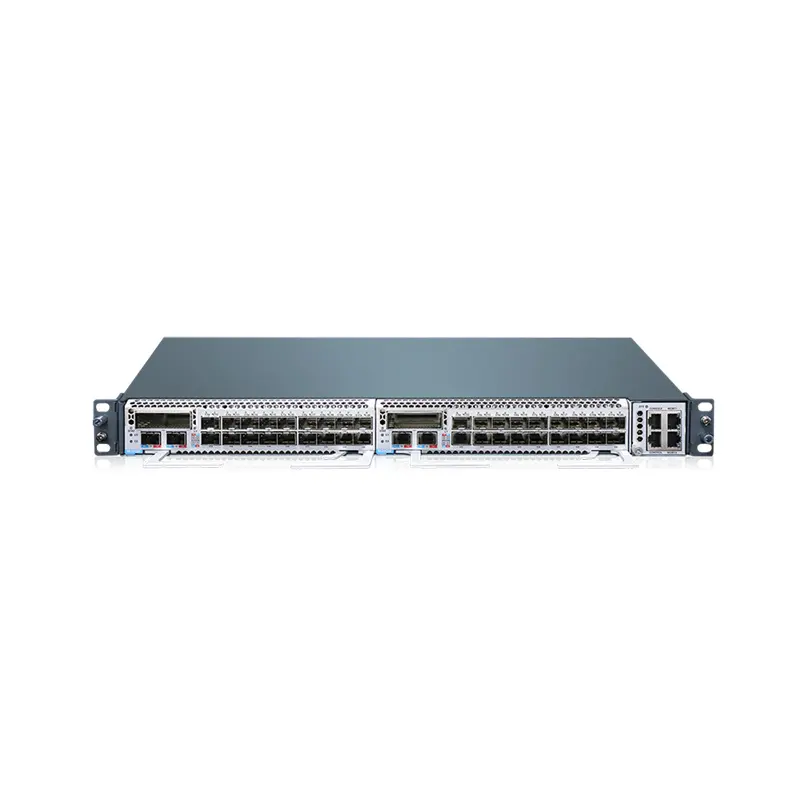
The digital economy – and the unprecedented surge in AI workloads – is fundamentally reshaping the architecture and deployment of data center interconnect (DCI) networks. This transformation is accelerating as distributed cloud takes root and data center training clusters reach massive scale. The race to build a scalable, resilient, and operable "metro DCI" network is no longer a choice but a necessity for operators and data center providers alike.
Why Metro Networks Are Becoming the New DCI Bottleneck
While long-haul and subsea DCI networks hog most of the attention, metro networks are quickly becoming the de facto bottleneck for DCI expansion. Simply stated, available fiber in most corridors is limited and fiber leasing costs continue to climb. As the AI revolution accelerates, traditional architectures – designed for incremental progress – can no longer keep pace with bandwidth growth. The promise that there is an infinite supply of fibers on hand has been an illusion all along.
Designing Metro Optical Architecture for High-Density Connectivity
Instead of stretching the bounds of what is possible, we must learn to maximize the fibers that we have. It’s time to move from a fiber-expansion model to one of fiber-efficiency for metro DCI infrastructure. We need a network design and buildout philosophy that is focused on density and integration.
This entails shrinking the size and increasing the density of optical devices – replacing chassis-based systems with compact devices designed for maximum bandwidth per rack unit. This means getting more performance, with more room to grow in space-constrained data centers, as well as minimizing footprint in central offices. Modern metro DCI requires a modular design that scales incrementally.
Scaling Capacity from 400G to 800G and Beyond
The small, flexible footprint means you can expand your network just as needed - you won’t need to fully overhaul your infrastructure or do major rewrites because you ran out of rack space or added capacity beyond current system specs. What does it take to scale up from 400G to 800G, and beyond? At the core of scalability is an infrastructure capable of evolving efficiently from 400G to 800G and beyond. This entails platforms that support the very latest coherent optics and have flexibility regarding client and line-side interfaces, allowing you to integrate current 400G requirements easily and step up to 800G (and higher) when economically justified and needed.
Improving Availability Through Protection and Resilience
With the growing role of DCI as the backbone for mission-critical applications, including AI and cloud, ensuring continuous and reliable network availability is paramount. The system needs to be built with robust protection and resiliency at every level – from the power supply and cooling components to individual network paths – guaranteeing uninterrupted service. The 1+1 optical line protection and equipment-level redundancy offered by intelligent metro DCI platforms provide critically needed protection and resiliency ensuring adherence to the most demanding service level agreements (SLAs).
Optimizing Metro DCI Operations and Management
The operational aspect of scaling up DCI is itself challenging. A modern metro DCI must be simple to operate, yet powerful. This means utilizing open, standard interfaces and software, such as NETCONF and SNMP, so the devices are easily integrated with your existing network management system.
Real Deployment Scenarios for Operators and Data Centers
This dramatically improves operations, reducing operational costs and making it possible to manage an exponentially growing network without a linear increase in staffing. A modern metro DCI platform is highly versatile and can solve many real-world problems. High speed and high capacity transport can connect distributed cloud providers or hyperscalers, supporting AI training, and allowing efficient data replication for storage. For service providers, metro DCI solutions can significantly lower build costs for existing metro networks while allowing you to deliver more capacity, with better performance, to enterprise and residential customers.
In both cases, your investment becomes a truly reliable foundation to scale. The STN6800-D16 series modular system can be deployed anywhere – from central offices to existing data centers.
Conclusion
In today's AI driven world, the metro network is the key component of the DCI chain. However, this is no longer sufficient to address the requirements of explosive data growth and the need for fiber efficiency – a new approach is needed to metro DCI. This requires high-density, scalable platforms that can easily scale up from 400G to 800G and further, and offer resilience and ease of operations.
Sino-Telecom Technology Co., Inc. is one of the leaders of this revolution. Our commitment to technological leadership and operational excellence is reflected in our innovative products and services. Our continuous investment in R&D has developed a strong portfolio and gained a lot of experience. Our state-of-the-art research center and extensive IP portfolio – with 241 patents and 156 software copyrights – reflect our dedication to innovation.
Sino-Telecom is a top-tier, reliable and trusted international DCI supplier—with over 100,000 units shipped. For metro DCI scenarios, the industry-leading density and scalability of our STN6800-D16 series modular DCI OTN platforms (1U 6.4T / 2U 12.8T) are offered. Our complete optical networking visibility suite, optical transceivers, and this platform are engineered to enable you to create scalable, high-performance optical networks for the AI age.Looking forward to creating a metro DCI network for the future? Call us today to get a free consultation or quotation.
Table of Contents
- Why Metro Networks Are Becoming the New DCI Bottleneck
- Designing Metro Optical Architecture for High-Density Connectivity
- Scaling Capacity from 400G to 800G and Beyond
- Improving Availability Through Protection and Resilience
- Optimizing Metro DCI Operations and Management
- Real Deployment Scenarios for Operators and Data Centers
- Conclusion