
 EN
EN
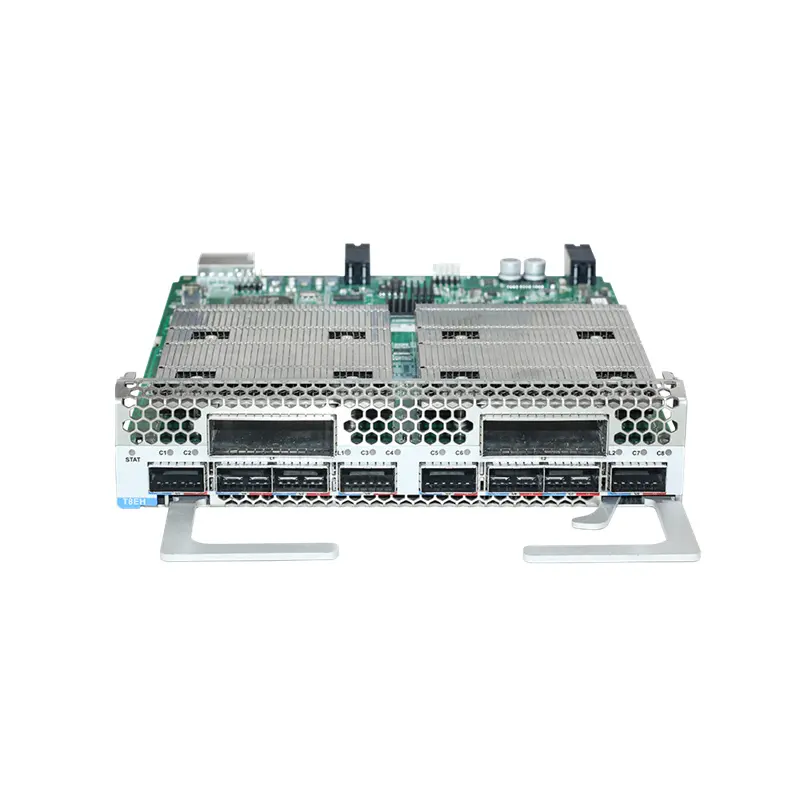
That is true particularly in today's fast-growing artificial intelligence (AI) and cloud services age, where data centers are one of the fastest-growing infrastructures within urban networks. The current challenge facing network operators is not only linking data centers together, but to do so rapidly and efficiently. This has led to Metro DCI being the preferred approach for network operators to overcome capacity-demand to physical-size constraints in urban environments.
The Urban Challenge: Fiber, Distance, and Density
Metropolitan areas have their own physical barriers which are often overlooked. The more people there are in the city, the more congested the city will be. Where there is available fiber corridors, they are rare, and rights-of-ways are very costly – sometimes too high of a price. These, in turn, are quite tangible limitations on optics transmission. Such restriction can also cause significant difficulties in achieving distance between data centers (typically deployed to distribute data traffic and provide greater reliability).
This density issue is manifested as saturation of fiber pathways in the city, first of all. Network operators have very little room for extending their capacity given the load on existing infrastructure. Second, urban areas also see a continued increase in data center density, too, as edge computing centers and other distributed data centers for AI spring up everywhere in the urban infrastructure. This is just beyond the capacity of previous DCI methods. Research validates the needs of tomorrow's networks – dedicated, hard slices of the network with ultra-low latency and controlled by automation – which will enable future network requirements.
Reducing Latency Through Better Network Design
The city is all about milliseconds – and often microseconds in the data center world. Microseconds can be the difference between winning or losing for high frequency trades, distributed AI training and other applications. Standard transmitter/receiver sets for transponders and other functions are required to implement additional processing steps, and increase transmission time.
This is where pluggable coherent optics comes in to change how latency has to be managed. By eliminating separate transponder stages, pluggable optics enable direct interaction between the data center network and IP transport – removing multiple processing steps from packet transmission and reception. Advanced signal processing which deals with fiber optic aberrations in real time further decreases transmission times. MTN (Metro Transport Network) technology can enable ultra-low latency via the rigorous network slicing demanded by city networks.
Getting More Capacity Out of Existing Metro Fiber
Because metro fiber is scarce and expensive, it is important that we take full advantage of the fiber we already have. The secret in this is coherent optics. New modulation techniques like 16 QAM can convey much more data on each wave in current city metro DCI applications than was possible with previous technology, using coherent optics.
This is what gives the optical fiber system a high spectral efficiency, sending a lot of terabits per second through the one pair of optical fibers.
There are, for example, several modular integrated OTN/DCI solutions that within 2 units of hardware can handle 12.8 terabit data rate, the higher the denser the connections and the smaller the footprint in already established or challenging areas. It's extremely useful in an urban network that's getting more and more traffic by allowing for growth through adding pieces, rather than the costlier, time consuming project of new fibers.
Monitoring and Managing Metro DCI Performance
Fiber transmission in urban networks will encounter numerous anomalies that could disrupt service: dynamic temperatures, accidental physical interference with cable, varying network traffic patterns. Efficient network management with good visualization can address all issues. Some coherent metro OTN DCI equipment now incorporates OTDR which would alert operators and aid in pinpointing network problems in both layer 1 (physical/fiber) and layer 3 (IP/data) communications.
Additionally, a single station that can monitor an entire metro network will allow network operators to diagnose problems as soon as they start, and manage capacity in real time.
Support for various protocols such as SNMP/NETCONF will simplify these network functions and speed up the management tasks.
Practical Strategies for Long-Term Metro Network Optimization
Long-term Metro DCI solutions would involve having a future growth strategy, the use of optimal resiliency practices in the urban networks, architectural simplicity as well as automation within these networks,
Plan for future capacity: Build with an option to easily scale beyond 400G and into 800G and above, by beginning to deploy 200G/400G coherent optics now.
Build resiliency: Utilize optical layer protections capable of rerouting optical circuits below 50ms following even very catastrophic cuts in the fibers. City areas frequently see optical transmission failures from accidental physical interruptions to the cables; resiliency in metropolitan areas is key.
Simplify the network: Fewer layers of equipment and a simpler architecture dramatically reduce costs and accelerate new service installations.
Adopt a 'pay-as-you-grow' model: This allows for incremental expansion of network capacity within the urban network, as it is necessary.
Employ automation: Deploy intent-based networking systems to automate provisioning and dynamically optimize traffic paths.
Conclusion
The city's needs for high-performing metro DCI will continue to expand as the growth of its network continues. To meet the demands for massive data capacity – faster, more reliably, and with far less physical infrastructure – coherent optics, modular networks, and intelligent control are essential for metropolitan DCI. Sino-Telecom has crossed the waters and is at the forefront of the optical transmission revolution that will connect different data centers and usher in the latest technology.
We have shipped well in excess of 100,000 units to clients worldwide, and we bring the expertise and understanding gained over the past few decades of optical fiber transmission into our solution of today's metro DCI networks.
Sino-Telecom provides fully configured transport-optimization platforms: the STN6800-D16 coherent OTN platform with transponder cards and muxponder cards. It is available in 1U 6.4T or 2U 12.8T configurations, suitable for the highest density, capacity, and reliability in dense metropolitan area networks.Currently we have 241 patents and 156 software copyrights, and will always seek to excel in network solutions. Let Sino-Telecom take care of your Metro DCI needs. Our team is ready to help you design and deploy the right metro DCI solution. Call us today for a free consultation and/or custom design proposal.