
 EN
EN
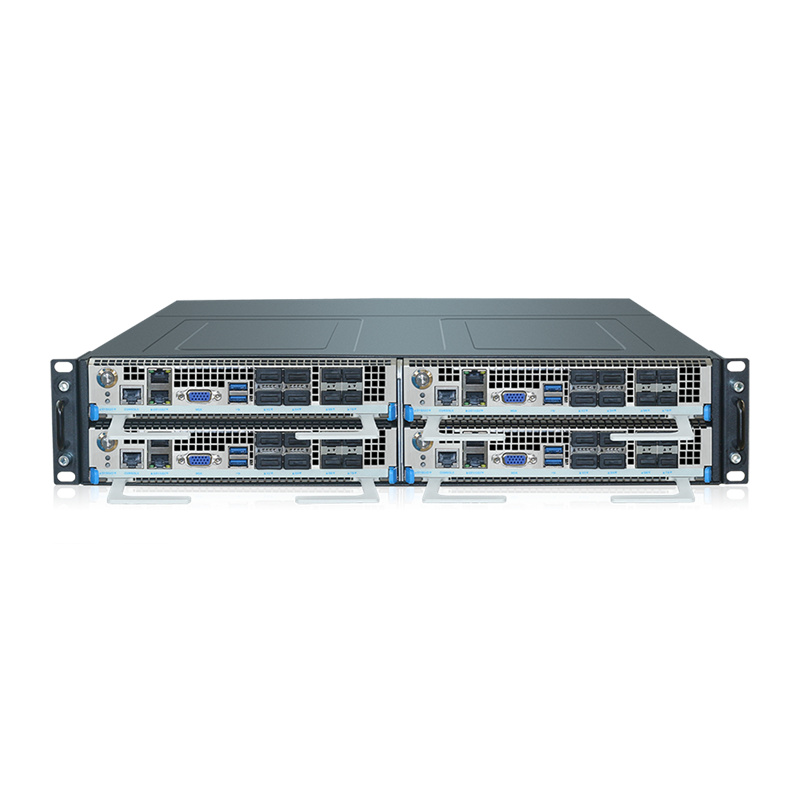
Deep Packet Inspection: What Role Does It Play in ISP Network Operation?
ISPs are facing increasingly challenging network environments. Subscribers have never had higher expectations for quality of experience. The traffic mix on the network changes daily, and security threats are becoming increasingly sophisticated. ISPs need a level of visibility well beyond simple interface counters and link utilization graphs to maintain control of their networks. Deep Packet Inspection has emerged as a critical operational tool providing the granular detail to truly understand exactly what is traveling across the network.
What is Deep Packet Inspection (DPI) in ISP Networks
Deep Packet Inspection involves inspecting packet payloads in addition to header information such as destination and source IP address. While traditional network monitoring tools are limited to examining Layer 2 through Layer 4 information-MAC address, IP address, port and protocol type-Deep Packet Inspection allows visibility all the way up through Layer 7-the application layer. In a broadband network, this means identifying which applications are consuming bandwidth, what data they're transferring, and what patterns exist in network traffic behavior. A deep packet inspection tool can distinguish between a video stream, a file download, a voice call, or a software update—traffic that might otherwise appear identical due to shared destination port numbers or encryption. Pattern matching, behavioral heuristics, and machine learning allow for this granular level of inspection.
Key Roles of Deep Packet Inspection in Network Operation
The first role is traffic classification and trending. By being able to continually categorize types of applications, ISPs can understand how subscriber behavior is changing over time-whether streaming video is increasing over standard web browsing, whether the amount of encrypted traffic is growing, or whether peer-to-peer has seen a resurgent rise in popularity. The second role is quality of experience correlation. Tying network performance to specific applications allows the ISP to answer the question: was this video rebuffering event due to network congestion, or is there an issue at the content provider? The third role is security detection. Malicious traffic, such as data exfiltration commands, malware command-and-control sessions, or DDoS attacks from multiple source IPs-can be flagged by inspecting packet payloads for specific signature, behavioral patterns, or cryptographic indicators that standard tools alone cannot detect. The fourth role is capacity planning. If you understand which applications are causing the biggest spike in network utilization then you can build the optimal network, avoid building the wrong thing at the wrong time and running into a capacity shortfall or an overprovisioned waste.
How DPI Helps Monitor ISP Network Status
It is never enough to know when the link goes down. ISP network status requires continuous, real-time insight into what is happening with services traversing the network. Deep Packet Inspection allows ISPs to track transaction completion rates for applications such as online banking platforms or government websites. If this rate dips below a threshold, the operational teams are immediately alerted to the potential customer issue before customers have a chance to call in. DPI can also look at how various protocols are performing. Is too much packet data being retransmitted? Are packets being delivered out of order? Is there an abnormal window scaling rate that is indicating a problem with an underlying path? For ISP services such as voice over IP and video streaming, DPI measures mean opinion score equivalents and video start-up times on an end-to-end basis without requiring expensive synthetic probe networks.
DPI for Identifying Network Anomalies
Network anomalies come in a variety of shapes and sizes, and Deep Packet Inspection excels at detection. Bandwidth anomalies-large bursts from an individual subscriber or a group of subscribers-often indicate infected systems sending amounts of data or malicious denial of service activity. By inspecting the flows and the actual payloads, an ISP's DPI system can identify the type of activity that is causing this abnormal consumption. Behavior anomalies are also an area of extreme importance for the ISP network-is an otherwise benign home user's machine suddenly sending vast amounts of data out to unexpected places on atypical ports? This is a clear indicator of a compromised machine attempting to become a part of a botnet. Protocols that deviate from what would normally be expected such as malformed packet payloads and peculiar header options can be indicators of potential exploitation. By looking continuously at packet payloads, a deep packet inspection tool can offer the first warning of impending issues in the network before those issues cascade.
DPI Simplifies ISP Network Maintenance
Day-to-day maintenance tasks are made considerably easier when network visibility provided by Deep Packet Inspection is in place. When end users are calling in about poor network experience, the helpdesk can quickly pinpoint the issue as being on the subscriber-side, with an external content provider, or on the ISP's own network. Slow web browsing could be due to a problem at a content delivery network edge server rather than a problem with the ISP's own infrastructure. Scheduling maintenance windows can be optimized by understanding at which times specific segments of the network are not experiencing peak load. Validating maintenance has never been easier: after work completion, DPI metrics can be compared before and after to confirm no negative performance impact was experienced or that no new issues were introduced.
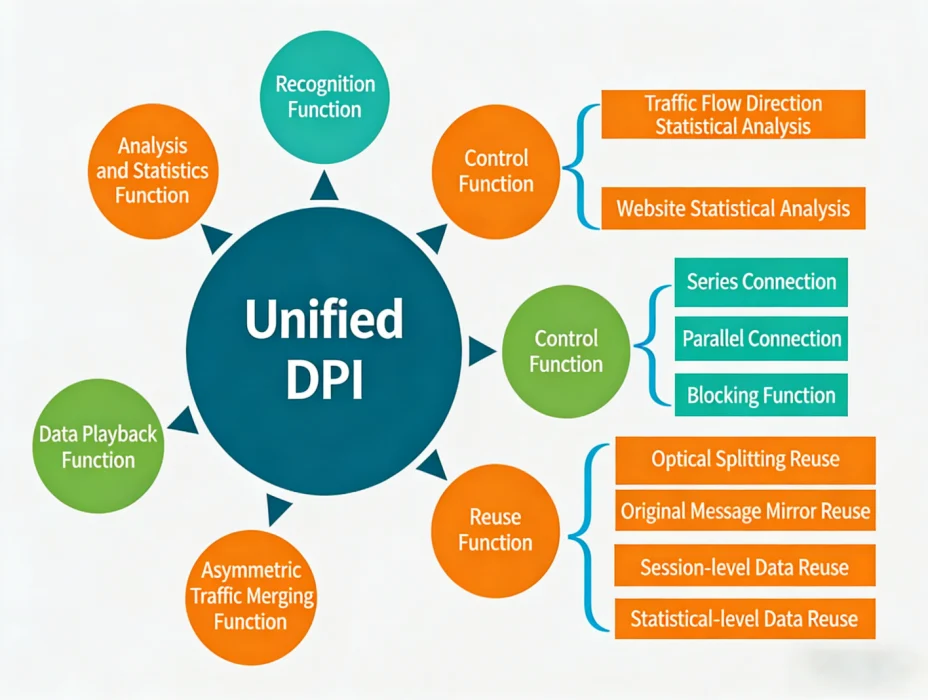
Practical DPI Solutions for ISP Operations
Deploying deep packet inspection capability at the ISP necessitates specialized hardware that is capable of processing traffic at line rates while not introducing latency or drops into the packet stream. Sino-Telecom offers deep packet inspection solutions as part of its broader network visibility product suite. Our DPI solutions include physical hardware, as well as virtualized platforms that scale to over 100 Gb line rates, supporting thousands of applications, with regular signature updates to provide visibility even for encrypted traffic. Dashboards provide intuitive, granular views of the network and traffic. Historical data retention and trend analysis provide insights for planning future capacity additions and service offerings. Our DPI solutions can also push notifications via standard network protocols so that they can be easily integrated with existing orchestration platforms. With 240+ patents filed and 150+ software copyrights granted for deep packet inspection and network security, our DPI solution has been deployed in dozens of countries-from startups to major Tier 1 and Tier 2 ISP networks worldwide.
Conclusion
Deep Packet Inspection is essential for the upkeep of an ISP's modern network. From classification and quality assessment to anomaly detection, security, and network maintenance, DPI is unmatched in providing intelligence across the network.
Should you require 10, 40, or 100 Gigabits per second line rate throughput and the ability to inspect thousands of applications on the fly, speak to our engineers. You can contact us via our website or through email.
Table of Contents
- Deep Packet Inspection: What Role Does It Play in ISP Network Operation?
- What is Deep Packet Inspection (DPI) in ISP Networks
- Key Roles of Deep Packet Inspection in Network Operation
- How DPI Helps Monitor ISP Network Status
- DPI for Identifying Network Anomalies
- DPI Simplifies ISP Network Maintenance
- Practical DPI Solutions for ISP Operations
- Conclusion