
 EN
EN
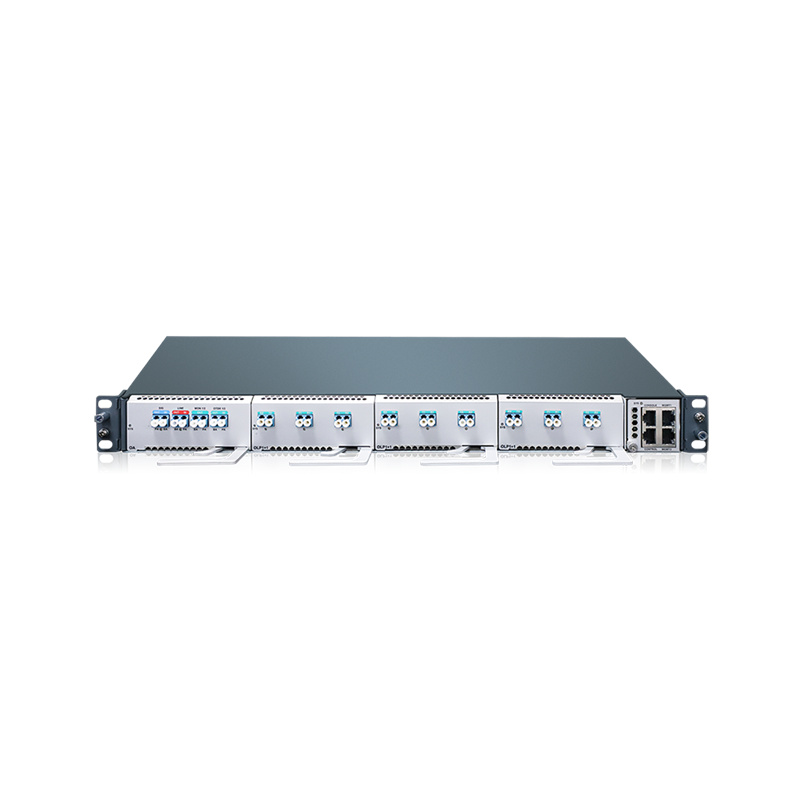
The current network paradigm with tightly coupled hardware and software, proprietary interfaces and vendor lock-in is under ever increasing pressure because of the demands of the modern digital economy. Data center interconnect (DCI) networks are evolving to support all the needs of the evolving AI workloads, distributed cloud services, and rapidly increasing number of traffic types. There has never been a more critical need for agility, programmability and cost optimization in the world of data center interconnect (DCI) networks. Enter open networking: a philosophy and architecture driven principles that remove the notion of hardware from software and encourage common open interfaces, as well as enabling the operators to build their own network as they see fit. We believe this change is what we can accomplish at Sino-Telecom Technology Co., Inc. with our open and disaggregated solutions.
Understanding Open Architectures in DCI Networks
At a very high level, open networking for DCI basically involves divorcing management and control software from the optical hardware. An open architecture platform enables optical transmission equipment, network management systems, and third-party applications to communicate through standardized interfaces and APIs. Normally, the software management layer provides unified configuration, monitoring, and resource management capabilities, allowing operators to simplify network operation and integrate optical transmission equipment into higher-level management platforms.
Open architectures can also be used for machines that have an optical line system installed by a vendor like Sino-Telecom and an independent choice of network operating system (NOS). This decoupling allows innovation and makes it possible for operators to select the optimal-of-the-best components, not necessarily from a single vendor.
Traditional Systems vs Flexible Deployment Models
Traditional direct control systems are sold with a single system – the hardware, operating system, management software and support – and frequently the system interfaces are proprietary, meaning that no other systems are integrated into the solution. They are very complex and well-tested systems, and have limited flexibility. There is a need for new software releases to upgrade, forklift replacement may be required for scaling, and new features may take a long time to be added and will need vendor specific changes.
Open networking will offer high flexibility in deployment models and operators can build on the DCI network. The SDN controller is available in either a small sized DCI-BOX for metro links or a high capacity line system for regional routes. The model follows a “pay-as-you-grow” design, meaning that it enables incremental expansion through software upgrades and modular hardware expansion, reducing the need for disruptive network replacement.
This is applicable to topology as well; open architectures are flexible and can be used with either point-to-point or ring topologies, and can accommodate new requirements with no network-wide changes needed.
The Role of Open Interfaces and Software Management
An open DCI architecture's foundation is its interface ecosystem. APIs provide a seamless way in which the optical hardware and network management systems can communicate. These interfaces allow the operator to provide automated provisioning, watch optical parameters "real-time" and set the alarm based on the set parameters.
In an open environment, software management shifts from command line, reactive operations to data-driven, proactive management. The centralized controller enables the engineers to get a view of the entire topology of the network, understand whether any links are healthy or not and re-route traffic dynamically to avoid network congestion. Additionally, open architectures can enable an optical performance data stream to be transmitted in real-time, such as optical power, chromatic dispersion, pre-FEC BER. Operators can make good use of this information for predictive maintenance and be proactive at spotting degradation issues before a service is affected.
Operational Considerations in Open DCI Environments
With an open architecture there are also some operational considerations. Firstly, engineering departments must be able to operate in a disaggregated way, or have to learn to do so. The software layer is useful for a range of applications, but also requires expertise in SDN controllers and scripting, as well as in API integration.
Secondly, there are interoperability issues. There are different implementations of open interfaces, which are standardized. As a result, it's strongly advised vendors be present at interoperability meetings and that they have API and hardware specs available. Third, security should be considered at multiple levels: security of the optical transmission itself, security of the SDN controller, security of management API and telemetry data security. Finally, models of support are not necessarily the same: where hardware and software are being sourced separately, support contracts should be specified. There is a lot to be said for the agility, cost-effectiveness and future-proofing of investing.
Where Open Networking Fits in Future DCI Evolution
The path of networking points in DCI is clearly heading towards being open. The ability to quickly deploy, reconfigure and scale networks will be a competitive advantage for data centers as it gets more distributed and edge computing gains momentum. Open networking is the platform that will provide the opportunity to construct autonomous, self-optimizing networks. In a world of artificial intelligence, the ability to program and dynamically respond to the changing load is what an open architecture provides.
In addition, transmission speeds are approaching 800G, 1.6T, and higher, and that makes it cost prohibitive to develop proprietary solutions. Open architectures offer an opportunity to share resources, to establish shared building blocks and to create economies of scale. Operators hold the view that open networking is a future where they don't have to wait for any single vendor to follow their roadmap, but can incrementally add new technologies or upgrade parts of the network as it becomes available, and ultimately establish a DCI network that will grow with their business.
Conclusion
Sino-Telecom stands at the forefront of the global DCI evolution, combining over 15 years of ICT expertise with continuous R&D innovation to deliver future-ready optical and IP networking solutions. Our flagship 400G/800G DCI platforms, intelligent computing interconnect switches, and modular TAP/DPI solutions are engineered to meet the most demanding requirements of telecom operators, SMB ISPs, data centers, and system integrators worldwide—offering white-box compatibility, low-power coherent optics, and end-to-end network visibility. Complemented by our flexible SKD/CKD partnership models, comprehensive technical documentation, and full GPON OLT/ONU and transceiver portfolios from 10G to 800G, we empower partners to achieve local branding, policy compliance, and cost-effective scalability.
As an internationally leading DCI supplier with cumulative shipments exceeding 100,000 units, Sino-Telecom has earned the trust of industry giants including China Telecom and China Mobile, backed by Golden Supplier awards and a proven track record of reliability. Our commitment to precision manufacturing, innovation-driven design, and unparalleled customer service ensures that every solution we deliver is built for performance, longevity, and seamless integration.
Ready to future-proof your network infrastructure? Contact our team today for a customized solution or request a quote—and discover why over 100,000 units deployed worldwide make Sino-Telecom the partner of choice for next-generation DCI and optical networking.