
 EN
EN
Ultra-Long-Haul DCI: How Coherent Optics Enable 2,600km Transmission
As cloud computing, AI workloads, and distributed storage continue to scale, DCI service demand is reaching new heights. Data center network designers are seeking the ability to support communications across multiple thousands of kilometers, over an extremely long haul, without having to perform an array of costly electronic regenerations. That is precisely where the importance of coherent optics is found. Sino-Telecom Technology Co., Inc. has demonstrated 200G transmission across 2,600 km - and it is a real world application not a theory.
What Makes Long-Haul Transmission So Challenging?
Sending signals across hundreds and thousands of km of fiber is subject to a host of physical challenges. When a signal traverses many hundreds and thousands of kilometers of fiber there are several signal impairments including, among others: CD (Chromatic Dispersion), PMD and the degradation of the overall OSNR (Optical Signal to Noise Ratio). An IM-DD (Intensity Mod and Direct Detect) transceiver is basically trying to discern some type of signal level and has not inherently implemented ways to combat dispersion and noise.
They often rely on OEO (Optical-Electrical-Optical) conversions to regenerate the signals. Although this has proven beneficial in terms of throughput, there has been overhead in the form of latency and power costs, together with complexity to implement in any given router system. By comparison, a 2,600 km route, which would require 35 optical regenerators, is simply not a practical solution with IM-DD.
Coherent Technology Behind Long-Distance Transmission — A Sino-Telecom Success Story
Coherent optics is a more advanced transmission technology that relies on detecting both the intensity and phase of optical signals, often with the added use of dual polarization multiplexing and DSP algorithms. As opposed to direct detection which just measures intensity, coherent detection requires the addition of a local oscillator laser to mix with the incoming optical signal, thereby enabling detection of phase and polarization (along with the signal’s intensity). Sino-Telecom has always been pushing for more distant data transmission, and one of our most notable recent projects uses the cutting-edge, low-attenuation G.654E optical fiber along with a suite of powerful EDFA optical amplifiers that amplify signals to acceptable levels. The heart of this solution, however, is the digital signal processing (DSP) engine which allows for digital compensation of CD, PMD and frequency shifts in real-time. This digital compensation eliminates the need for many in-line dispersion compensation modules and extends spacing between optical amplifiers dramatically. This makes long distances economical, as demonstrated in our G.654E fiber project.
200G Over 2,600km — A Real Deployment Case
Sino-Telecom’s innovation is demonstrated through this test project. We wanted to establish a model for an open optical network for long distance transmission, utilizing G.654E optical fiber and EDFA amplifiers to improve signal gain and attain adequate levels of transmission performance. In this project we built and tested a 200G system over G.654E fiber that was able to transmit a single wavelength signal over a distance of 2,600 km, requiring only 35 optical relay spans, without any electrical regeneration. This is a massive improvement over OEO regeneration technology and represents a huge leap forward in transcontinental data center interconnects.
400G Over 1,000km and What's Next
Achieving high-speed (400G or more) over long distances can sometimes be more complex because the higher speed typically implies a higher symbol rate or modulation format which could create additional OSNR impairments. In the same test scenario, Sino-Telecom tested and achieved a 400G single wavelength system that transmitted 1,000 km over G.654E fiber with only 15 optical relay spans (again, without electrical regeneration). As capacity increases, the distance decreases due to added link impairments. In the future, the advancement of digital signal processing (DSP) algorithms with enhanced forward error correction (FEC) and probabilistic constellation shaping, as well as ultra-high baud rates of 200Gbaud will continue to push the distance envelope further for both 400G, and then eventually for 800G and 1.6T ultra-long haul DCI networks.
Planning Long-Haul Routes: Site Selection and Margin Design
Deploying an ultra-long haul DCI link isn’t just a plug and play operation; careful planning is essential. Fiber type is an important site consideration. In this case G.654E results in very low loss, but the same circuit built using a prior G.652 would require planning for a dispersion management system. The location and density of amplifier sites also must be carefully calculated; you’ll want to balance increasing signal power with adding unwanted noise. Margin design is likewise a critical component. Analytical quality of transmission (QoT) models need to include margins to compensate for unknown values like connector loss, amplifier gain variations, and fiber type differences. In more advanced networks, some operators use machine learning models that are able to gradually reduce these margins as they accumulate data.
From Testing to Production: What Operators Need to Know
Once a model is validated and ready for production deployment, operators should take the following steps: Conduct rigorous optical line system testing including full characterization of all amplifiers under all operating conditions. Implement open network interfaces like SNMP and NETCONF, alongside robust NMS (Network Management System) based on B/S architecture, to ensure seamless integration with third-party integrated network management systems and allow for dynamic provisioning. Plan a staged deployment, starting with a dark fiber pair, testing and monitoring, then expanding the network. Ensure you have robust protection mechanisms such as OCH protection that provides fast failover in case of fiber breaks. With these plans in place, ultra-long haul DCI will go smoothly from proof-of-concept to production.
Conclusion
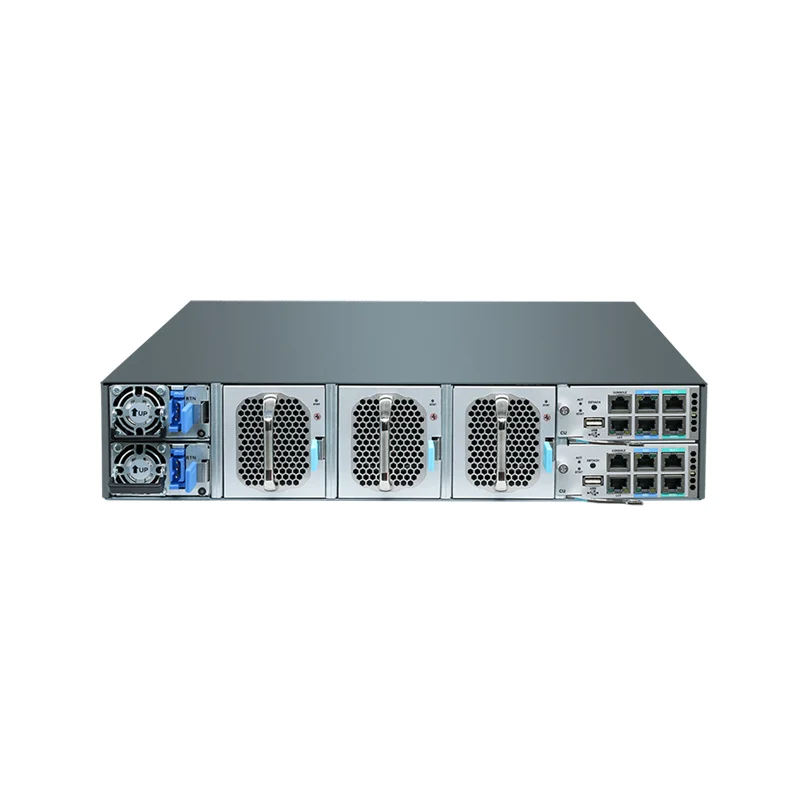
As a globally leading DCI supplier with over 100,000 units shipped to date, Sino-Telecom's successful demonstration of 200G over 2,600 km and 400G over 1,000 km—using ultra-low-loss G.654E fiber, EDFA amplifiers, and advanced coherent optics—showcases the remarkable progress of optical networking. With the capability of ultra-long haul DCI without OEO regeneration, now data centers can be connected across great distances, enabling truly distributed cloud deployments and massive artificial intelligence compute requirements. With our full line of coherent optical transport solutions, from our powerful DCI solutions like the highly compact 2U STN6800-D16-2U platform which delivers an ultra-large transmission capacity of up to 12.8T, to our comprehensive array of optical transceivers, Sino-Telecom can support your needs for ultra-long haul DCI. Please contact us today to discuss your ultra-long haul DCI network needs, get a quotation, see the detailed specifications, and view case studies including our 2,600km transmission demonstration to extend your network further than before.
Table of Contents
- Ultra-Long-Haul DCI: How Coherent Optics Enable 2,600km Transmission
- What Makes Long-Haul Transmission So Challenging?
- Coherent Technology Behind Long-Distance Transmission — A Sino-Telecom Success Story
- 200G Over 2,600km — A Real Deployment Case
- 400G Over 1,000km and What's Next
- Planning Long-Haul Routes: Site Selection and Margin Design
- From Testing to Production: What Operators Need to Know
- Conclusion