
 EN
EN
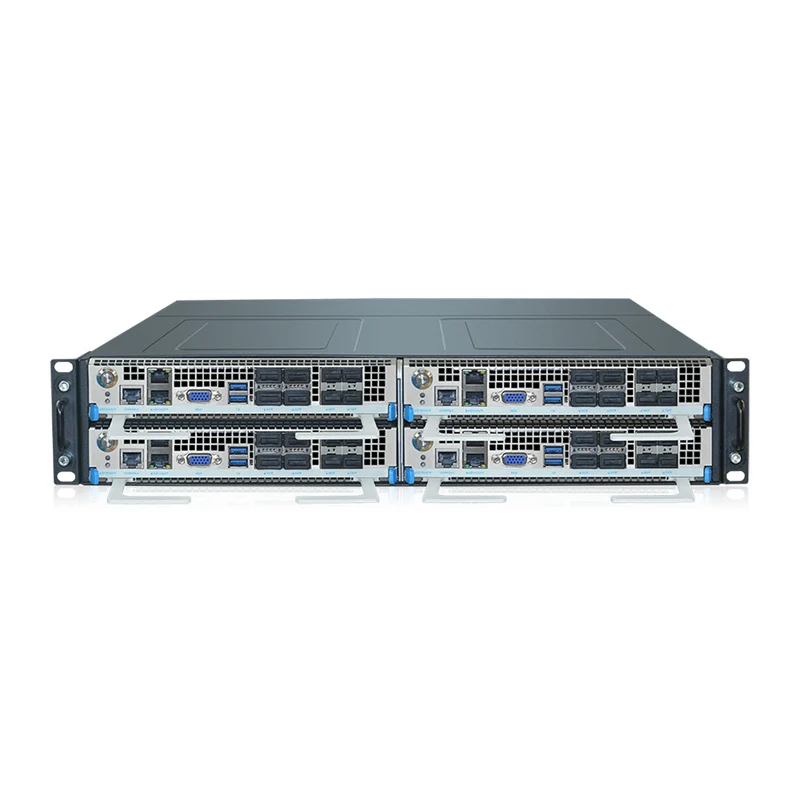
The DCI (Data Center Interconnect) landscape really shook up over the last couple of years but today marks another moment with the release of the DCI-BOX indicating network architects are still feeling budgetary constraints despite overwhelming demand for bandwidth. Traditional WDM/OTN chassis market faces new pressure from the module-based solution that is small in size and flexible enough to be deployed into diverse forms and sizes. Which approach is best for your infrastructure? Understanding the major differences in these architectures will be crucial before deciding where to place your investment. At Sino-Telecom Technology Co., Inc. we provide both options to make it as simple as possible to find what suits you.
Understanding Traditional WDM/OTN and DCI-BOX Architectures
Traditional WDM/OTN hardware has been the heart and soul of long-haul and even metro transport for the last 30+ years. Of course these are often big, chassis based systems, commonly more than 10U tall, in a dedicated cabinet. This allows their implementation with enhanced electrical cross-connect capabilities that comprise intricate OTN switching, agile multi-service aggregation (ranging from STM-N to 100GE) and advanced non-point-to-point (mesh) topologies. They have been designed for high reliability carrier environments, and support a range of extensive protection schemes, while operating on -48V DC power.
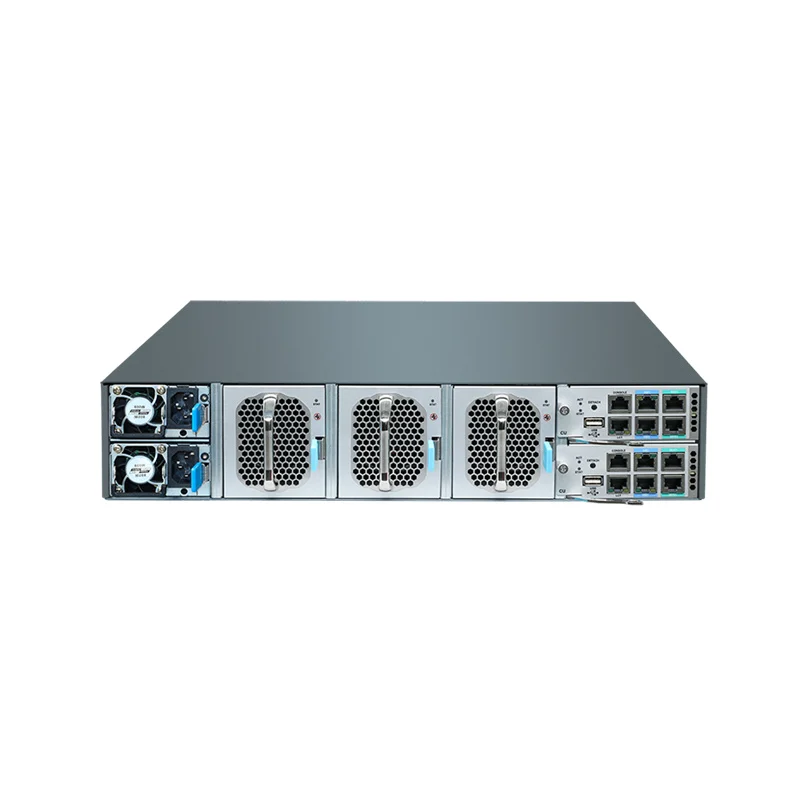
DCI-BOX is something different, however; it is a new paradigm in "small and refined" architecture. These 1U or 2U compact devices are targeted at the data center environment. They're able to power up from 220V AC, high-voltage DC and -48V DC, and they're designed to be cooled using front-to-back airflow, which is consistent with DC hot/cold aisle containment. The DCI-BOX products use TMUX (transponder/muxponder) service boards instead of a full OTN electrical cross-connect matrix to provide the fastest point-to-point transmission of up to 6.4T in 1U.
Key Differences in Deployment, Scalability, and Operations
The two systems are very different in their mode of operation. Traditional WDM/OTN systems are designed for high-capacity, long-haul applications, while the DCI-BOX delivers up to 6.4T in just 1U — making the latter far more space-efficient for data center environments. Adding service cards within the chassis or stacking additional subracks is also a costly process in terms of physical space and power planning that is required for scaling. These units are usually not optimized for the hot aisles of data center halls and deployment can be slow and require careful planning for cooling and power needs.
In contrast, the DCI-BOX can be stacked alongside other 1U or 2U networking equipment, aligning perfectly with the layout of modern data centers. In this pay-as-you-grow model, the deployment can be accelerated and extension can be made easily. DCI-BOX is very simple operationally. It is designed to allow for easy replacement of the service boards, optical amplifiers and power supplies, making maintenance easier. In addition, most DCI-BOX platforms support open interfaces and SDN, allowing the ability to connect with third-party controllers and to minimize vendor lock-in. Standard WDM is traditionally vendor-specific network management.
Cost Comparison: CAPEX, OPEX, and Scalability Over Time
The economic case for DCI-BOX is strong, especially for metro and regionals. The aim of the design of the DCI-BOX devices is to reduce capital and operation costs. From a CAPEX point of view, the simplified architecture employs fewer components and hence has lower upfront purchase cost. Consumption comes in as a game-changer too, as the typical consumption of a DCI-BOX device is less than 30W per 100G of capacity whereas traditional WDM equipment consumes more than 100W per 100G. This differential results directly in lowering of OPEX by lowering electricity and cooling costs.
Scalability over time also affects the cost curve. Traditional WDM systems tend to involve large up-front investments to provision a chassis for future growth, thus consuming capital. Adopting the DCI-BOX approach makes for a more granular, "pay-as-you-grow" financial model - capacities can be added when they are needed. In addition, by operating at very high capacities and ultra-long distance, the cost per bit of traditional WDM becomes more efficient, but from 100-300km metro and regional links, where the majority of DCI traffic exists, the economic profile of the DCI-BOX becomes more attractive.
Where DCI-BOX Fits: Metro, Edge, and Regional Networks
The DCI-BOX is best suited for metro and regional data center interconnects where point-to-point connectivity between data centers is common practice up to 300km. For instance, it could involve Data Center (POD) Interconnect, Cloud Network Access Point (POP) and Aggregation at the Edge, where extreme low latency at the microsecond level is vital. With its power efficiency and compact design, DCI-BOX is well suited for the existing data center racks, where it can be installed together with switches and servers. Traditional WDM/OTN systems are still used for national backbone and ultra-long-haul networks, or where complex OADM and mesh topologies are required. But these are edge cases for most DCI operators. For the metro and regional links where the majority of DCI traffic resides — point-to-point, under 300km, in data center environments — the DCI-BOX offers clear advantages in cost, power, density, and deployment speed. That's why over 100,000 DCI-BOX components are already in the field.
Making the Choice: A Decision Framework for Network Planners
The following questions should be asked when considering the choice of DCI-BOX versus Traditional WDM/OTN:
What is the distance? If the link is less than 300km, you might want to consider DCI-BOX as the most cost-effective solution. Traditional WDM or OTN may be required for advanced amplification and dispersion compensation for >500km.
What is the topology of the graph? Do you have mostly point-to-point networks? DCI-BOX takes care of this automatically. For complex add/drop requirements a traditional ROADM-based WDM platform is needed if ring / mesh required.
What is your power and space situation? DCI-BOX is designed for a modern data center that has AC power and hot/cold aisles cooling. The traditional systems are created for central offices in the telecom industry.
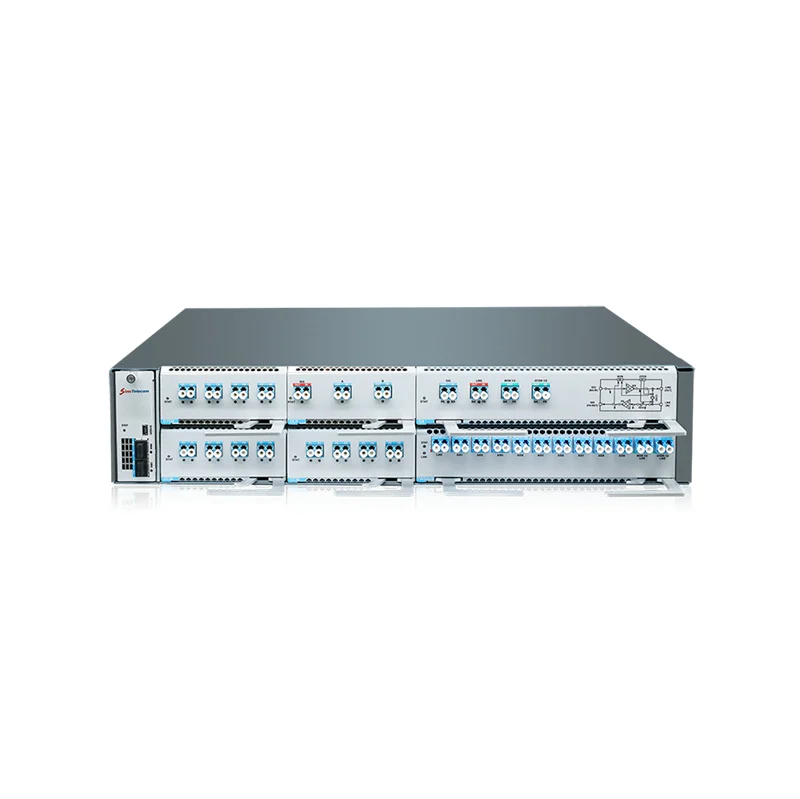
What services do you need? While early OTN devices focused primarily on Ethernet/IP traffic, modern advanced modular DCI-BOX platforms (such as the
STN6800 series) now offer full service agility. They can efficiently transport
not only Ethernet but also legacy SDH/SONET, SAN, and diverse OTN services.
Conclusion
Being one of the top global providers of DCI with over 100,000 units currently in operation around the world, we know that selection of DCI BOX vs WDM/OTN is not a universal one size – it really depends on distance, topology, budget and traffic. For the vast majority of metropolitan or regional DCI now in operation, DCI BOX holds definite cost efficiency, space efficiency, and deployment flexibility advantages. Nonetheless whether our popular STN6800 DCI BOX form factors, our 400G capable large scale OTN/WDM systems or elsewhere along our broad offering, our DCI products set the standard.
Let us assist you in planning the optimal blend and we'll get the cost just right. Connect with our sales representatives for pricing options, data sheets, and customer success stories; let's engage you. Send us your request using your e-mail or visit our connect web site now.
Table of Contents
- Understanding Traditional WDM/OTN and DCI-BOX Architectures
- Key Differences in Deployment, Scalability, and Operations
- Cost Comparison: CAPEX, OPEX, and Scalability Over Time
- Where DCI-BOX Fits: Metro, Edge, and Regional Networks
- Making the Choice: A Decision Framework for Network Planners
- Conclusion