
 EN
EN
While 4G networks used to carry mostly mobile broadband traffic with a relatively monotonous data pattern, 5G networks cater to a much wider range of service use cases. These use cases, namely enhanced mobile broadband, ultra reliable low latency communications, and massive machine type communications, impose individual demands and require specific control and visibility mechanisms from DPI. This article will explain, what the new demands are for the traffic and the limitations it places on conventional DPI, as well as discuss the main changes that allow DPI to be a part of a 5G network.
New Network Demands Brought by 5G
With new demands, there come new functionalities that were not available in 3G and 4G networks:
Network slicing enables operators to provide a dedicated logical network to their users on a shared infrastructure. The application slices could require varying levels of performance — for example, the mobile broadband slice would require a higher bandwidth while an industrial automation control system would require very low latency. DPI technology identifies which slice a flow belongs to, enabling policy-making that provides service-level guarantees for that slice.
Edge Computing provides better experience by moving computation and logic closer to end users in order to offer very fast application response times. The network architecture in edge computing is very distributed, and not all application flows need to terminate in the network core. Hence the DPI solutions need to have capabilities to handle a distributed network and offer consistency across it.
Encryption technology for user plane traffic over IPSec or similar protocols will be pervasive. However, extracting application information from the encrypted traffic is critical in a 5G network. This extraction must be reliable while maintaining security properties without decrypting large amounts of the traffic.
Early DPI Limits in Traditional Networks
DPI in 3G and 4G networks has some limitations which become even more critical in 5G:
Performance: The capacity of traditional DPI devices for 3G and 4G networks ranges from 10Gbps to 40Gbps, which may not be enough in 5G networks offering 100Gbps or more capacity.
Latency: While 10 microseconds was the expected DPI platform latency acceptable in the 3G/4G context, the need of sub millisecond end to end latency imposed by ultra low latency communications is much stricter.
Policy Dynamism: In traditional 4G DPI, it was more acceptable for policy to be static or updated in chunks periodically, but this does not meet the dynamic needs of 5G's network slicing and edge computing requirements which may demand minute-to-minute adjustments in policy and DPI enforcement.
Coverage: Application signatures had very limited scope in 4G and were also insufficient in identifying encrypted traffic, unknown applications and new protocols that were becoming more prevalent. Therefore, 4G DPI solutions lacked awareness of the traffic types running on the network. Centralized DPI deployment in 4G core network cannot fulfil visibility requirement from a distributed edge computing architecture.
Core Evolution of DPI for 5G Scenarios
Several improvements have enabled DPI solutions to be an integral part of the 5G network architecture:
Performance Evolution: Hardware acceleration is widely used to enable DPI devices and functions to process 100Gbps, 200Gbps or even higher traffic rates. Software functions of the DPI devices are also optimized in order to keep the performance to the required levels. The goal is always to inspect traffic without any dropped packets.
Latency Evolution: DPI technology introduces sub-microsecond latency in any user plane flow, which is acceptable from an ultra low latency communications perspective.
Architecture Evolution: Today, DPI function is no longer a monolithic centralized hardware component at the core network, but it is increasingly being virtualized and distributed in the network where it is needed, such as on radio access network edge nodes, aggregate points and core network. Virtualized functions can be deployed elastically and scale automatically with demand.
Encryption: The ability to handle encrypted traffic by analyzing flow behaviors or using machine learning approaches to classify without decryption — has improved greatly, balancing security and performance. New applications signature are now being updated on an almost daily or hourly basis in order to detect the new emerging protocols.
Better User Experience and Traffic Control
A stronger DPI solution will benefit users in many ways:
Enhanced user experience: The use of DPI in 5G allows for fine-tuned policy controls to be executed based on the individual service use cases which enables guarantee of QoS and preferential treatment. For instance, traffic from an industrial robot could be given precedence while less urgent data is delayed. The quality of service perceived by a mobile gamer is significantly enhanced because DPI identifies gaming traffic and actively deprioritizes large bulk data (such as video uploads) in favor of the game's data stream. Users can be confident that the performance characteristics that their service-level agreements mandate are being adhered to.
Improved traffic control: Network operators now have improved visibility and control over traffic on the network. Resources can be dynamically allocated to real-time applications, preventing congestion when many users at an event simultaneously upload video. The service can automatically deprioritize large file uploads in favor of a real time voice conversation. Attacks and threats like flash mobs or DDoS attacks can be automatically identified within milliseconds enabling for immediate response.
Sino-Telecom Optimized DPI for 5G
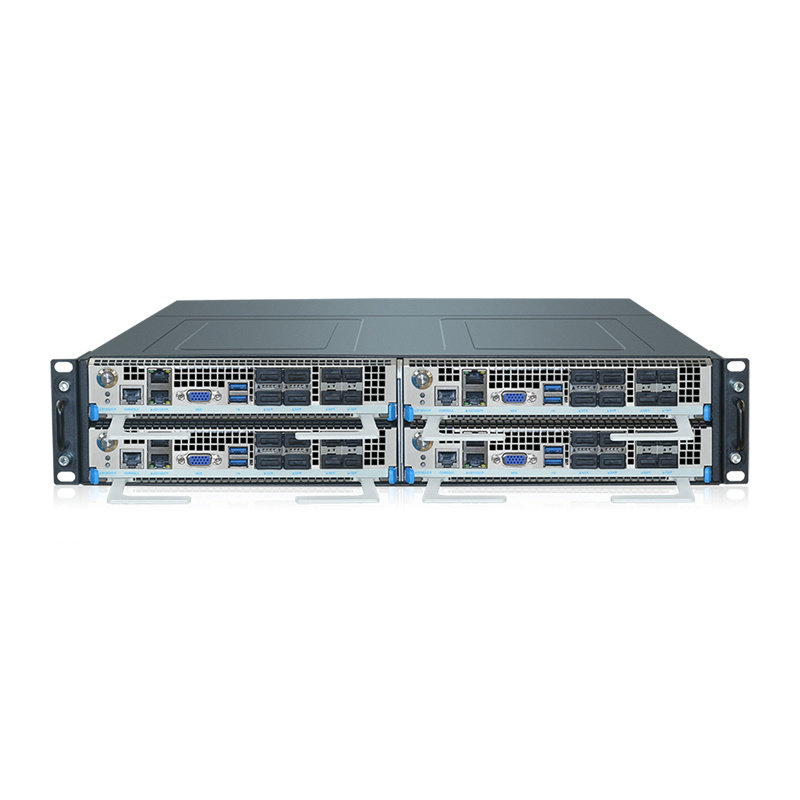
These DPI platforms support up to 1200 Gbps traffic processing per system, featuring native support for 400GE ports and their DPI signature files can process thousands of apps, and are constantly updated to support the latest apps and protocols, while delivering microseconds of latency per flow, rather than milliseconds. Sino-Telecom's DPI solution is designed for the 5G environment in multiple forms — as a virtualised function and for distributed deployment at RAN edges, aggregate points, and core network, supporting a service based architecture. Sino-Telecom offers DPI with a library of thousands of protocols, updates daily, and behavioral classification for encrypted traffic to achieve higher classification accuracy. It also includes intelligence for handling context aware data from radio access and core network which further increases its classification accuracy.

Conclusion
The rapid advancements in DPI technology have successfully overcome the constraints of its predecessor and addressed the ever-growing demands of 5G networks. In addition to enhanced performance characteristics and latency control, the evolution toward sophisticated encrypted traffic handling, virtualized and distributed function, coupled with very swift signature update mechanisms ensures that DPI has transformed from a monitoring tool to a crucial component of the 5G network operation, enabling improved user experience and traffic control.
For your quotation, product datasheet or to understand the context of DPI within overseas 5G deployments, please contact Sino-Telecom Technology Co., Inc. Our specialists can provide architecture verification as well as tailored OEM/ODM proposals based on your specific scale and performance needs, available via Sino-Telecom's web portal or any of our designated regional sales representatives. Let's architect the intelligent DPI layer of your 5G network.