
 EN
EN
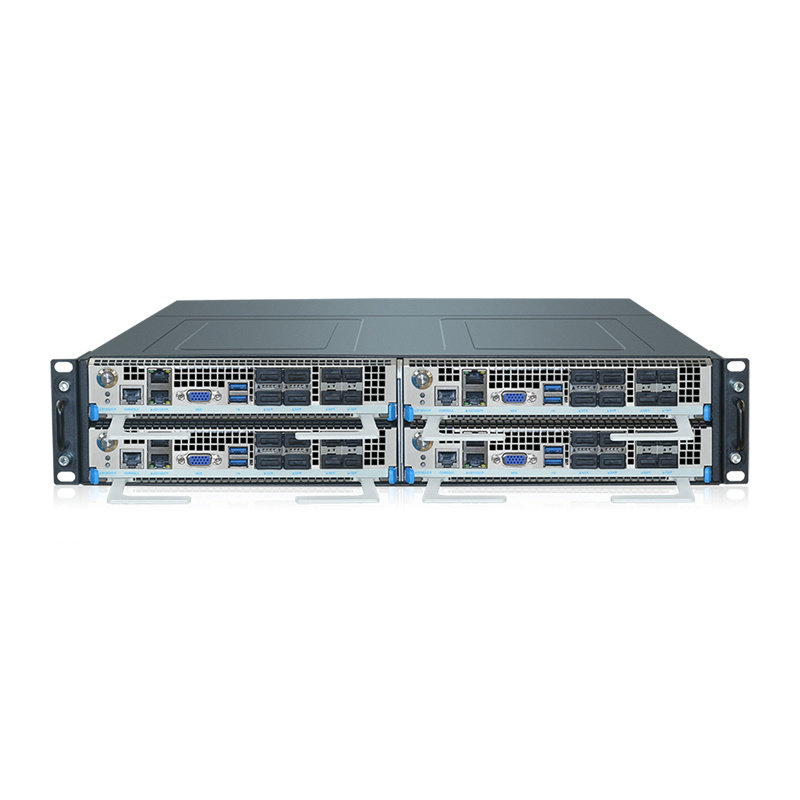
As data traffic continues its upward explosion, cyber threats climb skyward, and complex multi-vendor network environments become the norm, DPI hardware is essential for operators throughout the world. All DPI devices are not created equal however, and with DPI deployed in a global market-including disparate regulatory frameworks, environmental considerations and differing performance expectations-reliability is paramount. What then really defines the reliability of DPI hardware on a global level? Let's examine the fundamental requirements.
Key Reliability Requirements for Global DPI Hardware
DPI hardware intended for a global market will surpass ordinary enterprise requirements. Environmental aspects are critical; hardware deployed in Asian telecom shelters will require operation from the low end in arid cold environments to as high as 45°C with a higher humidity level. Hardware in Eastern European COs will have to withstand temperatures below freezing if non-climate controlled. The thinner air at higher altitudes in the Andes will reduce cooling efficiency in a Latin American installation; while dust ingress is a major concern in African markets as well as wider day-night temperature variances. Power reliability will also be a consideration for operators hoping to maximize up-time in markets where electrical grids may be less stable than in developed nations. Redundant, hot-swappable power supplies, wide range DC power inputs (-48VDC) along with universal AC inputs (110-240 VAC without re-configuration) will be desired.
Stable Performance in Multi-Regional Networks
For predictable operation, hardware needs to offer consistent, stable performance across disparate regions. Throughout stability-a 40Gb/s appliance must produce 40Gb/s in a climate controlled European data center and an outdoor, remote hut in rural Indonesia alike-will be important. Latency needs to remain constant from temperature extremity to temperature extremity; not just in ideal conditions. Storage and memory will be rated for industrial temperature and vibration-not consumer grade. Designs will need to incorporate ample heat sinks, multiple, redundant fans, and adequate airflow (in a front-to-back or side-to-side configuration); non-fan devices will need careful thermal design. Internal device parameters like temperature, fan speed, and power supply voltage monitoring through in-band data will be crucial.
Adaptability to Different Global Network Environments
Many interface types are expected in a global marketplace-1Gb/s to 100Gb/s, including optical and multi-mode implementations. Operators will likely require support for copper interface configurations as well in order to link with legacy equipment. Timing and synchronization will also vary widely; mobile applications will require strict PTP or SyncE, whereas the fixed market may only need NTP. Form factors vary depending on space considerations at edge locations versus aggregation in core networks; 1RU appliance form factors may fit many CO requirements whereas the high port density offered by 2RU and 4RU form factors will suit the core aggregation roles. While individual line cards, swappable in place, are highly desirable for ease of expansion and repair, many clients will continue to demand fixed configurations to keep initial purchase prices lower.
Durability and Easy Maintenance of DPI Hardware
Durability requirements mandate components designed for long operational life: electrolytic capacitors will be avoided in favor of solid-state and gold-plated connectors will endure the elements far better than nickel-plated ones; Printed circuit boards will need a protective coating. Casing needs to withstand shock and vibration-easy-grip hardware is required for easier mounting. Serviceability will be addressed at various levels; hot-swappable power supplies and fans will prevent outages during replacement while front-access components will speed repairs in tight rack deployments. Status indicators via LEDs (power, health, link status, traffic activity) are essential, as out-of-band management access (serial or network connection) and removable storage devices (microSD or USB memory stick for boot images) are desired to facilitate recovery and troubleshooting when the data plane is unavailable.
Cost-Effective Reliability for Global Operators
Reliability will not be considered in the abstract without regard for cost. Frequently failing units generate their own additional expenses, including costly replacements and potentially large travel expenditures to distant locations. Devices with a long lifecycle will significantly reduce the total capital expenditure on hardware and equipment requiring only a handful of common spare parts will dramatically lower inventory costs. Spare part standardization across models will not only further minimize inventory costs but will make for easier planning; hardware that can be deployed today at 10 Gbits/s will still have useful, readily-available spare parts, such as power supplies, when operators need to scale to 40 Gbits/s tomorrow. Cost effective reliability is not synonymous with cheapest-it means well-tested, robust components designed with sufficient margins; with rugged, well-tested and serviceable design.
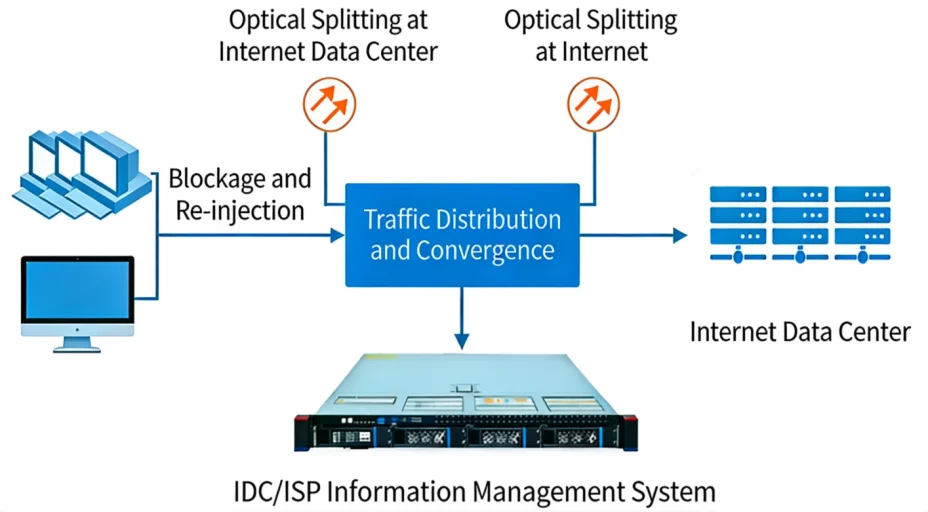
Sino-Telecom Reliable DPI Hardware Advantages
Sino-Telecom designs and manufactures DPI hardware for the rigors of the global marketplace. All hardware is tested under conditions simulating global environments including humidity, extreme temperature variances and vibrations, while power inputs are tested under fluctuations of both voltage and frequency. Sino-Telecom components are rated for industrial temperature ranges and are intended for long life. Hardware will incorporate hot-swappable power supplies and fans and will feature front access for the technician, along with status LEDs to rapidly assess the system’s operation. These DPI platforms support up to 1200 Gbps traffic processing per system, featuring native support for 400GE ports and their DPI signature files can process thousands of apps, and are constantly updated to support the latest apps and protocols.Hardware can be ordered in both modular 1RU, for edge deployments, or 2RU or 4RU, for aggregation, devices. Our hardware has been installed in more than 30 countries worldwide-including the jungles of Indonesia, the arid climate of the African market, high altitude environments such as Brazil and even winter climates like Eastern Europe. We support the innovation represented by the 240+ patents and 150+ software copyrights we hold by continuously improving both our hardware and software designs.
Conclusion
DPI hardware, unlike some common computer hardware components, will not be found off-the-shelf, rather it requires specific, robust designs that meet varied needs across the globe-while delivering stable, reliable operation, regardless of operating conditions, at a cost that operators can manage, with ease of maintenance a key concern. Sino-Telecom's DPI solutions — spanning Mobile Network DPI, Mobile Internet DPI, and Fixed Network DPI platforms — are purpose-built to meet these requirements, with proven compliance across 30+ countries and deep technical expertise in data center interconnect, OTN, and switching technologies. Ready to discover the depth of visibility into your network with reliable DPI hardware? Contact Sino-Telecom for a tailored quotation, spec sheets, and to connect with our engineers on deployment use cases.
Table of Contents
- Key Reliability Requirements for Global DPI Hardware
- Stable Performance in Multi-Regional Networks
- Adaptability to Different Global Network Environments
- Durability and Easy Maintenance of DPI Hardware
- Cost-Effective Reliability for Global Operators
- Sino-Telecom Reliable DPI Hardware Advantages
- Conclusion