
 EN
EN
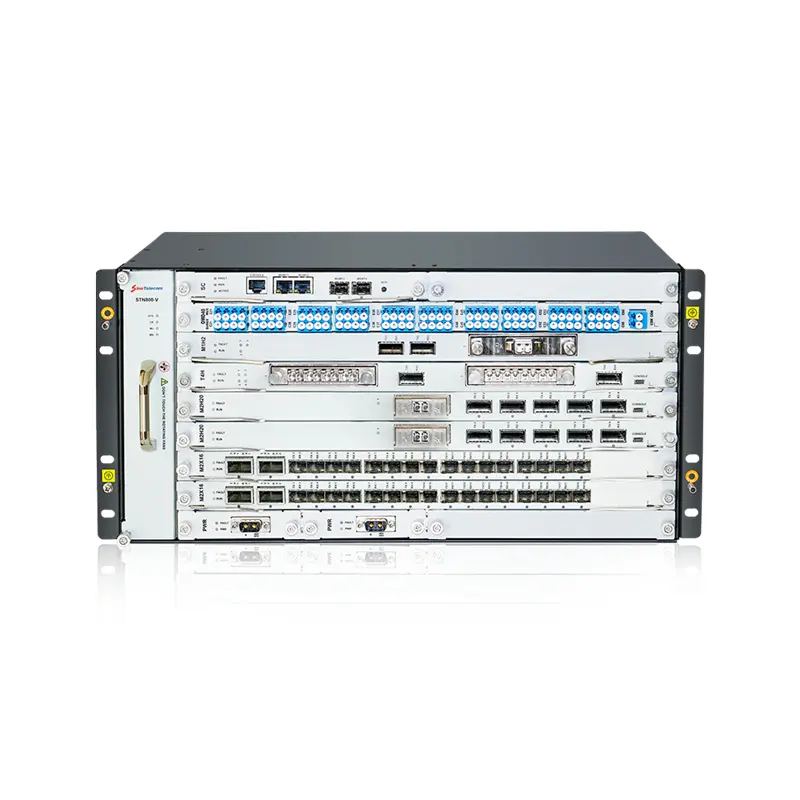
Emerging markets all over Southeast Asia, Latin America, Africa, and portions of Eastern Europe are rapidly becoming digitally driven. Mobile broadband deployment is picking up pace, fixed-line penetration is on the rise, and government agencies are aggressively investing in national broadband networks. Driving all of this growth are optical transport networks. For operators in emerging markets, OTN forms the backbone for reliable, high capacity transmission that can scale to meet current needs while also fitting within budget constraints. This article addresses the unique needs of emerging markets, the core benefits of OTN network solutions, and practical deployment strategies to offer robust, scalable, and cost effective networks.
Emerging Market Needs for OTN Networks
Emerging market operators face a specific set of demands and needs that do not entirely mirror the demands seen in developed markets. First and foremost, traffic growth can be very unpredictable — for example, the sudden uptake of a streaming service, a mobile payment application, or social media can mean unexpected bursts in traffic that the network will need to be ready for. Second, a greater level of geographic coverage is needed. Operators need to provide services not only in densely populated areas but also in rural or remote locales where the infrastructure is limited and the revenue per user is significantly lower. Third, technical expertise may be more limited, meaning the solution needs to be simple to manage for a small group of technicians. Fourth, capital expenditure must be managed carefully, and many operators prefer phased payments and not be willing to commit a large portion of capital funds upfront. Fifth, there are numerous variable power conditions-whether a stable data center, or a rural shack with unreliable power. OTN solutions fit the needs of all these demanding characteristics by offering flexible, high-performing and easy to manage networks.
Core Advantages of OTN Network Solutions
The benefits of OTN for emerging market operators include a few fundamental characteristics. OTN inherently supports multiplexing several types of client traffic-including Ethernet, SDH, and storage-into a single optical wavelength, which makes for the optimal use of fiber. Furthermore, it inherently supports forward error correction, meaning that links can be longer and more reliable, which will decrease the amount of equipment required as regenerating stations can be farther apart. The overhead bytes within the OTN are defined, and each byte supports specific functions related to performance monitoring, alarm propagation, and SLA reporting without the need for extra test equipment on each port. OTN is also the first transport technology to support hitless resizing of a circuit, allowing for the bandwidth of a circuit to be upgraded without tearing down the existing one. This alone drastically reduces O&M costs compared to traditional transport technologies. Moreover, the hierarchical nature of the OTN supports older SDH methods so the engineers who have used it previously will have minimal learning curve to start using it.
Stable & Scalable OTN Deployments
Stability and scalability are not conflicting requirements of well-designed OTN networks. Stability can be achieved with prudent equipment selection. Ruggedized OTN platforms designed for extended temperature ranges, redundancy, and stable power supplies ensure that equipment remains functional. The more passively designed the system, the fewer active failure points. Comprehensive alarm management systems that allow for remote troubleshooting reduce O&M costs over time. The stability and scalability of the OTN infrastructure stems from its hierarchical structure. An operator may have a core OTN switch that carries all of the traffic and may add different line cards and increase wavelengths to carry more and more traffic as necessary. When scaling up, the inherent hierarchical structure will support upgrades from 10G to 100G to 400G without requiring the underlying switching infrastructure to be upgraded-effectively keeping the same OTN core relevant for city wide traffic, and later, region wide traffic over several years. For emerging market operators this could mean not having to undergo a forklift upgrade of the entire transport network every three to four years, which is not an operationally or economically feasible alternative.
Cost-Saving Benefits of OTN Solutions
Capital expenses and operational expenditures are reduced through OTN solutions. On the CAPEX side, OTN solutions carry mixed traffic types across single optical wavelengths, meaning the total number of wavelengths is lower and the number of transponders needed is lower than for existing overlay networks. It aggregates SDH, packet, and storage across one transport platform reducing the physical space required to implement network aggregation, lowering equipment costs and purchase orders. Supports for gray optics where needed can eliminate some costs for specific colored transceivers in those links, even at very high speeds. O&M savings are also incurred because only a single OTN control plane is required for a unified transport network carrying TDM, packet, and storage traffic, reducing training time and complexity. Remote provisioning of new services removes any need for truck rolls to bring up new circuits. Proactive maintenance can be performed by spotting degraded links using network monitoring tools before failure; expensive emergency call outs are a thing of the past. All these cost savings add up to a lower TCO over a span of five to seven years compared to separate overlay networks.
Flexible OTN Deployment for Emerging Markets
There is no single deployment model that works for each emerging market operator; OTN solutions offer a variety of flexible options. The network is ideal for greenfield operators who are building entirely new networks. In that case the entire network could be an OTN transport network that is managed centrally to gain the best operational efficiencies. It is also feasible for operators who have existing SDH and/or DWDM networks and want to implement OTN at the core. They can then slowly migrate other layers of their network. Operators in extremely rural markets can use some lower port count OTN products as a cost-effective way to enter the market with future expansion capability. SKD and CKD delivery methods can be beneficial in developing markets where a country wishes to assemble products locally. These methods provide disassembled units or kits, allowing local companies to build final equipment according to domestic manufacturing standards.

Reliable OTN Solutions for Operators
Sino-Telecom offers traditional OTN platforms as well as highly compact 1U/2U DCI (Data Center Interconnect) platforms like the STN6800 series, specifically to address emerging market operators' requirements. Their OTN platforms cover core, aggregation and access layers, ranging from 10G up to 800G capacities so there will be a solution available when the traffic requirements expand. Each is built with forward error correction and detailed performance monitoring, and is rated to handle tough fiber plants and environments with consistent, reliable operation. The management options support both on-site craft management and remote network control for whichever system is appropriate for the operator. With over 30 countries as deployed customers, Sino-Telecom's OTN network solutions are proven in places like Indonesia, Brazil, Mexico, India, South Africa, and more. Sino-Telecom holds over 240+ patents related to optical networking and has developed 150+ software copyrights; this demonstrates a continued investment in optical technologies. Their entire portfolio of optical transceivers includes everything from 10 GE through 800 GE.
Conclusion: OTN for Emerging Market Growth
OTN network solutions are an excellent choice for operators in emerging markets looking to handle increasing traffic volumes by utilizing a highly reliable, scalable, and cost effective transport network. Consolidation of all traffic into one network will maximize fiber usage, lower operating costs and ultimately increase operational efficiencies.
Feel free to contact a Sino-Telecom sales representative today for a custom quotation, to download our full selection of OTN data sheets, or read some customer case studies from emerging market operators like you. You can contact us by visiting our website or sending us an email.