
 EN
EN
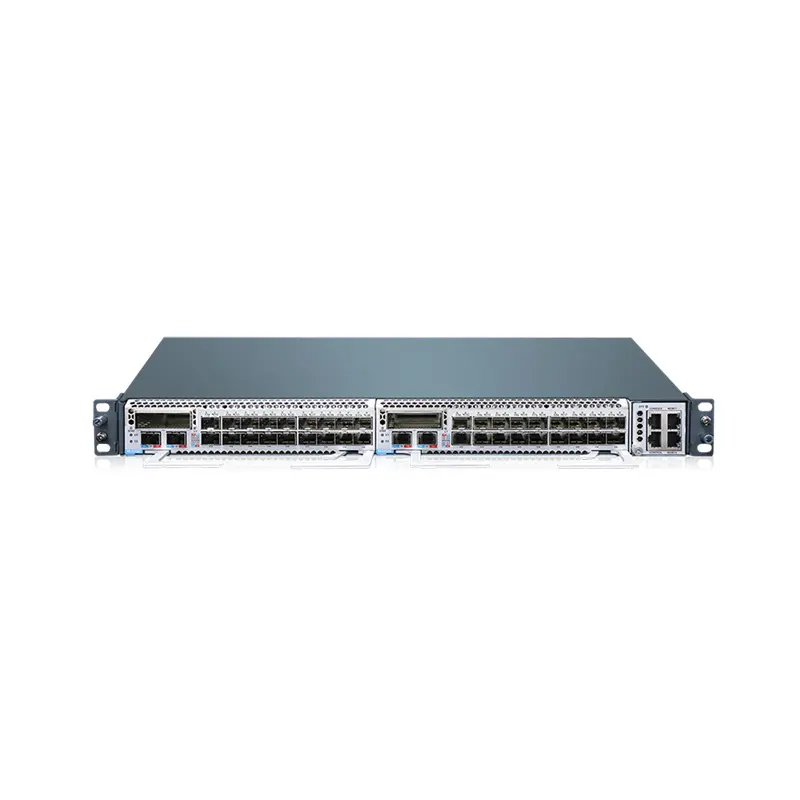
Data Center Interconnection Long-Haul DCI Deployment Guide for Operators
Data centers, by moving out of the metropolitan regions into larger regions or countries, they require interconnectivity over longer distances than ever before—spanning hundreds and even thousands of miles. In this regard, the usage of long-haul Data Center Interconnect has become inevitable for those companies operating distributed infrastructures, disaster recovery sites or content delivery networks all over the world. Where metro DCI is about compactness, fast deployment and manageable distance, long-haul DCI has more about high performance, advanced amplification and complex protection mechanisms.
What Is Long-Haul DCI for Operators
Long-haul DCI is an optical interconnect used between two D/Cs which transmit more than 120km (it could transmit to several thousand kilometers). As for network operators, long-haul DCI can be applied for 3 main goals that short reach DCI could not accomplish: data centers replication between central sites and remote sites (often a regulation for compliance), content distribution and caching over geographically distant sites, load balancing and migrating over D/Cs across country and continents. In this regard, unlike in metro systems where there is tolerability for signal attenuation, long-haul DCI requires much higher performance in the challenging fiber plant comprised of multiple spans, inconsistent environment, and legacy hardware.
How to Simplify Long-Haul DCI Deployment
There is no need to be intimidated by the complexity of long-haul DCI. A number of methods help simplify the deployment, such as using coherent optics with integrated digital signal processing, which compensates for chromatic and polarization impairments in an electronic fashion and eliminates the need for optical dispersion compensation modules. Furthermore, by using optical line systems with automatically controlled amplification and balanced power output, the time to engineer at each site is minimized. Unified network management software which provides topology visibility, calculates optimum transmit power and validates link budget is another solution. Standardizing on only a few types of transponders with 400G or 800G coherent performance will make spare parts management more manageable. For the long-haul dark fiber lease, its quality such as PMD and the connector can and must be verified to prevent future failures. All these will bring the time down to weeks instead of months.
Reliability Tips for Long-Haul DCI
Successful long-haul DCI and unsuccessful long-haul DCI are distinguished by the former’s ability to deliver consistent service. For example, 1+1 wavelength protection can instantly switch to a backup optical link if signal strength deteriorates. Continuously monitoring the performance of a link with optical time domain reflectometry is indispensable for identifying potential degradation before a failure actually happens. Error correction schemes with adequate coding gain are recommended to compensate for noise for a certain distance and fiber quality without losing the net throughput excessively. Controlled temperatures or ruggedized components are necessary at each amplification site. Clear and defined procedures must be established to hand off the link to the carrier, with specified restoration times for each scenario as a minimum requirement. During line commissioning, a 24-48 hours burn-in at diverse operating temperatures are strongly recommended to verify reliability of 400G to 1500km or 800G over shorter distances. Through such comprehensive tests, five-nines availability may be achieved even on long-haul networks with troublesome physical links.
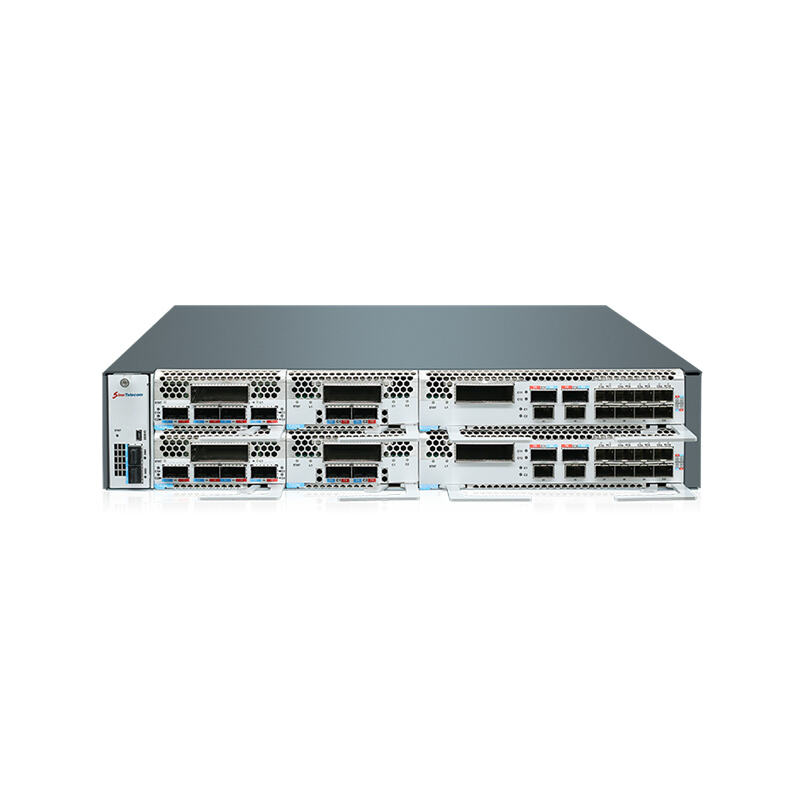
Cost-Effective Long-Haul DCI Options
Long-haul DCI used to cost a great deal for the users;nowadays, it is much cheaper thanks to the new technologies and business models available. An open line system with disaggregated transponders and amplifiers drastically reduces reliance on the vendor and offer a more competitive option for procurement. Pluggable coherent transponders that fit directly into DCI equipments eliminate the cost and space of separate transponder shelves. Starting with a smaller capacity-e.g., 400G per channel-and upgrading to 800G without a completely new optical line system saves money in the long-run. For the fiber transmission between two points, if feasible, carriers should collaborate on a common path so that they are able to save the costs for fiber leasing or IRU in the long run. Electrical regenerator sites should only be included when absolutely necessary. Modern coherent systems can achieve 400G transmission over 1,500km or more without regeneration. These alternative cost-saving options have been made available even for those operators only used to buy lambda from a traditional incumbent operator.
Long-Haul DCI for Global Operators
To connect geographically dispersed data centers, global operators require long-haul DCI that works predictably worldwide. While European networks benefit from high fiber densities to easily exchange bandwidth for reach as required with their adaptable modulation techniques, American operators need the high performance offered by advanced coherent optics and forward error correction over long spans to achieve higher throughput. Global carriers require robust coherent systems with adaptive equalization, and nonlinear compensation technologies to cope with degraded networks in the emerging markets, such as parts of Asia where network infrastructure may not be well-maintained. A consistent global network management system is key, since most global operators require their entire long-haul network, no matter which region of Asia, Europe or the Americas it may reside in, to be controlled through one unified interface and hence reduce the training curve for operators.
Trusted Long-Haul DCI Solutions
Sino-Telecom has a comprehensive portfolio of long-haul DCI solutions, addressing the toughest demands for global carriers. Its high-performance 400G or 800G coherent optical transmission platforms deliver over 1500km distances without electrical regeneration and come with built-in amplification and channel monitoring. Pluggable coherent transceivers fit directly into standard switches and reduce overall hardware cost and power consumption. Its network solutions are underpinned by industry-leading forward error correction, adjustable modulations and simplified management software.With over 241 granted patents (including 185 invention patents) and 156 granted software copyrights, Sino-Telecom possesses extensive R&D expertise to design and deploy optical networks and provides solutions to over 30 countries around the world, including but not limited to Canada, France, Australia, Indonesia and Brazil. Sino-Telecom’s solutions span across metro to long-haul DCI, and a range of optical transceivers from 1GE to 800G are also available.
Conclusion
Long-haul DCI is the basis of all the technologies to provide reliable connectivity for a large distance. To respond to the increasing demands from applications, Long-haul DCI empowers the network operators to establish the interconnect network for Disaster Recovery site, Content Delivery Network and any workloads with multi-site capability in a scalable and flexible manner.
Be it high capacity 400G link over 1500km or 800G ring backbone interconnecting multiple regions, our engineers can work with you to build and deploy long-haul DCI solution for you. You can also visit our website, or send us an email to start with a conversation.