Shanghai, China – June 26, 2026 — The 2026 Shanghai edition of the Mobile World Congress (MWC), organized by the GSMA, concluded successfully at the Shanghai New International Expo Centre. Under the theme “The IQ Era”, the event focused on cutting-edge developments in 6G, Mobile AI, Embodied Intelligence, and space-air-ground integrated network architectures (SAGIN).
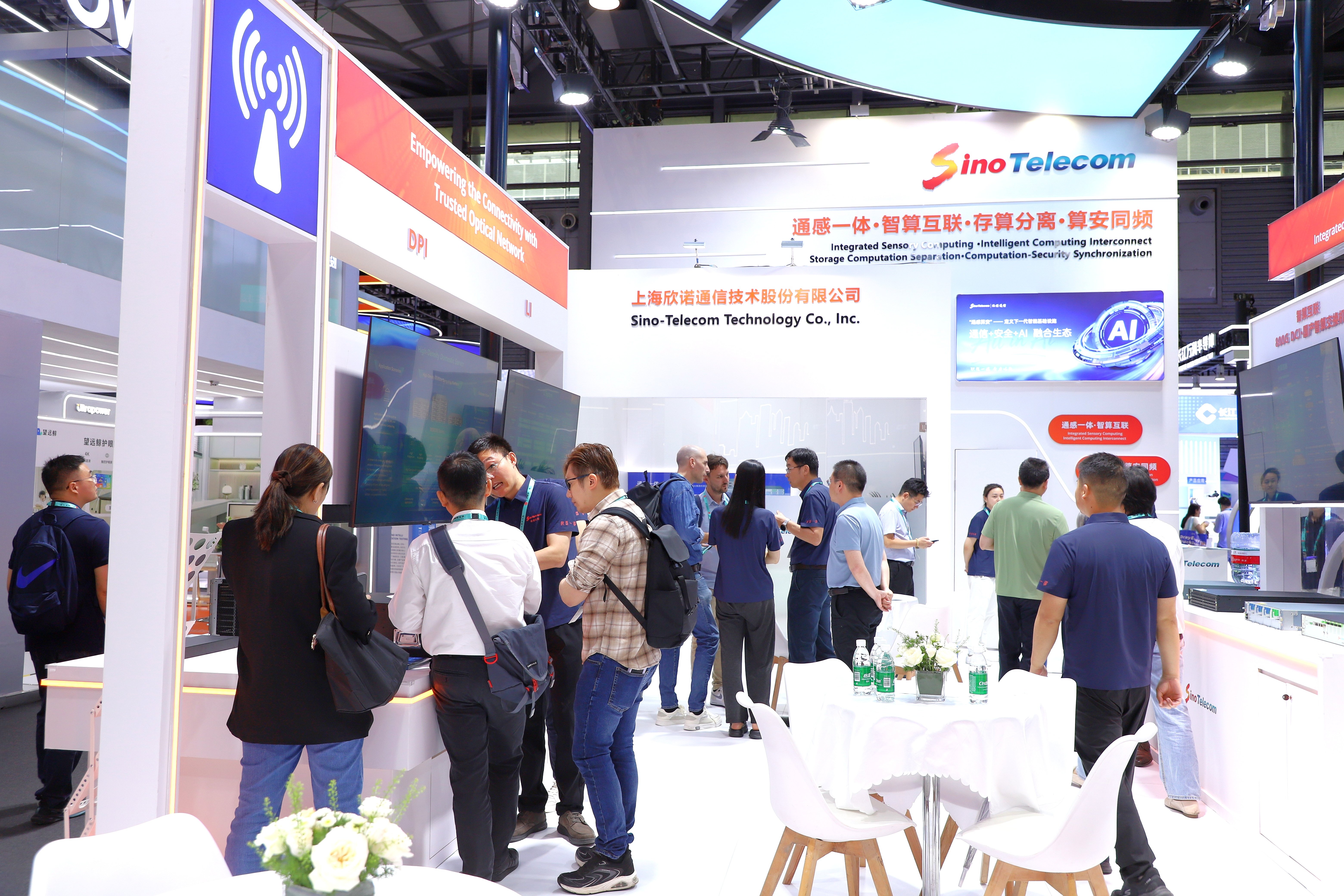
At the exhibition, Sino-Telecom presented its comprehensive integrated sensing and communication full-stack capabilities, showcasing an integrated digital infrastructure designed for the AI era. The company became one of the key focal points of the exhibition, attracting strong attention from industry visitors, enterprise customers, and ecosystem partners.
Full-Stack AI Infrastructure: Five Technology Pillars for the AI Era
Following its participation at MWC Barcelona earlier this year under the theme “Full Optical Foundation · Intelligent Computing Interconnection · Boundaryless Security”, Sino-Telecom further upgraded its positioning at MWC Shanghai with the exhibition theme:
“Integrated Sensing and Communication · Intelligent Computing Interconnection · Compute-Storage Separation · Compute-Security Synchronization”
Summarized as:
“Sense. Connect. Compute. Secure. Driving New Momentum in AI.”
The company systematically presented five core technology domains forming its full-stack AI infrastructure.
Intelligent Computing Interconnection
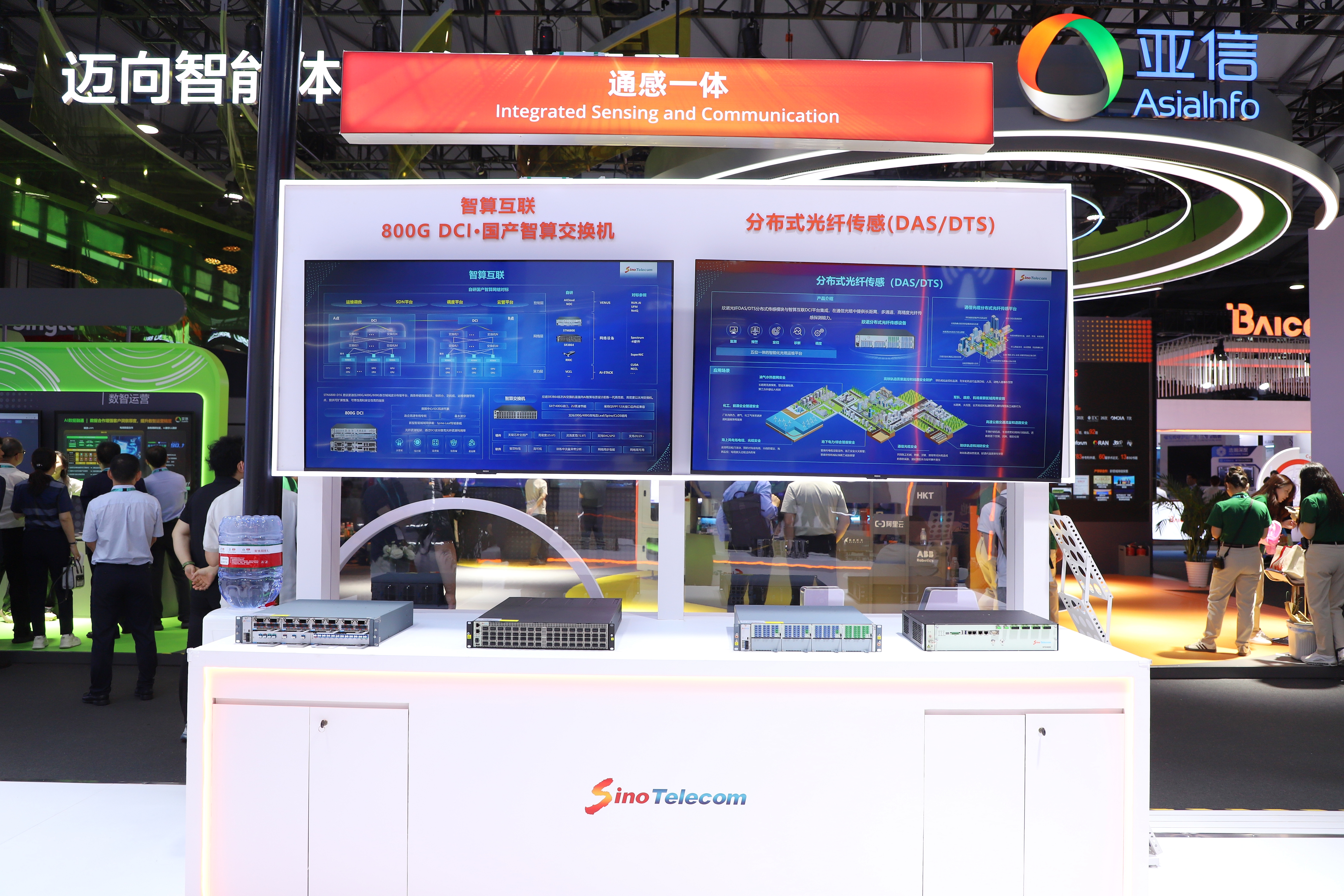
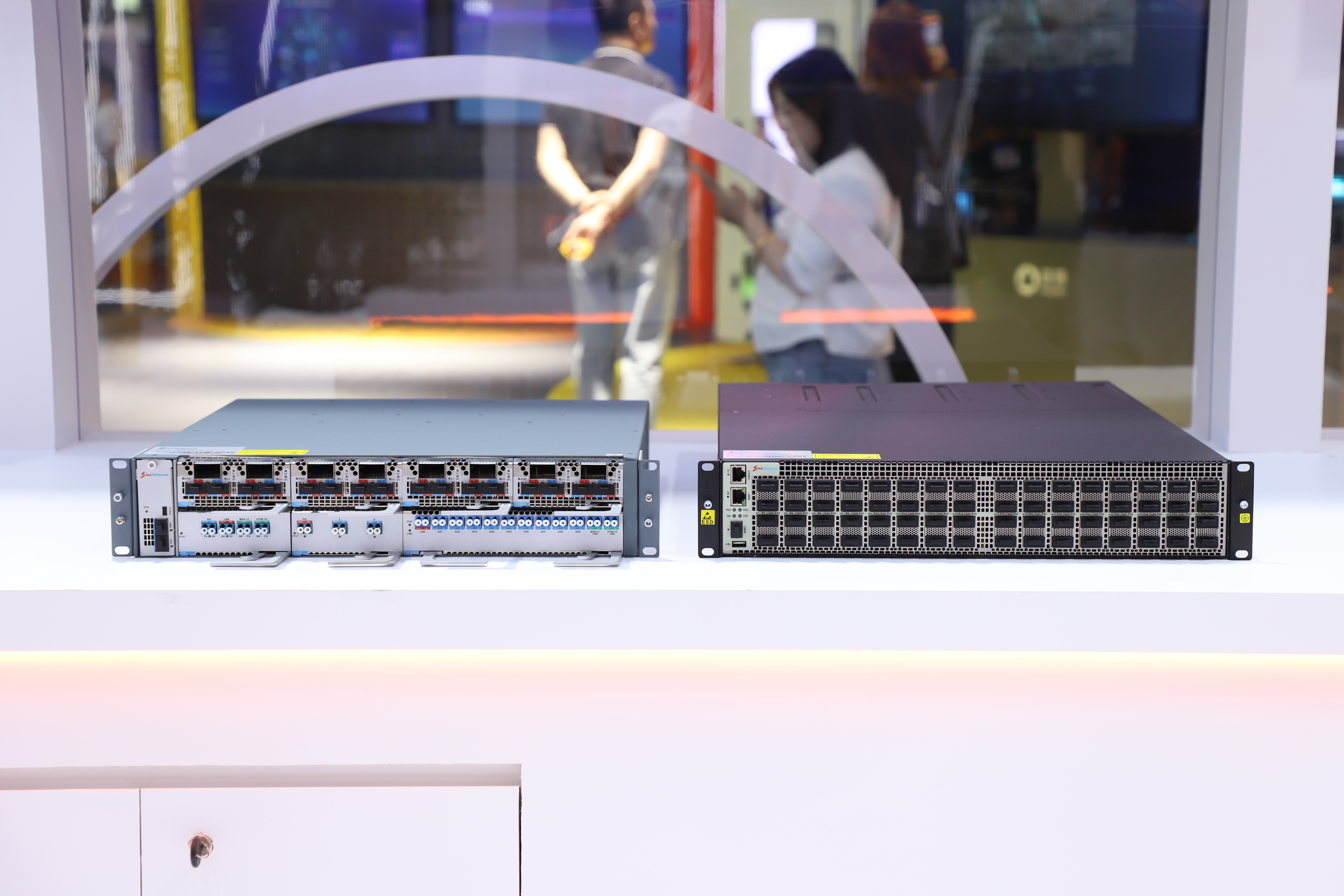
Sino-Telecom showcased its full portfolio of intelligent computing networking solutions, including optical DCI (Data Center Interconnect) systems and domestically developed high-performance intelligent computing switches. These products provide high-throughput, ultra-low-latency, and scalable interconnectivity for AI training, large-scale model inference, and big data workloads.
Distributed Optical Fiber Sensing (DAS)
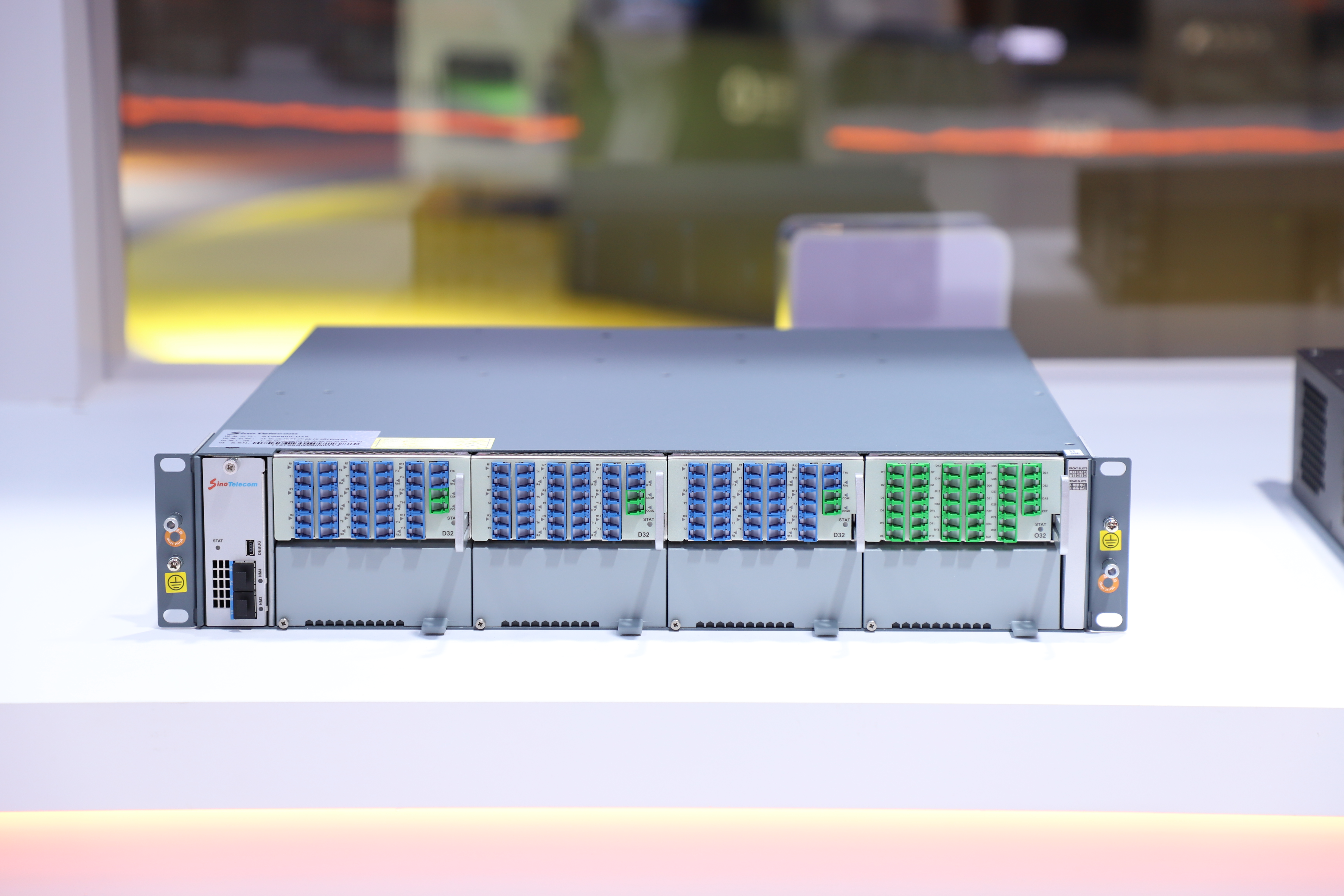
Based on Distributed Acoustic Sensing (DAS) technology, Sino-Telecom enables optical fibers to function as distributed sensing networks. This allows communication infrastructure to simultaneously serve as a perception layer, enabling deep convergence of communication and sensing capabilities across multiple scenarios.
Intelligent Computing Servers
Sino-Telecom introduced its high-density training-and-inference integrated server portfolio powered by domestic computing architectures.
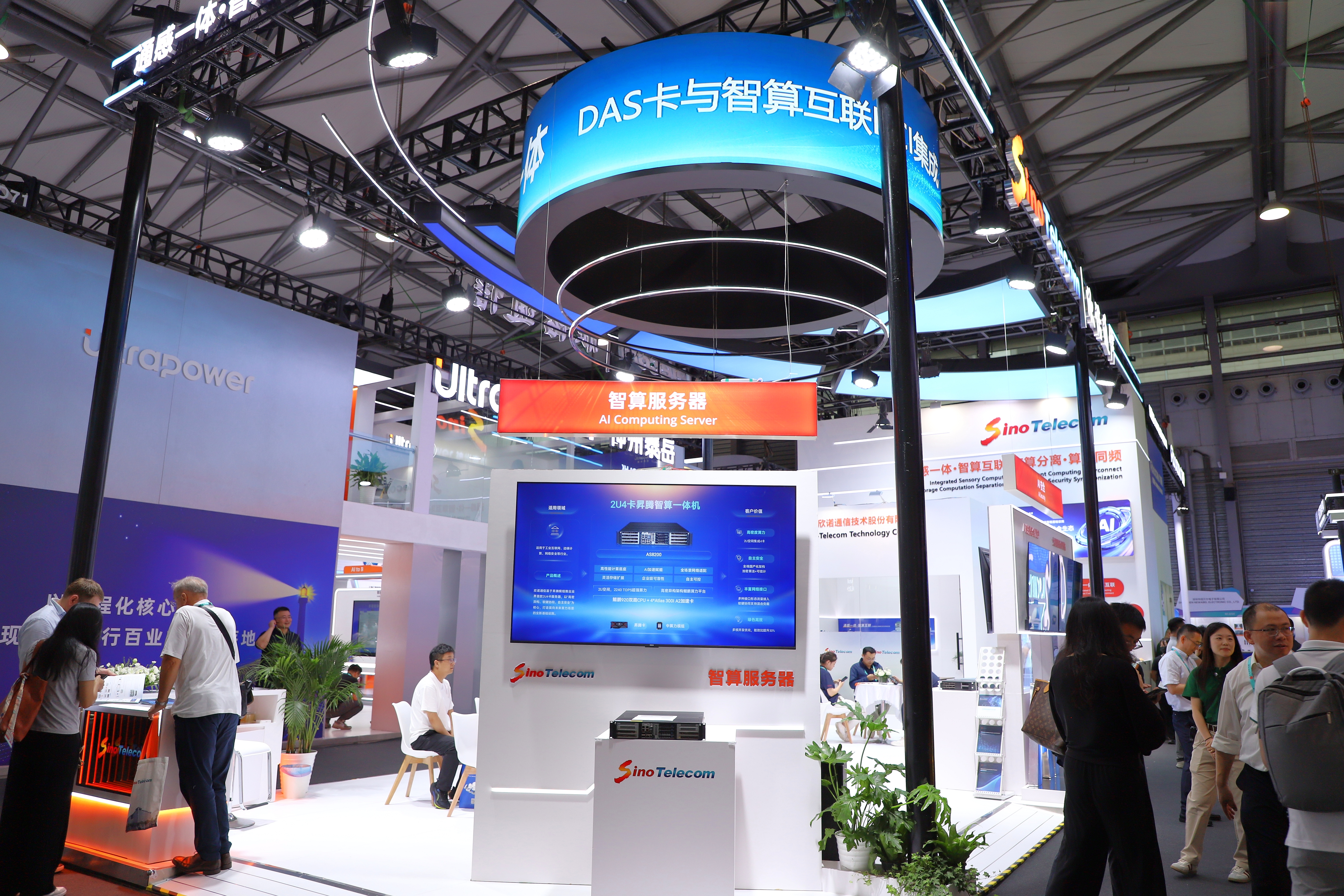
At MWC Shanghai 2026, the company officially launched the AS8200 2U 4-card Domestic GPU AI Integrated Server, marking the industry’s first AI computing system integrating four Domestic GPU AI accelerator cards within a 2U chassis.
Based on deeply customized Domestic GPU modules, the system is equipped with dual ARM 920 CPUs and four Atlas 300I A2 AI accelerator cards, delivering:
The platform provides a secure, efficient, and independently controllable AI computing foundation for trillion-parameter model inference and mission-critical AI applications in government and enterprise sectors.
Compute–Storage Separation
The compute–storage disaggregation architecture decouples computing and storage resources, allowing CPUs and storage devices to scale independently across their respective lifecycles. Compared with traditional tightly coupled architectures, this approach significantly improves resource utilization efficiency and system elasticity.
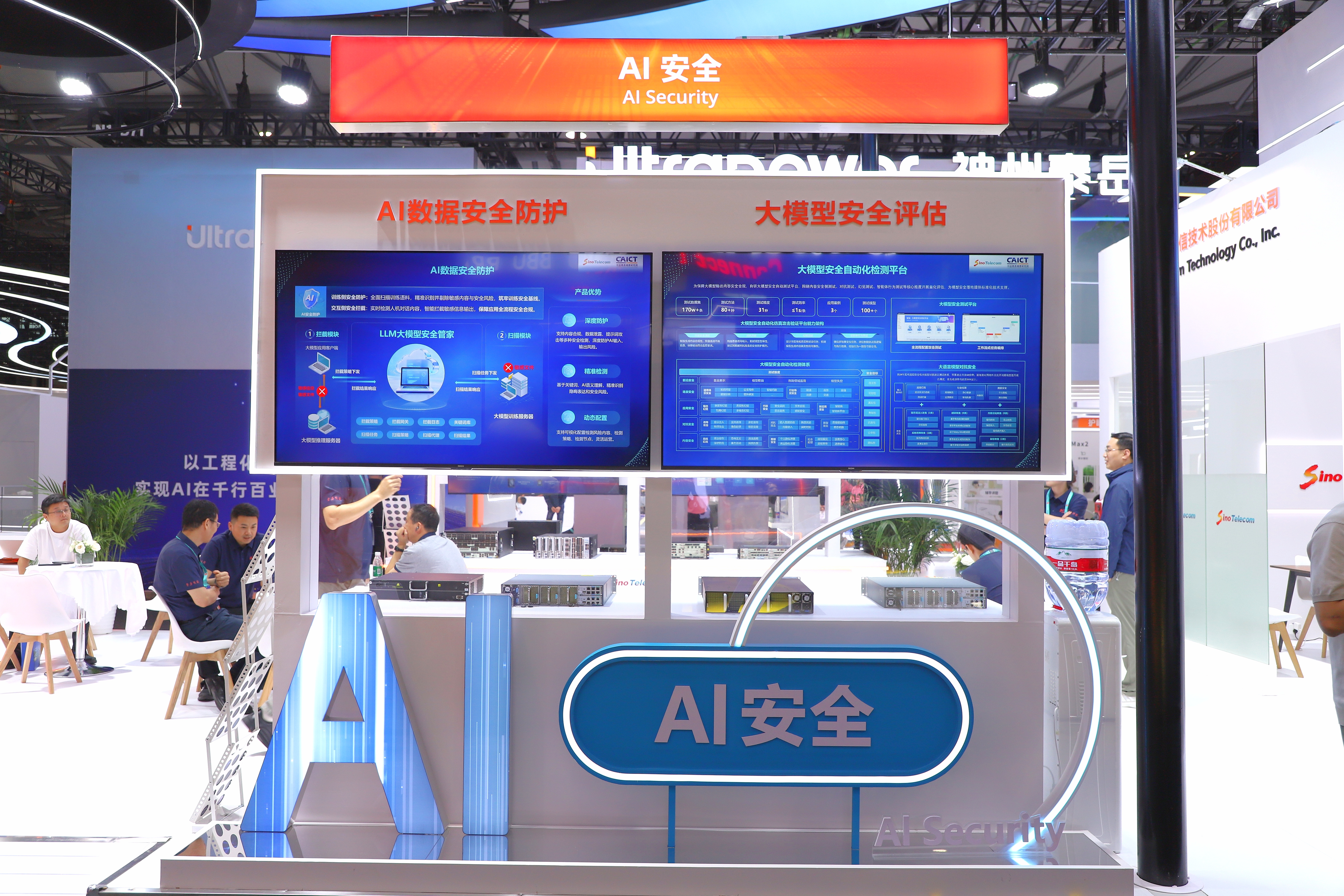
AI Security
Sino-Telecom presented a full lifecycle AI security framework covering:
-
Anti-data-poisoning protection during model training
-
Defense against prompt injection attacks during interaction
-
Protection against model theft and extraction
This end-to-end security system establishes a native defense layer for enterprise AI deployment.
Together, these five pillars form Sino-Telecom’s integrated full-stack intelligent infrastructure for the AI era.
Expanding Domestic AI Compute Capabilities: From ARM to Domestic GPU
At MWC Shanghai last year, Sino-Telecom jointly launched the MS8000 high-density modular computing platform with the ARM ecosystem. The platform achieved a 400% increase in compute density and a 50% reduction in power consumption, providing a green and efficient computing foundation for industries such as finance, telecommunications, and government.
One year later, Sino-Telecom continues to expand its domestic computing portfolio.
From ARM to Domestic GPU, and from general-purpose computing to AI acceleration, the company has completed a strategic evolution toward a full-stack domestic AI infrastructure ecosystem spanning the entire compute continuum.
Strong Industry Engagement at the Exhibition
During the event, Sino-Telecom’s booth attracted extensive engagement from government organizations, enterprise customers, system integrators, and global ecosystem partners.
Technical teams conducted in-depth one-on-one demonstrations across all five technology domains, with key highlights including:
-
The AS8200 high-density AI server architecture
-
Distributed Acoustic Sensing (DAS) applications
-
Compute–storage separation systems
-
End-to-end AI security capabilities
Visitors widely recognized Sino-Telecom’s comprehensive domestic technology stack and its innovations in high-density AI infrastructure design.
All in AI: Building the Future of Intelligent Infrastructure
Looking ahead, Sino-Telecom will continue to uphold its corporate philosophy of “Sincerity in Every Commitment, Full Effort in Every Execution.”
Guided by its “All in AI” strategy, the company will continue advancing its differentiated communications technology (CT) architecture and deepening its presence in the domestic AI computing ecosystem.
From ARM to Domestic GPU, and from general-purpose computing to AI acceleration, Sino-Telecom has established a complete end-to-end domestic AI infrastructure portfolio. The company will continue collaborating with the Domestic GPU ecosystem and industry partners to strengthen the intelligent computing foundation—one TOPS at a time—and jointly build a secure, efficient, and independently controllable AI computing ecosystem for the future.


 EN
EN