
 EN
EN
Data security is increasingly becoming one of the most pressing issues for telecom operators around the world. As the complexity of networks increases and networks grow larger, operators are under greater pressure to protect subscriber data, prevent fraud and meet regulations and satisfy customer trust. Most conventional solutions are inadequate because they lack the granularity needed to detect sophisticated threats hidden within seemingly normal network traffic. Deep Packet Inspection (DPI) technology addresses these challenges by providing advanced traffic identification, protocol analysis, and network visibility capabilities, enabling operators to gain comprehensive insights into their networks while improving security, optimization, and operational efficiency.
Common Data Security Pain Points for Operators
Operators face unique data security challenges that most enterprises do not need to worry about. Protecting subscriber data is an ongoing problem – personal data, location data, call records must be kept confidential from any unauthorized third parties. Fraudulent activity, which directly impacts operator revenue and subscriber experience, ranges from SIM Box fraud (where international calls are made to look like local ones) to other forms of traffic related fraud. Operators are also increasingly being used as a channel by phishing and malware attackers who have learned to deliver emails and malicious content to subscribers using the operator network itself. These challenges have been further exacerbated by numerous new and varied regulatory requirements for operators to block illegal content, prevent data breaches, and maintain an audit trail of any security incidents. DDOS (Distributed Denial of Service) attacks, which have two variants (volumetric and application-layer), can bring a network down in an instant and finally there is always the internal risk from employees and compromised credentials which simple network monitoring can't always detect. The unifying factor behind all of these pain points is lack of sufficient visibility into the network and what is crossing it.
How DPI Addresses Core Security Challenges
DPI works through several key functions. Protocol decoding reveals which application each packet originates from (e.g., distinguishing a valid HTTPS browsing session from malware that exploits it as a secure channel). Payload inspection inspects what is inside the packet itself to detect signatures of exploits or phishing URLs, or command and control (C&C) traffic. Behavioral analysis attempts to identify anomalous packets that do not match known signatures - for example, a home user generating very large amounts of outbound traffic from unlikely ports, or C&C traffic patterns which do not match any known signatures. Flow reconstruction allows packets belonging to the same conversation to be reassembled. Metadata creation generates searchable records of all flows so that any incidents can be investigated forensically later on. All these combined turn raw traffic into meaningful security data.
DPI for Real-Time Data Threat Detection
Knowing what to block is of little use without the ability to do so in real time as the threat emerges. Packet inspection with DPI helps telecom operators detect threats in real time instead of hours or days after a breach occurs when there may be little the operator can do other than inform its subscribers about a potential problem. For example when a subscriber tries to connect to a fraudulent phishing page, the operator's DPI engine recognizes the phishing URL within milliseconds during the DNS request or HTTP session setup and can block it immediately. When a device controlled by malware tries to connect to its command and control server, the DPI engine can recognize the characteristic beacon packet and its destination IP address from threat intelligence feeds and block it instantly. It also allows the operator to proactively protect subscribers from data loss. Detecting malicious program propagation (e.g., EXE, APK) and abnormal traffic behaviors via deep sample restoration and feature database matching. This real time detection is essential for proactive threat management, instead of merely reacting to security incidents after they have happened.
Blocking and Shielding Capabilities against Detected Threats
It is not enough to detect the threats; the ability to actively shield against and block identified threats is critical to solving the security pain points. Deep packet inspection devices include blocking capabilities so that the threats are contained immediately they are identified. When DPI identifies a phishing attempt it can drop the traffic, thereby preventing the subscriber from ever reaching the fraudulent site. When malware attempting to communicate is identified, the connection to the C&C server can be blocked-either for the specific subscriber or for the entire network-preventing any further communication. Illegal content or any other identified threat is blocked in real time by the policy engine. Blocking can be as targeted or as broad as the policy determines. It may simply record the traffic for analysis, or block only if the attempt happens several times in succession from a specific subscriber or location.
Simplify Security Management with DPI
One of the main challenges for the security operations center in a telecom network is that the number of security alerts can be enormous, and many of them could be false positives. Deep packet inspection brings intelligence to the alerts by distinguishing what is true network traffic versus malicious content, so security teams don't waste time on events which pose little to no security threat to the subscriber or the network infrastructure. For example, an alert on the operator's network for traffic heading towards a malware distribution site is much more significant than the same alert coming from an automated vulnerability scanner for an approved testing session. Automated responses allow the operator to configure policies to automatically block known malicious traffic as it is detected without the need for any human intervention. Alert consolidation allows many events that relate to the same underlying threat to be grouped together into a single security alert so the operator's security teams are more efficient and productive.
Reduce Security Risks in Daily Operations
Telecom networks are complex environments where many human-driven activities such as configuration changes, software updates and vendor support operations introduce operational risks. Deep packet inspection helps to manage these risks. A change to network configurations becomes less risky when network engineers are confident that the security implications have been properly understood and addressed. Vendor support activities and accesses can be monitored to ensure that unauthorized changes are not made and no private information is exfiltrated from the operator network. Service deployments also present a risk as it may be difficult to predict the impact and security exposures of a new service and it is essential to ensure that the new service is not introducing any new attack vectors. Incident response becomes significantly easier when an operator can use the information provided by DPI's forensic records to quickly understand exactly what happened in the past incident, so it can be fixed properly in a much shorter time.
Practical DPI Value for Operator Security
The benefits for operators using DPI for network security can be summarized in the following primary use cases.
Anti-fraud uses deep packet inspection to detect SIM Box fraud by correlating various data such as call data records, location data and signaling patterns to identify international calls that terminate on the network but are disguised as local calls, to stop direct revenue loss.
Anti-phishing uses DPI to instantly block known malicious phishing sites and thus reduce lost credentials for subscribers and reduce calls to operator support lines complaining of fraudulent activity.
Anti-malware uses DPI to detect malware communication in real time with C&C sites, and reduce the number of malware infected devices on their network.
Data loss prevention identifies non-encrypted sensitive data transit over the network which the operator is bound by regulatory requirements to protect, and either enforces or enables enforcement of the security policies related to the confidentiality of the sensitive data.
Reliable DPI Solutions for Data Protection
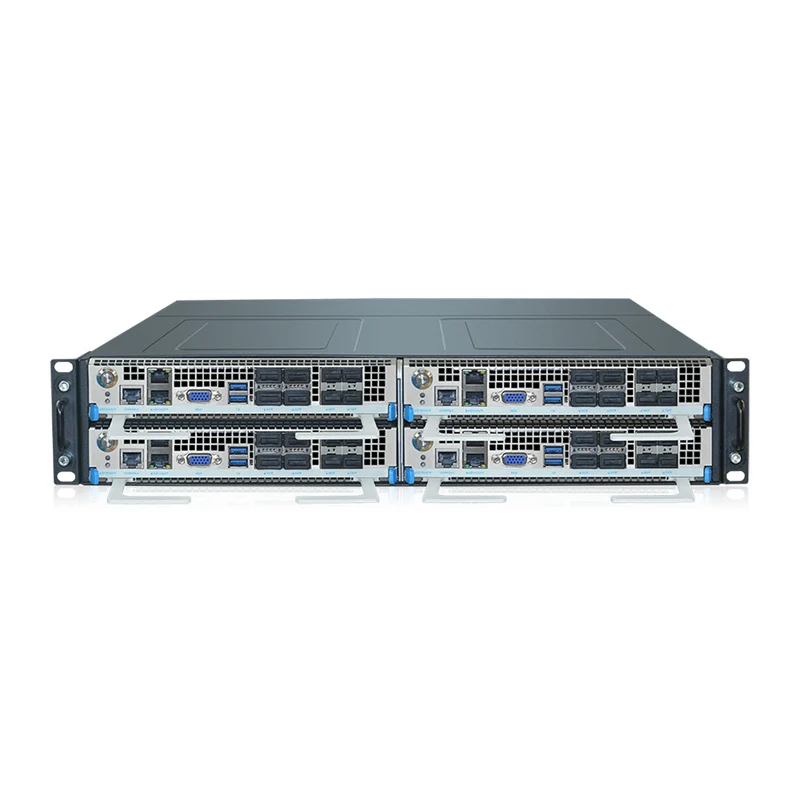
Sino-Telecom offers fully integrated deep packet inspection solutions to address operators' security challenges. Sino-Telecom's DPI solutions process network traffic in real time on-line rates from 1Gbps to 100Gbps, offering comprehensive threat intelligence databases including signatures for thousands of applications and known emerging threats. Sino-Telecom's DPI solutions process network traffic at massive scale, delivering up to 120 Gbps per 1U appliance for 5G mobile networks and scaling to an industry-leading 1200 Gbps with native 400GE support for fixed broadband. Powered by an ultra-efficient UCPP engine, our solutions feature a massive 4-million entry blacklist capacity and comprehensive blocking mechanisms—including TCP connection termination, UDP packet dropping, and HTTP redirection. By recognizing over 3,500 application sub-categories and correlating 5G/IoT traffic, Sino-Telecom provides the carrier-grade threat intelligence operators need.
Table of Contents
- Common Data Security Pain Points for Operators
- How DPI Addresses Core Security Challenges
- DPI for Real-Time Data Threat Detection
- Blocking and Shielding Capabilities against Detected Threats
- Simplify Security Management with DPI
- Reduce Security Risks in Daily Operations
- Practical DPI Value for Operator Security
- Reliable DPI Solutions for Data Protection