
 EN
EN
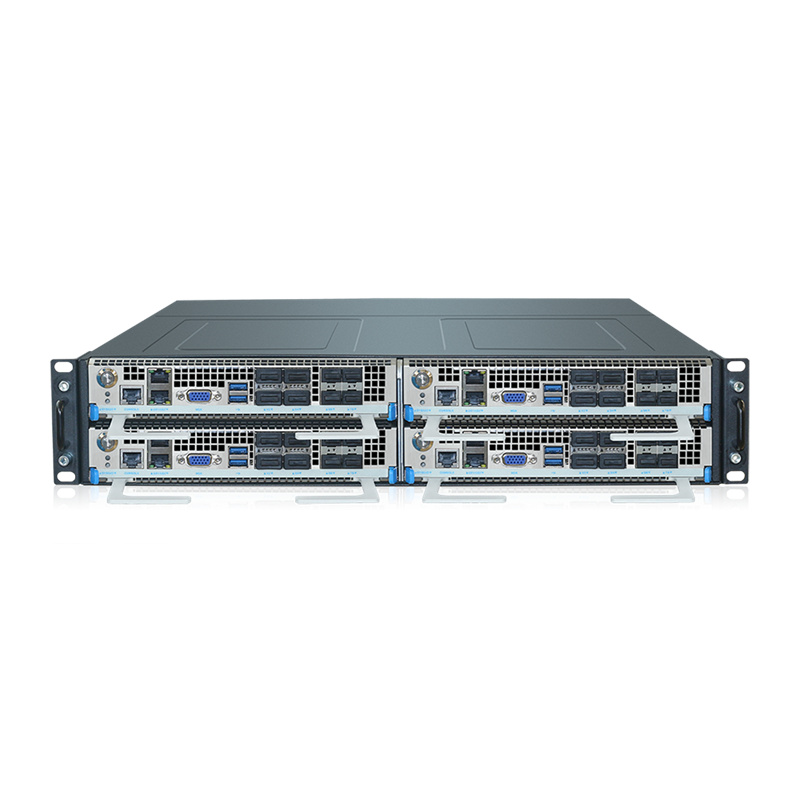
Across every industry-telcos and ISPs, enterprises and government - system integrators are the trusted resource for rolling out the next generation of network security and visibility tools. Conse quently, they need the broadest possible range of DPI capabilities in their portfolio. But not all DPI toolkits are created equal; many were not designed with the realities of an integration environment in mind. In system integrator projects, a successful DPI solution has to be powerful, of course, but also cost-effective, easy to integrate and maintain.
Current DPI Demands for System Integrators
System integrators face a broad range of DPI needs across their customer bases. Telecom operators require a carrier-grade DPI capable of managing hundreds of gigabit Ethernet links in parallel while recognizing thousands of applications and performing real-time threat detection. Enterprise users require DPI to monitor employee usage of the internet for purposes such as data loss prevention and to satisfy industry-specific regulatory requirements. Government projects may require the capability to perform DPI for lawful interception purposes, content filtering, and network forensic analysis. Educational institutions may require affordable DPI to filter content and manage student internet bandwidth. Across all these vertical segments, system integrators require a reliable, well-documented solution supported by responsive engineering staff. Additionally, integrators increasingly expect solutions to be embedded into existing platforms like UTM devices, network visibility appliances, and the like, rather than having them function as standalone black boxes.
Core Features to Look for in DPI Tools
System integrators will look for specific features in DPI tools when planning an integration project. Application signature coverage is essential for the platform to recognize today's applications and to receive future signature updates as new protocols and patterns emerge in encrypted traffic. Scalability also plays an equally important role, and the integrator needs DPI tools that can manage throughput between 1 Gbps and 100 Gbps, preferably running on the same software across hardware of varying architectures. The depth of the protocol decoding will also determine what kind of information can be derived from the DPI, and the integrators will look for support for the most common protocols, such as HTTP/HTTPS, DNS, SMTP, FTP, and SIP. Metadata export capabilities also enable SIEM and reporting platforms to leverage information delivered from the DPI tool, using standards such as IPFIX, NetFlow, or REST APIs. Finally, the interface for the DPI tool must be easy to use, whether through a GUI for basic configuration or a through programmatic interface (API) for integration into larger orchestration tools.
Flexible Deployment for Diverse Project Scenarios
Every integration project will have its own unique infrastructure requirements and limitations, so a good DPI tool needs to be able to handle different deployment models. For system integrators to be effective, it's essential that their customers can deploy the DPI tool within their network architecture in the way that best fits their needs. A plug-and-play appliance-based solution would be attractive for customers seeking ease of installation and support. For customers using cloud environments, a virtualized deployment model that allows integrators to leverage their own compute resources or deploy in their own private clouds would be preferable. In a distributed network or for certain architectures, such as micro services or the emerging edge network, a containerized DPI tool would make most sense, due to its lower resource requirements and faster deployment times. Additionally, integrators will look for solutions that support the particular environmental needs of customers, whether that is extreme temperatures for outdoor deployments in certain regions, or the need for dual power supplies for business-critical infrastructure. Finally, in a multi-site environment, the ability of the system to coordinate multiple collector-based DPIs through a central management interface is a necessity for global visibility.
Cost-Efficient DPI Solutions for Partners
Integrators are driven by margins and seek cost-effective solutions. In calculating the total cost of ownership (TCO) of DPI technology for a customer integration project, an integrator will account for licensing fees, maintenance costs, hardware purchase costs, as well as ongoing operational costs, such as updates and ongoing technical support from the vendor. A vendor should offer its system integrators flexible licensing terms that suit the integrator's business model: either a perpetual license (for customers who prefer capital expenditure upfront), a subscription-based license (that can lower barriers for less extensive projects), or a throughput/feature-based license that can be scaled precisely to the customer's actual needs. Using the vendor's hardware in the form of appliances increases the initial hardware purchase costs and leads to reduced flexibility when spares are needed. Therefore, integrators should seek solutions that can utilize standard x86 hardware to lower costs and increase reliability. For less cost-sensitive markets such as SMB ISPs and educational institutions, the reduced total cost of ownership will be a significant benefit that the system integrator can leverage against the competition.
Simplified Integration & Technical Support
The complexity of the integration process can easily lead to reduced profitability for a system integrator, so it's essential that DPI tools allow for easy integration. For instance, when the system requires a proprietary API, the complexity of integration increases, and the system integrator may have to use precious engineering resources or employ custom code development. Therefore, a tool with a well-documented API for configuration, monitoring, and metadata export — one that can interface with existing platforms is essential. It would also be helpful for integrators to have access to source code samples for various programming languages (Python, Java, Go, etc.) to speed up the custom integration process. For easier interoperability with third-party reporting tools and SIEMs, using a standardized metadata schema is desirable. Technical support from the DPI vendor is extremely valuable. Integrators need access to level-2 engineering support to solve complex technical problems and not merely level-1 support, which is usually limited to the basics. Technical support also needs to offer self-service resources such as an updated partner portal, with application signature lists, documentation, software updates, and release notes available. DPI vendors may also offer certain strategic partners a form of engineering assistance that goes beyond normal technical support levels, providing help throughout the entire customer engagement lifecycle, including validating an integrated solution prior to deployment.
Customizable DPI Tools for Global Markets
How regionalizing a global DPI solution challenges the global system integrators, the main reasons for which are differences in usage patterns and preferred applications based on the region. Consequently, integrators need the option to have a custom signature detection capability so they can identify region specific applications. They or the end-customers might also need the management interface to be available in the local language of the region. Different countries and regions also have compliance regulations regarding how the DPI tool log the information and the format and retention of data and custom metadata export. The custom approach for DPI tool might give a definite competitive edge when responding to international tender offers.
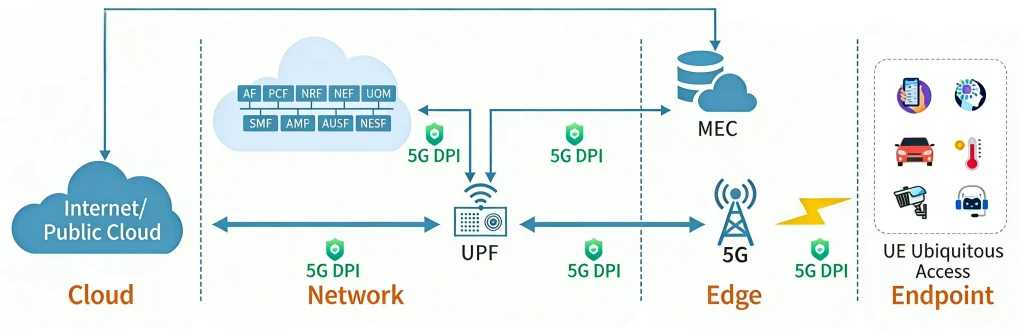
Reliable DPI Options for Integrators
Sino-Telecom's deep packet inspection tools are built with system integrators in mind. Our DPI technology can support throughput between 1 Gbps and 100 Gbps with various deployment options available including appliance-based solutions, virtualized deployment or containers. Metadata can be extracted via standards like IPFIX, NetFlow, and REST API for seamless integration with virtually any existing SIEM or reporting solution. Our flexible licensing options include perpetual, subscription or usage-based pricing models that offer choices based on system integrator preference. To date, Sino-Telecom has deployed in over 30 countries worldwide and holds 185 patents regarding, which is currently utilized by telecom operators, enterprises and government network.
Contact Sino-Telecom's partner sales team today to receive a personalized quote, download comprehensive DPI product datasheets.