Home > Products > IP Networks > IPRAN
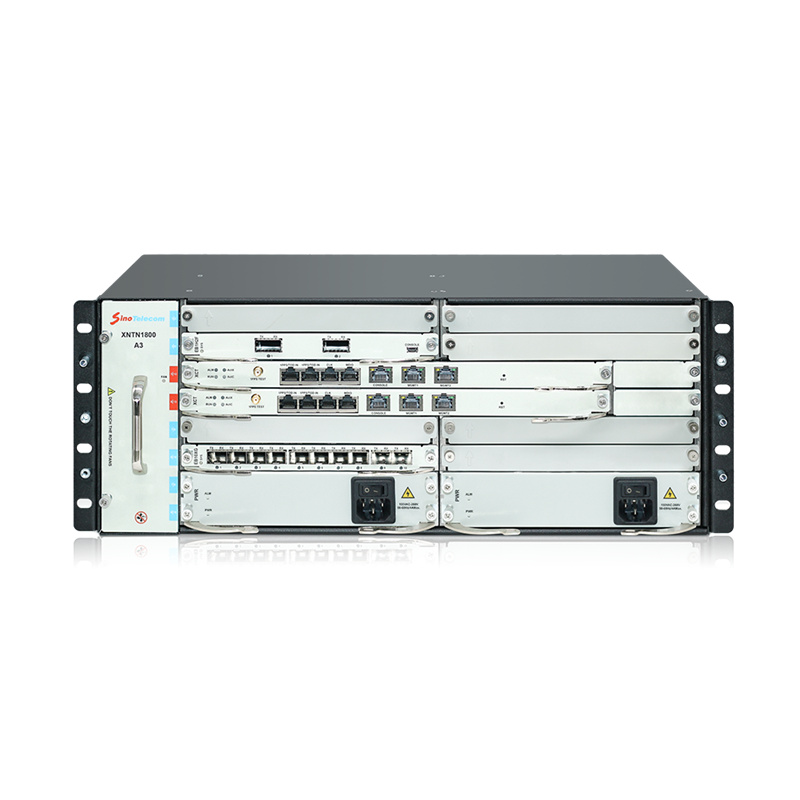
The XNTN1800 (A3) is a transport device developed by Shanghai Sino, specifically designed for the access layer of bearer networks, and is suitable for BBU centralization and integrated service transport.
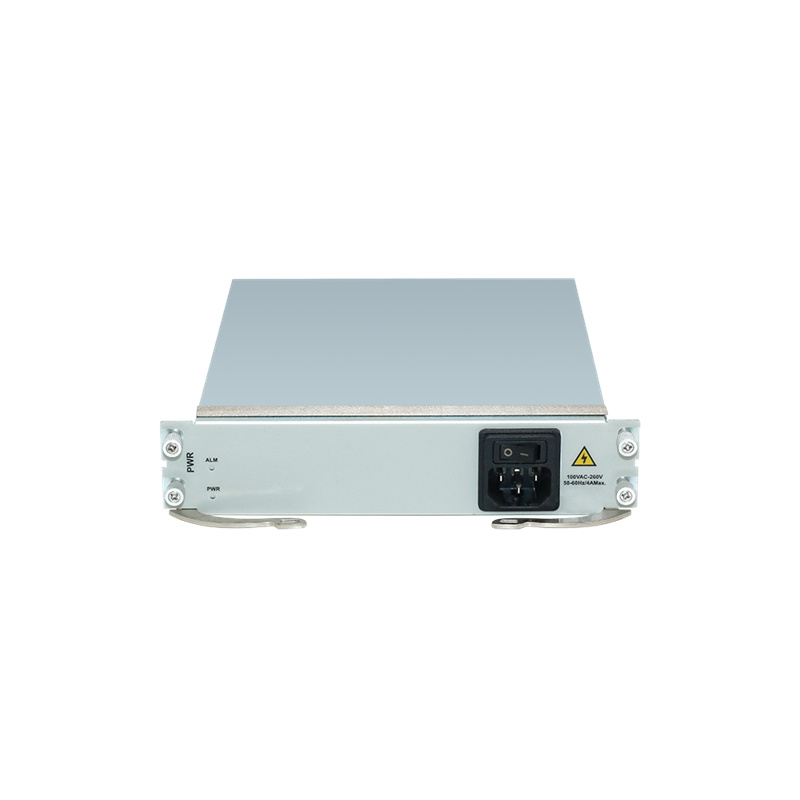
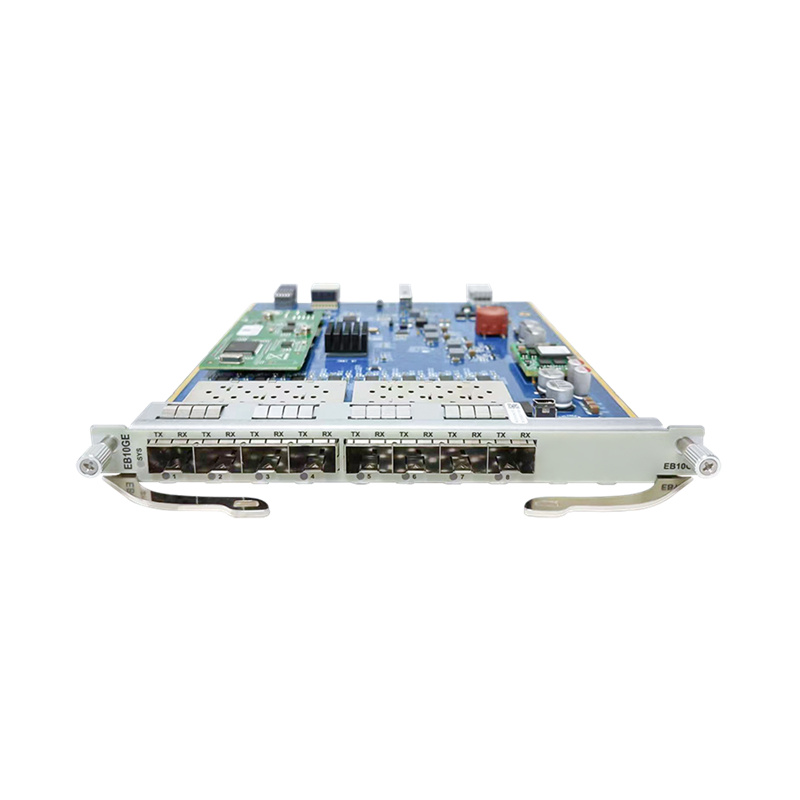
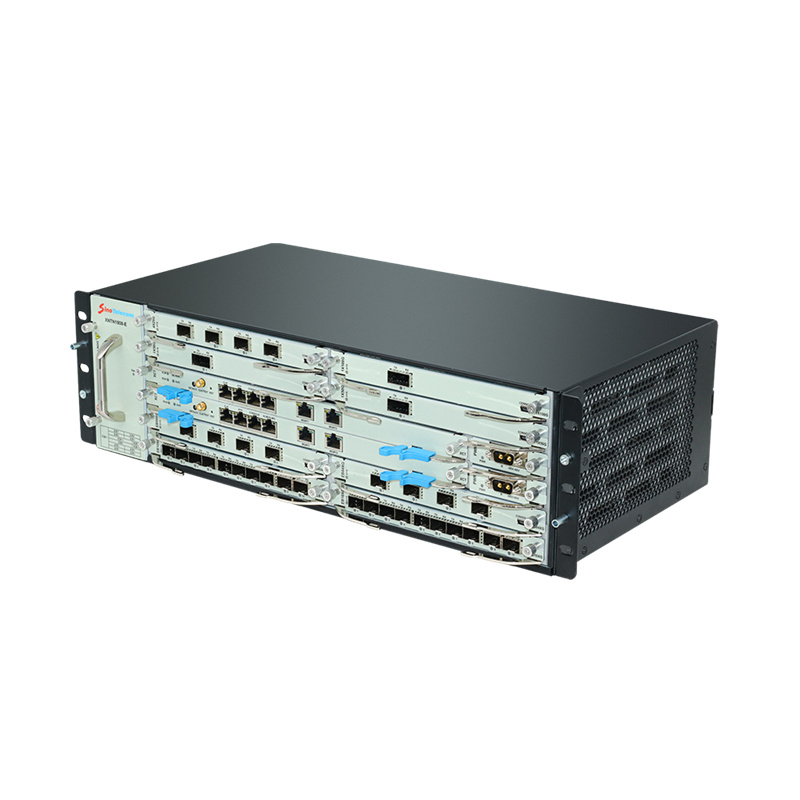
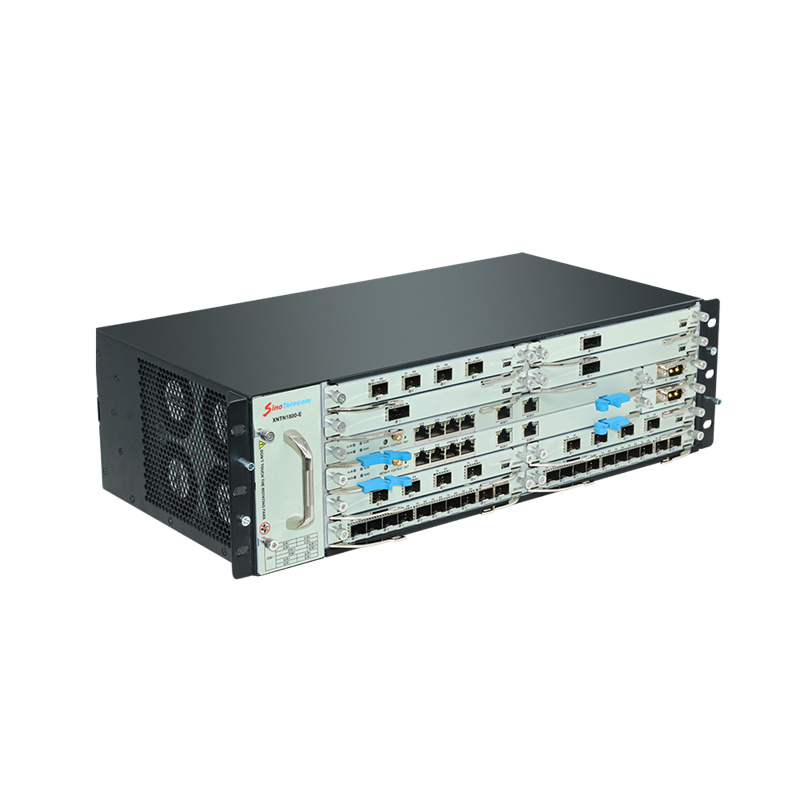
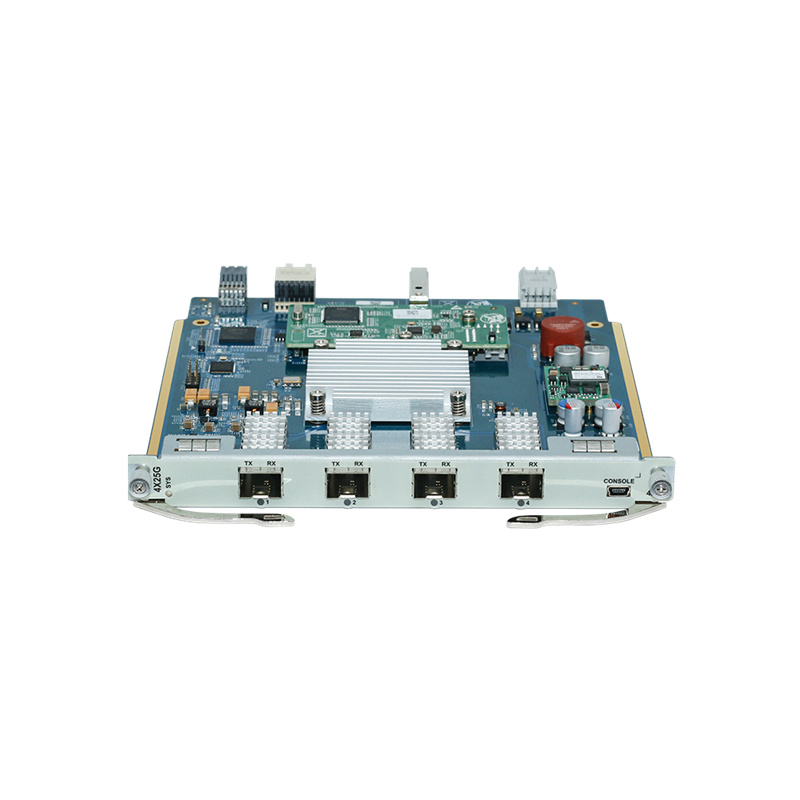
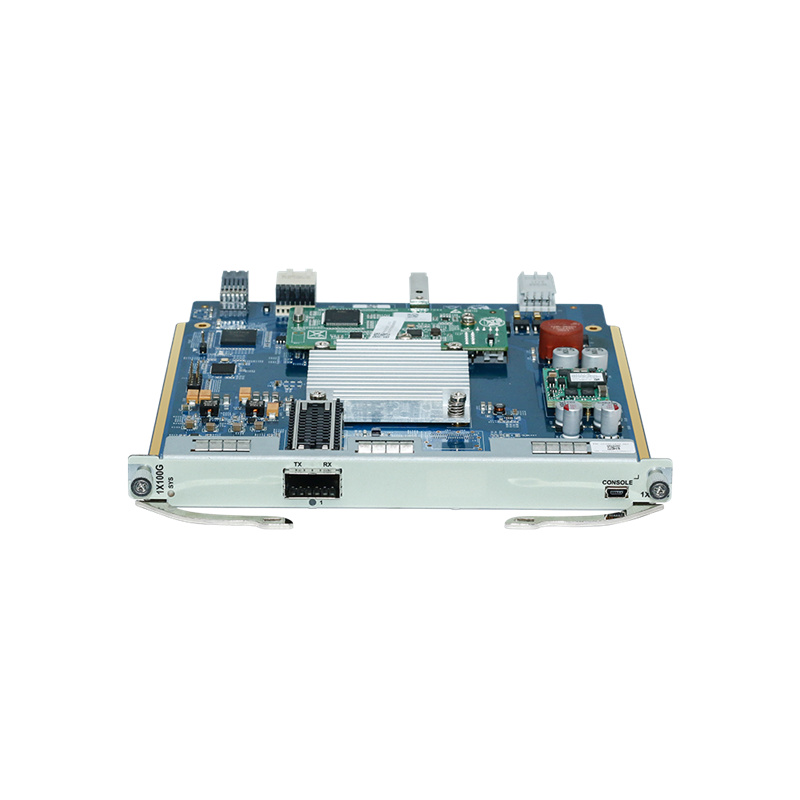
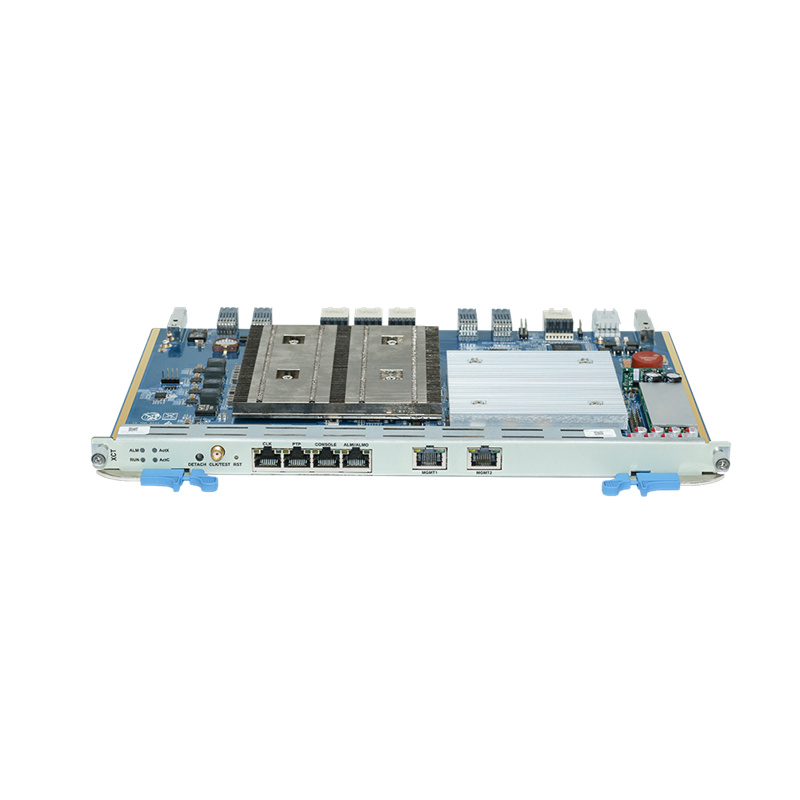
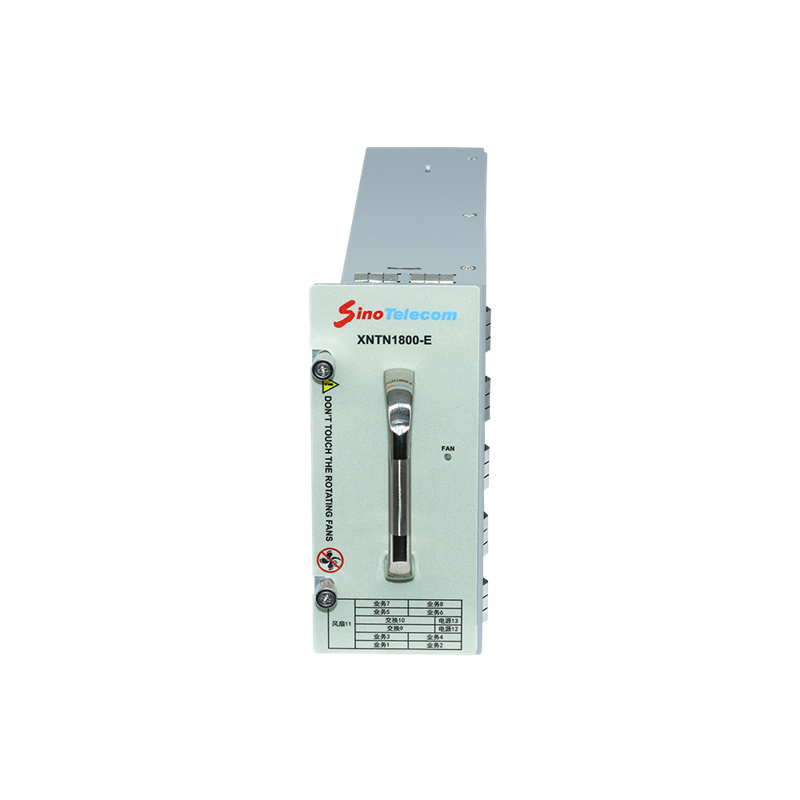
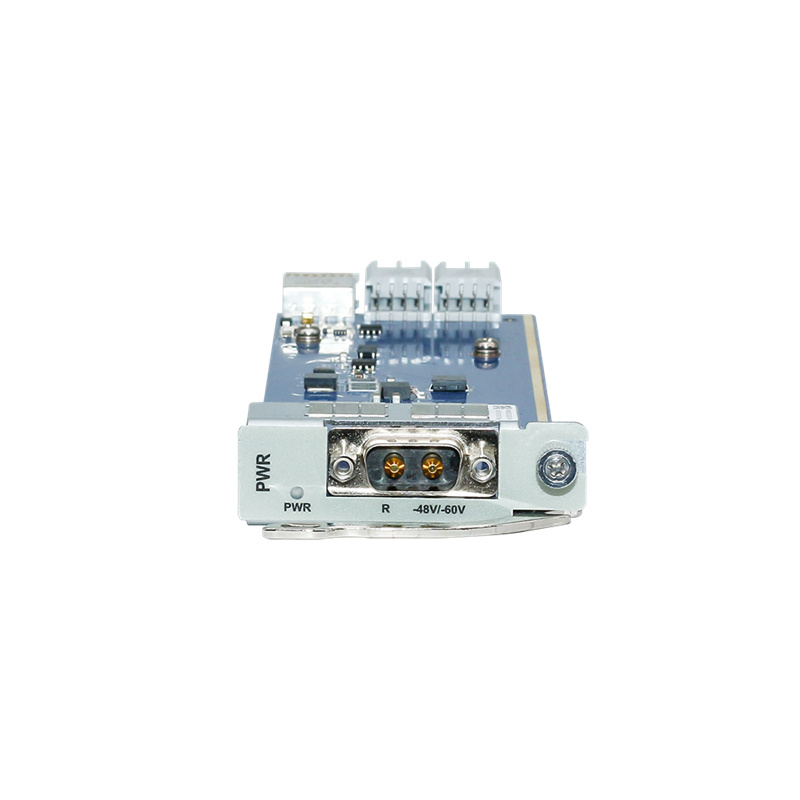
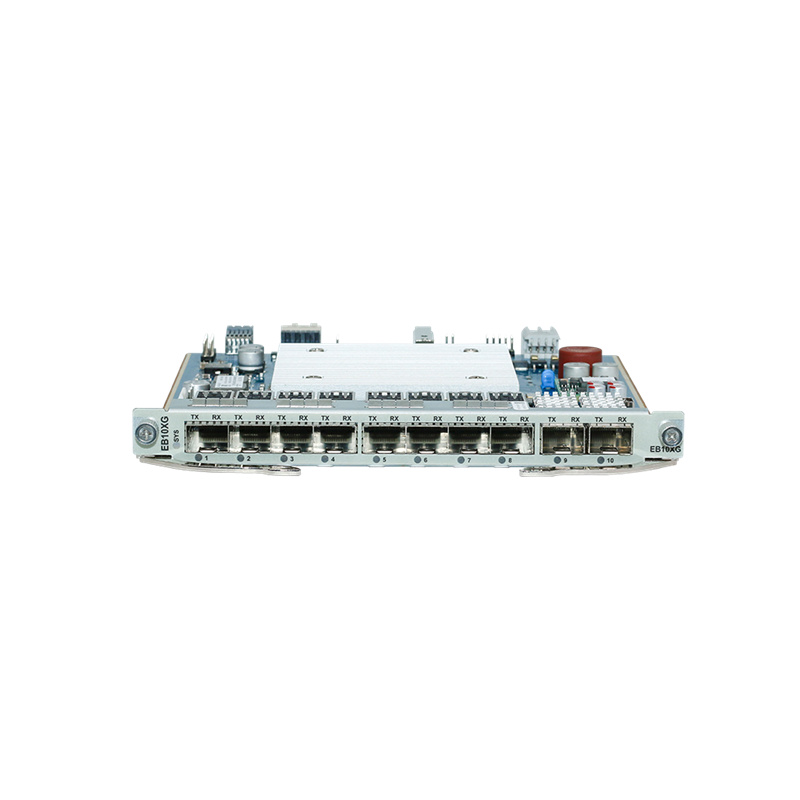
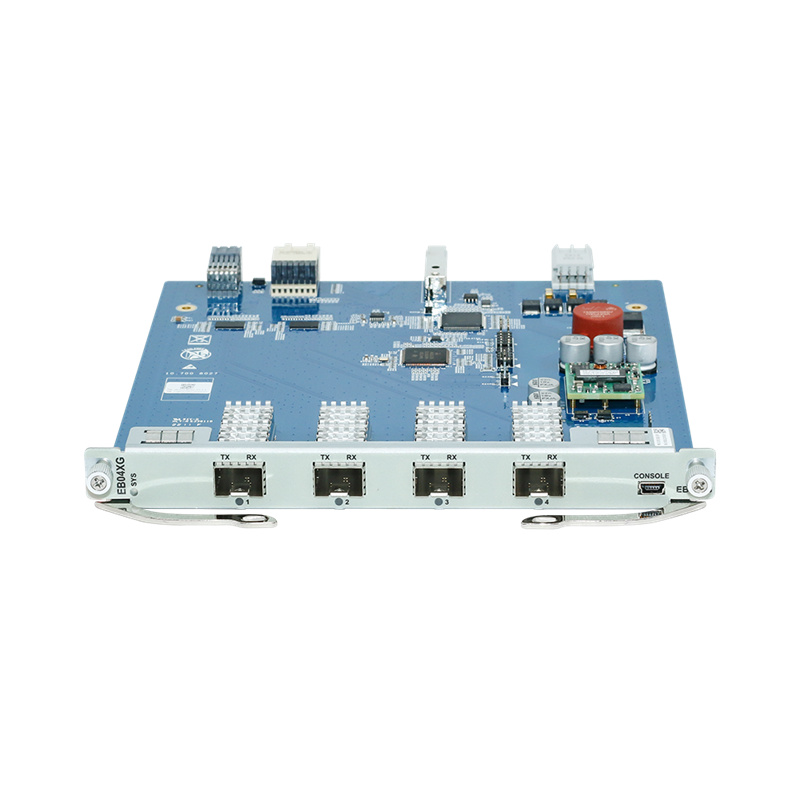
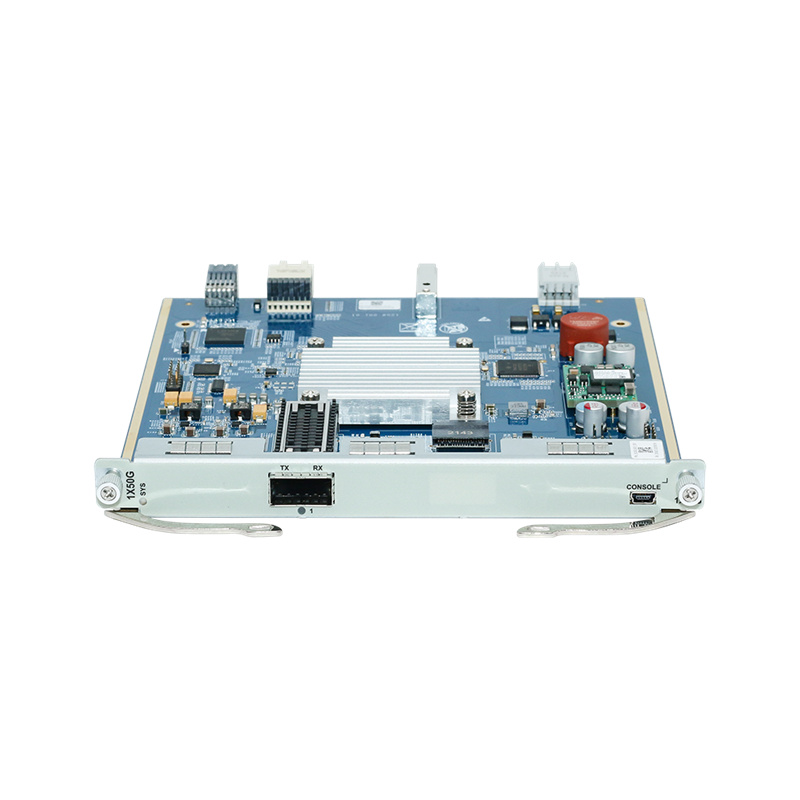
The XNTN1800 (A3) is a transport device developed by Shanghai Sino, designed for the access layer of bearer networks to support BBU centralization and integrated service transport. The device features a clock board area for switching control, a service line card area, a power supply board area, and a fan area. It provides multiple service interfaces including 100G,50G,25G,10G, GE, and FE, enabling flexible configuration of various network architectures such as chain and ring networks.
The dual master control design ensures uninterrupted service during primary/backup switching.
The business board supports hot-plugging to improve the reliability of the entire machine;
It adopts a non-blocking switching bus architecture and a professional integrated service processing engine, which supports up to 100G group ring network and line speed service processing capability.
Provide ns-level clock accuracy and millisecond-level link fault detection;
Supports FlexE features to ensure business isolation and flexible bandwidth adjustment.
A fully-featured multicast routing protocol for the second and third floors, designed to meet the access requirements of IPTV, multi-terminal HD video surveillance, and HD video conferencing.
The complete three-layer routing protocol and large routing table capacity meet the needs of various types of network interconnection, and can be used to build large 5G bearer networks and industry user private networks.
It fully supports MPLS VPN at both Layer 2 and Layer 3, enabling the deployment of ultra-large-scale MPLS VPN core networks to meet the access requirements of both industry-specific and enterprise network VPN users.
Supports BFD OAM for rapid detection and troubleshooting of link failures;
Supports network quality monitoring features including Y.1731, RFC2544, TWAMP Light, and Y.1564;
Support hardware coprocessor to process detection protocol packets, achieving millisecond-level detection accuracy;
Supports hardware coprocessors for transmitting and receiving detection traffic, ensuring detection capabilities for 10GE, 25GE, 50GE, and 100GE links.
Supports IOAM in-stream detection, which samples and adds OAM information to business traffic in real time, and actively pushes sampled data to the analyzer to achieve real-time awareness and monitoring of network operation status.
Supports G.8275.1 standard, enabling high-precision time synchronization via SyncE+PTP with nanosecond-level accuracy.
Supports SyncE (Synchronous Ethernet Protocol) for frequency synchronization, with performance metrics meeting G.8262.1 requirements.
Supports PTP (Precision Time Protocol) IEEE 1588v2 protocol for time synchronization;
Supports the BMC (Best Master Clock) algorithm to prevent clock loops, and enables high-quality clock source selection and switching.
Supports multiple clock types including 1588V2 OC/BC/TC;
Full support for the IPv6 protocol suite, including IPv6 neighbor discovery, ICMPv6, Path MTU discovery, DHCPv6, and other IPv6 features.
Supports a wide range of dynamic routing features, including OSPF, ISIS, BGP, OSPFv3, BGP4+, and ISISv6.
Supports comprehensive MPLS network features, enabling flexible deployment of MPLS L3VPN, MPLS L2VPN, Traffic Engineering (TE), IPv6 MPLS L3VPN, EVPN, Segment Routing, and SRV6 to meet integrated service access requirements.
Supports IPv4 and IPv6 multicast, including: IGMPV1/V2/V3, IPv4 and IPv6 PIM-DM/SM, MBGP, MSDP, and MLD.
Supports IPv6-based Ping, Traceroute, Telnet, SSH, ACL, and other protocols to meet the needs of pure IPv6 network device management and service control.
Device-level security: The advanced hardware architecture enables hierarchical packet scheduling and protection, defending against DoS attacks, TCP SYN Flood, UDP Flood, broadcast storms, and high traffic. It also provides command-line access control with tiered permissions.
Comprehensive security authentication mechanism: Supports IEEE 802.1x, Radius, Tacacs+, and other protocols, providing users with a complete security authentication mechanism.
Enhanced security mechanisms: Supports plaintext or MD5 authentication for relevant routing protocols, and uRPF reverse routing lookup technology to effectively control unauthorized traffic. Hardware-level packet deep inspection and filtering technology enables deep detection of control and data packets, effectively isolating malicious data packets and enhancing network system security.
The advanced power system architecture design enables efficient power conversion, unique power monitoring, slow start-up and other functions, real-time monitoring of the running state of the whole machine, intelligent adjustment, deep energy saving.
Intelligent fan management system: Intelligent fan design, support automatic speed adjustment, effectively reduce the speed, reduce noise, and extend the service life of the fan.
Supports the carrier DCN self-service management solution to meet the requirements for plug-and-play automatic deployment of devices.
A standardized network management interface that supports multiple standard protocols such as SNMP and NETCONF, enabling seamless integration with third-party network management platforms.
Supports network monitoring features such as telemetry and flow classification statistics;
Support Dying Gasp;
|
Device size |
DC:482mm×230mm×132mm(3U)/ AC: 482mm×230mm×176mm(4U) |
|
exchange capacity |
800G |
|
working power supply |
DC:-48V:-72V DC ~ –36V DC / AC:100V-240V,50Hz±10% |
|
Slot count |
13 slots, including 2 main control slots, 8 service slots, 2 power supply slots, and 1 fan slot |
|
System Interface Capabilities |
100GE:8,50GE:8,25GE:32,10GE:80,GE:64 |
|
L2 Features |
IEEE802.1q、IEEE802.1p、IEEE 802.3ad、IEEE 802.1ab、STP/RSTP/MSTP |
|
L3 Features |
OSPF、RIP、IS-IS、BGP、ACL、IPv4、6VPE、ARP 、MBGP |
|
MPLS characteristic |
LDP、MPLS L2 VPN、MPLS L3 VPN、 |
|
SR/EVPN features |
SR/SRv6, EVPN L3VPN, EVPN VPWS, EVPN VPLS |
|
Multicast |
IGMP、Static Multicast Routing、PIM-SM/SSM、 |
|
QoS |
Supports flow classification, traffic scheduling, traffic shaping, and traffic monitoring. Supports HQoS, Pipe, and Short-pipe. |
|
OAM |
ETH OAM、BFD、RFC 2544、Y.1731、TWAMP、IOAM |
|
cut into slices |
Supports Flex-E slicing protocol |
|
Netconf |
Supports Netconf for automated orchestration |
|
clock |
1588v2 (G.8275.1), supports synchronous Ethernet clock and NTP |
|
O&M |
Supports DHCP, DCN, SNMPv1/v2/v3 |
|
Telemetry |
Supports sub-second network fault detection for telemetry |
|
working temperature |
Working temperature: -5℃ ~ 55℃ Guaranteed performance working temperature: 0℃ ~ 45℃ |
|
Working humidity |
Working humidity: 5% ~ 90% (30℃) Guaranteed performance working humidity: 5% ~ 85% (30℃) |
|
electric fan |
Built-in redundancy, temperature control, and speed adjustment |
|
Typical Power Consumption |
Less than 375W |
|
protect |
Power 1+1, main controller/switch/clock 1+1, fan redundancy |
5G Transport
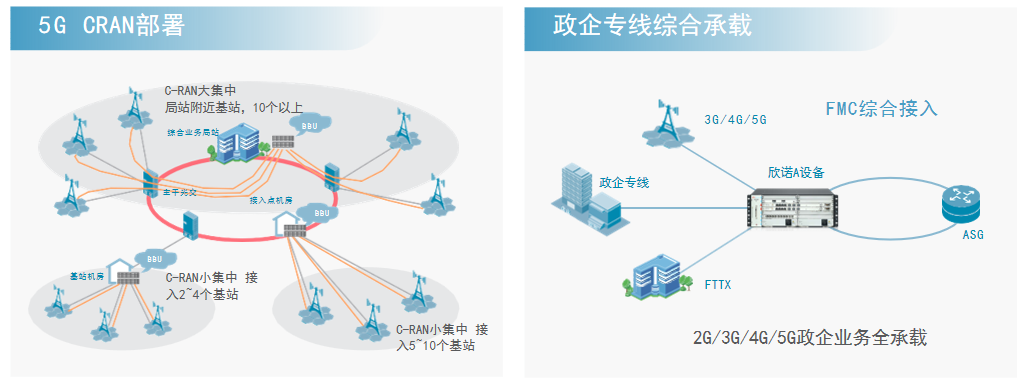
The XNTN1800 A3 is built on IP/MPLS protocols with SRV6 as its future evolution, designed for 5G mobile service delivery. It delivers To C/To B network slicing technology based on standard FlexE protocols, while supporting Layer 2/3 channel-based services. The system features elastic scalability, enables data stream differentiation, and provides QoS guarantees to ensure secure and reliable network interconnection.
Government-Enterprise Access
At the same time, it meets the sustainable development needs of large customer dedicated line carrying solutions, helps operators improve network bandwidth and deployment efficiency, and reduces operation and maintenance costs.

 EN
EN