
 EN
EN
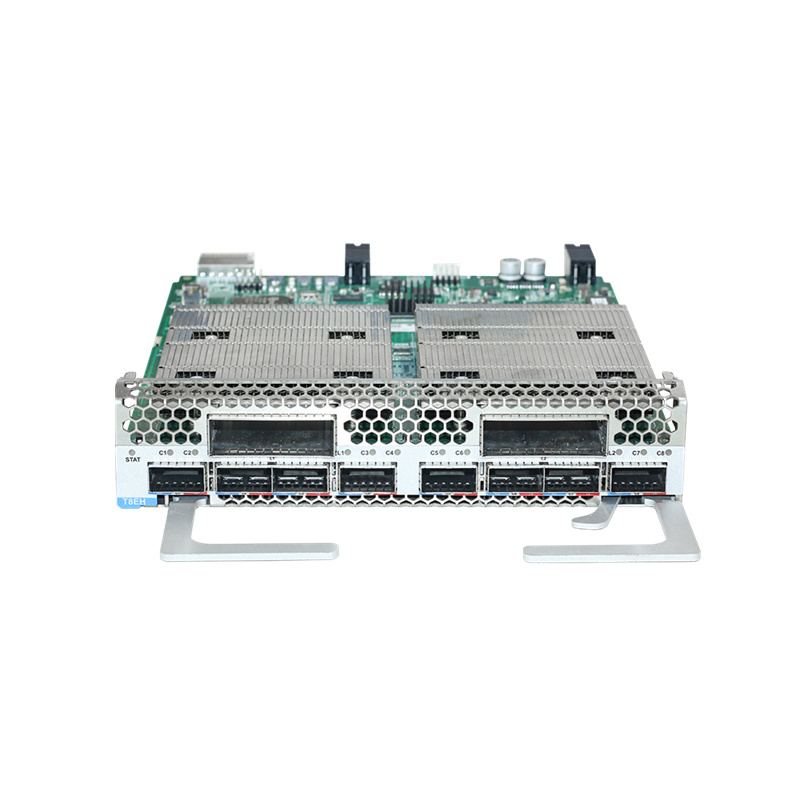
Now we're living in the Information Age where data has become the new crude oil circulating our economy through fiber-optic cables. Artificial Intelligence, Cloud Computing, and 5G are driving exponential growth in the data transfer rate of global enterprises and service providers. The hub connecting all of the infrastructure – Data Center Interconnection (DCI) is experiencing unprecedented stress and demands a transformation to enable seamless operations, and hence bandwidth is no longer a choice but a business prerequisite. Traditional approaches simply add more hardware, which drives cost overruns and quickly becomes difficult to finance.
At Sino-Telecom, we believe the future of data centers lies in smart, scalable infrastructure, embodied by our STN6800-D16 modular DCI OTN platform (1U 6.4T / 2U 12.8T). Instead of chasing the lowest cost, we strive to deliver the best possible per-bit value for enterprises. The key to that value lies in intelligent management of network costs at the underlying layer.
Understanding the True Cost of DCI Deployment
Prior to optimization the DCI network has costs that outweigh the price of the DCI gear. This is total cost of ownership, which typically comprises hardware acquisition, power consumption, cooling power, rack space, and maintenance costs.
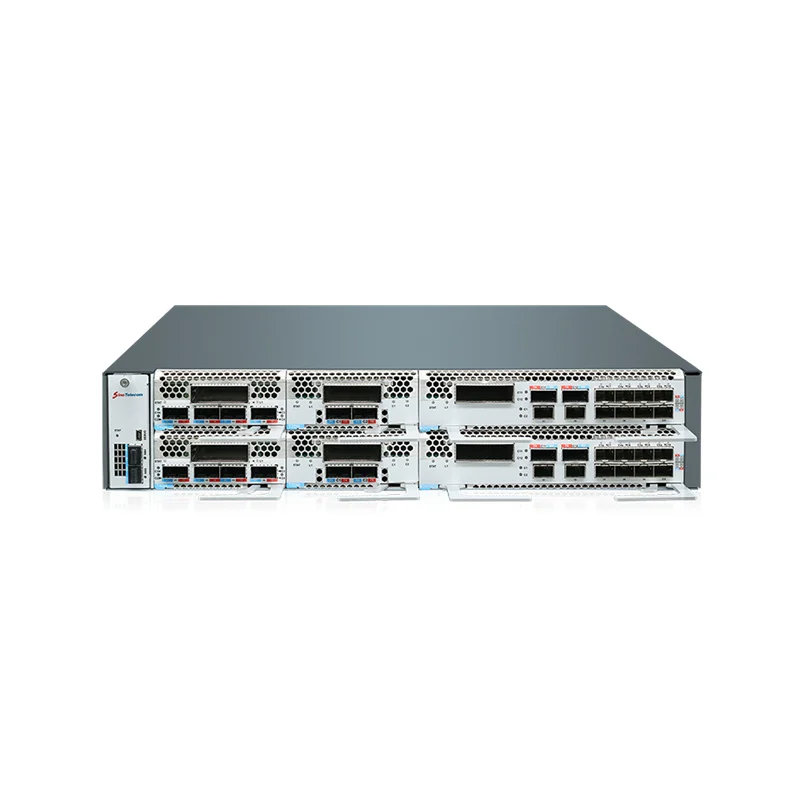
One mistake people make is that they only worry about purchasing price, but the operating expense cost increases. Whether you factor in real estate costs based on the amount of rack space equipment takes, or your operating expenses due to the power-intensive transceivers and the two chamber design used by others, it all sums up in the form of a total cost of ownership for your investment. This is precisely why the STN6800-D16 series is designed for efficiency and density. The 2U STN6800-D16-2U, available in a 2U form factor, packs 8 slots and a maximum capacity of 12.8T within a 2 rack space reducing floor space versus a bundle of 1U boxes offering equivalent throughput-while the 1U 6.4T platform consumes only 350W maximum, and the 2U 12.8T version draws just 700W, industry’s lowest power-usage per watt. Pick STN6800-D16, reduce the space your company’s infrastructure has to occupy in exchange center, minimize your cooling and power costs and reap the benefits of the industry’s lowest operating cost while providing the ability to scale from 6.4T to12.8T when your company needs it. In addition, the life cycle of these assets, from upgrades to eventual decommissioning, should be taken into account in designing the financial model. When network architects consider all the costs of deployment, including installation and end-of-life, they can make informed choices to avoid budget surprises three to five years in the future.
CAPEX vs OPEX: What Really Drives Network Cost
In any network deployment, the balance between Capital Expenditure (CAPEX) and Operational Expenditure (OPEX) determines financial health. CAPEX includes the physical equipment – optical transceivers, optical switches and cabling. OPEX includes the continuing expenses: electricity costs, cooling costs, contracts, and manpower.
A short-term objective of minimizing CAPEX costs can be a pitfall in a DCI environment. Buying less expensive lower quality optics can be a short-term money-saver but will require more power per bit and more maintenance issues. Conversely, investing in coherent 400G/800G optics and a high-density platform like the STN6800-D16 series may require higher initial CAPEX, but delivers significant OPEX savings through superior performance-per-watt. The 2U STN6800-D16-2U offers up to 12.8T of transmission capacity in just 2 rack units, with a maximum power consumption of only 700W — the industry's lowest per-bit power draw at this density. The key trick is shifting from "How much does it cost to buy?" to "How much does it cost to operate per gigabit per month? " By concentrating on the efficiency of OPEX, organizations are able to drive down the total cost of ownership, and in doing so, the network can adapt and grow without an increased running cost.
How Higher-Speed Optics Improve Cost per Bit
The economics of optical networking follow a simple rule: speed counts. Faster optics, like 100G, 200G, 400G and faster, provide a real benefit in cost per bit. This is an important metric as it will help you to push more revenue-generating traffic through your infrastructure for every dollar you spend.
New high-speed transceivers pack more capacity into fewer ports and fibers, lowering cost and power per bit. Upgrading from 100G to 400G doesn't necessarily require four times the power or space, for example, the power per bit may actually drop dramatically with this upgrade. In addition, using sophisticated coherent optics to allow messages to be transmitted greater distances without regeneration will simplify network design. With the ability to support 200G/400G/800G line cards and CFP2-DCO coherent modules on the 2U STN6800-D16 with up to 12.8T, providers now invest in what they need for today, with right-sized capacity and an intelligent pay as you grow path toward tomorrow’s massive data consumption. The payoff is a less stressed network with lower network lifetime costs as traffic demand climbs.
Pay-as-You-Grow Architectures for Network Expansion
Over-provisioning often occurs in traffic forecasts due to uncertainty. Many networks are designed to handle maximum traffic which can only be experienced for a couple of hours each month, and this means that capacity is sitting idle and money is lost. STN6800-D16 1U/2U platform has a selection of 4 or 8 slots to install cards at will in the future in order to carry out capacity upgrade from 6.4T to 12.8T without ordering the full number of ports initially.
A software-defined, modular architecture of DCI enables organizations to scale up gradually. If the demand increases, you consume the capacity that you need and switch it on, and you don't have to pay for hardware you don't consume. This is the major point that capex is minimized and much more predictable and flexible over time. It scales with revenue.
Reducing Operational Costs Through Simplified Management
The enemy of network budgets is complexity. Handling several vendors with different management interfaces and complicated provisioning workflow requires highly paid people and a lot of work. Automation is thus the only effective way for OPEX reduction.
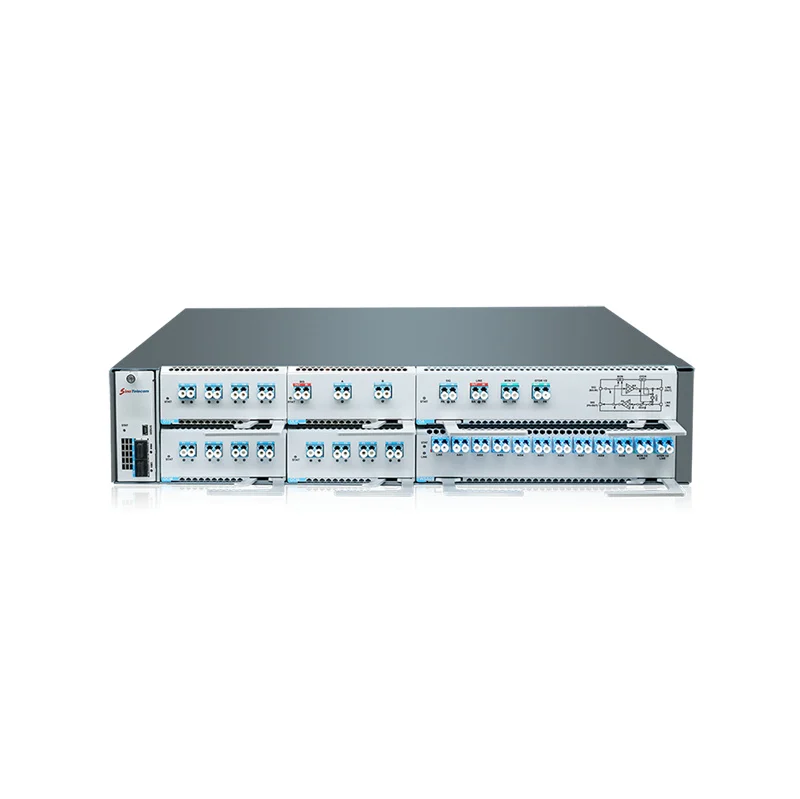
The current network visibility and management platforms are evolving to provide central management and real-time analysis. NMS: STN6800-D16 series use B/S architecture NMS. Supports to connect NMS by the open SNMP/NETCONF interfaces and the OSC in-band Management can support the system connection to the third-party integrated network management systems. Engineers can easily visualize the situation in one pane of glass and quickly determine if there are any bottlenecks, provision services and perform diagnostics without truck rolls and long console commands. Automation is key to this. Simplified management becomes a strategic asset instead of a headache. It frees up skilled talent to concentrate on innovation, not firefighting and ultimately reduces cost of operations for keeping the data center lights on and the data flowing.
Conclusion
To address the ever growing need to scale bandwidth cost effectively, cost effective data center interconnection is far more than getting faster optics. What it truly entails is developing a truly scalable and holistic DCI solution, a plan that will provide the flexibility to adapt your CAPEX and OPEX at every growth stage of your network in a way that benefits your organization most, through, “pay-as-you-grow” modular capacity additions, the implementation of network automation in order to remove administrative overhead, cost efficiencies per bit rather than on a year-by-year hardware cycle, and more. As a globally leading DCI supplier with over 100,000 units already deployed across 30+ countries From Ultra dense OTN solutions in 1U / 2U Form factor and in speeds of 200GbE, 400GbE and 800GbE through open NMS connectivity to low power 400GE modules that dramatically reduce colocation and energy cost we provide your entire network lifecycle solution. Whether its 1.2T dark fiber enhancement or expanding a current, all we offer “right –size” network to start with and a road for easy to upgrade to beyond 12.8T.
Contact us now to get your tailored network blue print and network design, a no commitment consultation and detailed quotation. Take advantage of 10 year DCI’s field experts team and the cheapest bit on the planet!